
Three Way Wire Connectors: Types and Fit Compared

For a three-way wire splice across several wire sizes, Amfuujoy 3-Way Heat-Shrink Crimp Terminals offers heat-shrink crimp terminals in three AWG ranges. Choose 3-Port T-Shape Lever Nut Connectors instead for a reusable-style lever connection without crimping, or 314-BOX Self-Stripping Pigtail Connectors for a self-stripping splice; each connector style requires a compatible wire range and application.
We earn a commission if you buy through links on this page. As an Amazon Associate I earn from qualifying purchases. Products are compared on manufacturer specifications, not hands-on testing.
- Best overall: Amfuujoy 3-Way Heat-Shrink Crimp Terminals – The 20-piece assortment covers three wire-size ranges from 22–10 AWG and uses heat-shrink crimp terminals.
- Best for lever connections: 3-Port T-Shape Lever Nut Connectors – Its three-port lever connector accepts solid or stranded wire within the AWG ranges.
- Best for self-stripping splices: 314-BOX Self-Stripping Pigtail Connectors – The IDC connector makes contact by cutting through unstripped wire insulation when its plunger is pressed.
| Product | Best for | Wire range | Connection style | Package count | Shop |
|---|---|---|---|---|---|
| Amfuujoy 3-Way Heat-Shrink Crimp Terminals | Mixed wire sizes | 22–10 AWG | Heat-shrink crimp | 20 pieces | Check Price on Amazon |
| 3-Port T-Shape Lever Nut Connectors | Lever connections | 28–12 AWG solid; 28–14 AWG stranded | Lever nut | 10 pieces | Check Price on Amazon |
| 314-BOX Self-Stripping Pigtail Connectors | Fast IDC splices | 22–14 AWG | Self-stripping IDC | 30 pieces | Check Price on Amazon |
Three Way Wire Connectors Compared
Match the connector style to the wire gauge and the kind of splice you need.
Amfuujoy 3-Way Heat-Shrink Crimp Terminals

Amfuujoy 3-Way Heat-Shrink Crimp Terminals stands out with a mixed-size assortment of heat-shrink crimp terminals for three-way splices. The 20-piece kit contains 10 blue terminals for 16–14 AWG, five yellow for 12–10 AWG and five red for 22–16 AWG. Tin-plated copper terminals and translucent tubing let you inspect wire placement before shrinking. The maker describes the connectors as waterproof. This style requires a crimping tool and heat to finish the joint, so it is less suited to someone seeking a lever-operated connection or a splice that does not require heat.
Bottom line: Choose it when your project needs crimped, heat-shrink splices across several listed wire ranges.
3-Port T-Shape Lever Nut Connectors

3-Port T-Shape Lever Nut Connectors uses a three-port lever-nut format rather than a crimp barrel or insulation-displacement clip. The 10 connectors accept solid wire from 28–12 AWG and stranded wire from 28–14 AWG, so check both wire type and gauge before choosing it. Its insulated housing contains a stainless-steel spring buckle, and the maker describes the material as flame retardant. This product is the fit for a lever-style connection; it is not the heat-shrink option for a sealed crimp splice, and its wire ranges are not identical for solid and stranded conductors.
Bottom line: Pick it for three-port lever connections when your wire type and gauge fall within its range.
314-BOX Self-Stripping Pigtail Connectors
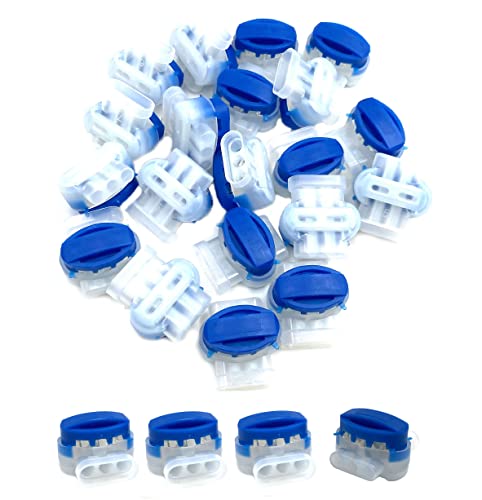
314-BOX Self-Stripping Pigtail Connectors uses insulation-displacement contacts: insert the unstripped wire ends, then press the blue plunger so its metal blade cuts insulation and makes contact. The 30-piece set fits 22–14 AWG cable and has a silicone-gel seal inside a flame-retardant nylon housing. The maker says the connectors withstand up to 600V. This style avoids pre-stripping the wire ends, but it is a specific IDC connection rather than a lever nut or heat-shrink crimp terminal; use it only with compatible wire gauge and application.
Bottom line: Choose it when a compatible 22–14 AWG wire splice calls for a self-stripping IDC connector.
How to Choose a Three Way Wire Connector
Start with the splice method, then match the connector to the conductor gauge and wire type. Crimp terminals form a mechanical joint when compressed with a compatible crimper; heat-shrink tubing is then warmed to seal the joint. Lever connectors clamp conductors in spring contacts, while IDC connectors pierce insulation to contact the conductor. AWG numbers run opposite intuition: a lower number means a thicker wire, so 12 AWG is thicker than 22 AWG. Use the connector only within its wire range. For a project with mixed gauges, select a kit that explicitly covers each conductor size rather than assuming a connector accepts every wire in the overall range. Disconnect power before handling wiring, and verify it is off with a suitable tester.
Three Way Connector Types and Uses
Crimp, lever and insulation-displacement connectors make three-way joins differently, so they are not interchangeable just because they have three connection points. A crimp terminal needs the correct die and a completed crimp; a heat-shrink style also needs heat to shrink the tubing. A lever nut uses its lever to clamp a prepared conductor, while an IDC connector cuts through insulation when pressed. Match the method to the work: prefer a lever format when its wire type and gauge fit, choose crimp terminals when you need that crimp-and-seal construction, and use IDC only when its specified cable range fits. This table compares the connection methods, not a substitute for checking connector ratings or installation requirements.
| Need | Connector style | Check first |
|---|---|---|
| Crimped, heat-shrink joint | Crimp terminal | Gauge, crimper, heat source |
| Lever-clamped connection | Lever nut | Solid or stranded wire range |
| Unstripped-wire splice | IDC connector | Cable gauge and connector rating |
Wire Gauge and Connector Fit
Wire gauge is a fit requirement, not a rough suggestion: the conductor must fall within the connector’s range. Remember that AWG scale direction is reversed, with smaller numbers indicating thicker wire; the range 22–14 AWG therefore covers thinner wire than 12 AWG. For lever connectors, also distinguish solid from stranded conductors because the acceptable ranges can differ. For example, a connector may accept solid wire through 12 AWG but stranded only through 14 AWG. When a splice joins different conductor sizes, confirm that the connector is approved for each wire position and gauge. Do not force a conductor into a port or trim strands to make it fit; select a connector with a compatible range instead.
Frequently Asked Questions
Can three-way wire connectors join different wire gauges?
Some connectors accept a range of gauges, but each conductor must fit the specific connector and port. Check the AWG range and, for lever connectors, whether the wire is solid or stranded.
Do heat-shrink wire connectors need a crimping tool?
Yes, heat-shrink crimp connectors need a compatible crimper to secure the terminal before the tubing is heated. A crimp that is loose or improperly formed can compromise the connection.
What is the difference between IDC and lever connectors?
An IDC connector cuts through wire insulation to make contact when pressed, while a lever connector clamps a prepared conductor with a spring contact. Choose by wire range and whether the installation calls for unstripped or prepared wire.
Should power be off when installing a wire connector?
Yes, de-energize the circuit before working on wiring and verify it is off with a suitable tester. Household circuits can present a shock hazard even when a switch is off.