
Tomcat Rodent Repellent Sprays Compared by Size

For most households, Tomcat Ready-to-Use, 1-Gallon 2-Pack is the best fit when total ready-to-use volume matters: its two 1-gallon containers provide 2 gallons combined. Tomcat rodent repellent sprays use a cinnamon, garlic and peppermint oil blend, with formats ranging from a continuous-spray can to larger ready-to-use containers.
Choose Tomcat Continuous Spray, 14 oz for a compact 14-ounce continuous-spray format, or Tomcat Ready-to-Use with Comfort Wand, 1.33 Gal if you want a 1.33-gallon container with a comfort wand. Repellent spray is a perimeter measure, not a substitute for sealing gaps that rodents can use to enter.
We earn a commission if you buy through links on this page. As an Amazon Associate I earn from qualifying purchases. Products are compared on manufacturer specifications, not hands-on testing.
- Best overall: Tomcat Ready-to-Use, 1-Gallon 2-Pack – Two 1-gallon ready-to-use containers provide 2 gallons combined.
- Best for compact storage: Tomcat Continuous Spray, 14 oz – The 14-ounce continuous-spray can is the smallest format here.
- Best for wand application: Tomcat Ready-to-Use with Comfort Wand, 1.33 Gal – The 1.33-gallon ready-to-use container includes a comfort wand.
| Product | Best for | Format | Total volume | Shop |
|---|---|---|---|---|
| Tomcat Ready-to-Use, 1-Gallon 2-Pack | Larger coverage areas | Ready-to-use containers | 2 gal | Check Price on Amazon |
| Tomcat Ready-to-Use with Comfort Wand, 1.33 Gal | Wand application | Ready-to-use with wand | 1.33 gal | Check Price on Amazon |
| Tomcat Continuous Spray, 14 oz | Small-area application | Continuous-spray can | 14 fl oz | Check Price on Amazon |
Tomcat rodent repellent sprays
Compare these Tomcat options by container format and total volume to find one that suits the area you plan to treat.
Tomcat Ready-to-Use, 1-Gallon 2-Pack

The two-container pack gives you the greatest combined volume here: 2 gallons total. Tomcat says its cinnamon, garlic and peppermint oil formula is rain-resistant, intended for indoor and outdoor use, and should be reapplied every 30 days. The maker also says it is safe around children and pets when used as directed. This format suits households treating multiple areas or keeping a second container available. Its limitation is the bulk of a two-container pack; choose a smaller option if storage space or carrying weight is a concern.
Bottom line: Choose this pack when you need the most ready-to-use spray in one purchase.
Tomcat Ready-to-Use with Comfort Wand, 1.33 Gal

The comfort wand distinguishes this ready-to-use option, which holds 1.33 gallons in one container. Tomcat says the cinnamon, garlic and peppermint oil blend helps discourage rodent entry, nesting and foraging, and is rain-resistant with reapplication every 30 days. It is intended for indoor and outdoor use around potential entry points such as doors, windows, cracks, crevices, pipes and vents. This size suits someone who prefers one larger container with a wand. The 2-gallon pack offers more total spray, so this is not the best choice when maximizing volume is the priority.
Bottom line: Choose this if a single larger container and comfort wand suit your application routine.
Tomcat Continuous Spray, 14 oz
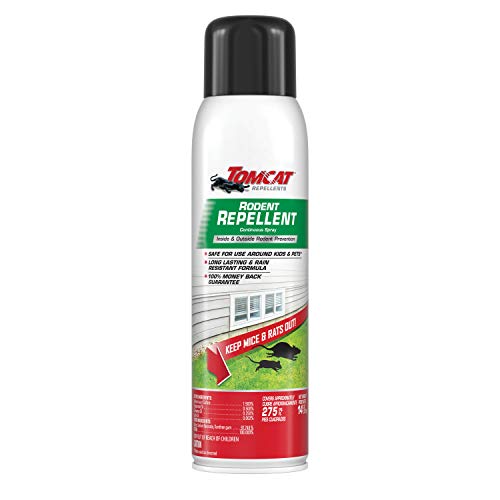
The 14-ounce continuous-spray format is the smallest and most compact option in this group. Tomcat says the cinnamon, garlic and peppermint oil formula is intended to deter rats and mice indoors and outdoors, is rain-resistant, and should be reapplied every 30 days. The maker says it is safe around children and pets when used as directed. This can suits a small application area or limited storage space. Its main limitation is volume: households treating many entry points may prefer one of the larger ready-to-use containers.
Bottom line: Choose this for a compact format and a smaller treatment area.
How to choose a Tomcat rodent repellent spray
Choose by application format and the amount of area you plan to treat, not by the oil blend, which is shared across these options. The 14-ounce can is the compact format; the ready-to-use containers hold 1.33 gallons or 2 gallons combined. Rodent repellents are one layer of prevention: close gaps with durable materials and remove food and water sources so rodents have fewer ways to enter and fewer reasons to stay. A mouse can pass through a gap about 1/4 inch wide, so inspect around pipes, doors and vents for openings at least that size. If you need to cover several distinct areas, the larger combined volume may be more practical; for one small area, a compact can avoids storing a larger container.
Where to apply rodent repellent spray
Apply only to the locations and surfaces allowed by the product label; indoor and outdoor use does not mean every surface or room is appropriate. Rodents commonly use building edges and utility penetrations as travel routes, so inspect door thresholds, pipe openings, vents and cracks before choosing application points. Exclusion is more durable than scent deterrence: seal openings with suitable materials and repair damaged screens or door sweeps rather than relying on repeated spraying alone. Keep the container and treated areas away from food, dishes and food-preparation surfaces unless the label expressly permits those uses. When children or pets are present, follow the label’s directions for application and access; the product claim of safe use is conditional on following those directions.
Tomcat spray formats and treatment needs
Match the format to the job: a continuous-spray can is compact, while ready-to-use containers hold more volume for repeated or broader applications. These products share a cinnamon, garlic and peppermint oil blend, so the main buying difference is quantity and dispensing format rather than a different listed active blend. Reapplication is part of the plan: the maker calls for repeating treatment every 30 days, and rain-resistant does not mean permanent or maintenance-free. Use this quick guide to narrow the format, then base the amount you apply on the package label.
| Need | Format to consider |
|---|---|
| Compact container | 14-ounce continuous-spray can |
| One larger ready-to-use container | 1.33-gallon container with wand |
| Most combined volume | Two 1-gallon ready-to-use containers |
Rodent spray safety and prevention
Use pesticide products according to their label, including directions for where to spray and when people or pets may re-enter treated areas. Never transfer a repellent into a food or drink container, and store it in its original packaging away from children and pets. A repellent does not remove rodents already inside, close entry holes or replace food cleanup; pair prevention with sealing openings and storing food in closed containers. For a gap around 1/4 inch or wider, investigate and seal it rather than assuming a spray barrier will stop entry. If rodent activity continues indoors, identify the entry route and consider appropriate trapping or professional pest-control help.
Frequently Asked Questions
How often should Tomcat rodent spray be reapplied?
Tomcat calls for reapplication every 30 days for these options. Rain-resistant does not mean that treatment lasts indefinitely, so keep the label’s interval in mind when planning ongoing use.
Can I use Tomcat rodent repellent around pets?
The maker says the 14-ounce can and two-gallon pack are safe around children and pets when used as directed. Follow the specific label for application, storage and access to treated areas.
What size gap can a mouse squeeze through?
A mouse can fit through an opening about 1/4 inch wide. Inspect around pipes, doors and vents for gaps that size or larger and seal entry points instead of relying on repellent alone.
Does rain-resistant rodent spray need reapplication?
Yes; Tomcat specifies reapplication every 30 days for these sprays. Rain resistance does not remove the need to follow the label’s repeat-treatment schedule.
Will repellent spray remove rodents already inside?
Repellent spray is intended to discourage rodent entry, nesting and foraging, not to remove rodents already inside a building. Seal entry holes, remove accessible food and water, and use appropriate control measures for an existing infestation.