
UV Protectant Spray for Outdoor Decor: 3 Options

SUNGUARD UV Protectant, 2-Pack is the closest match for outdoor decor, with UV inhibitors and coverage of 25 square feet per can on nonporous surfaces. Choose UV Protection Spray, Matte Finish for a matte finish on materials such as vinyl or plastic, or Scotchgard Outdoor Sun & Water Shield when the target is outdoor fabric and water repellency.
These sprays are surface coatings or treatments, not substitutes for checking material compatibility; test an inconspicuous spot before treating a visible area.
We earn a commission if you buy through links on this page. As an Amazon Associate I earn from qualifying purchases. Products are compared on manufacturer specifications, not hands-on testing.
- Best overall: SUNGUARD UV Protectant, 2-Pack – Made for garden decor across materials including resin, wood, metal, plastic, and stone.
- Best for a matte finish: UV Protection Spray, Matte Finish – Designed for outdoor surfaces including vinyl, rubber, PVC, plastic, fiberglass, and metal.
- Best for outdoor fabric: Scotchgard Outdoor Sun & Water Shield – Combines water repellency with protection against UVA and UVB rays for outdoor gear and patio furniture.
| Product | Best for | Intended surface | Finish | Shop |
|---|---|---|---|---|
| SUNGUARD UV Protectant, 2-Pack | Mixed-material decor | Garden decor and multiple materials | Clear semi-gloss | Check Price on Amazon |
| UV Protection Spray, Matte Finish | Matte outdoor surfaces | Vinyl, rubber, PVC, plastic, fiberglass | Matte | Check Price on Amazon |
| Scotchgard Outdoor Sun & Water Shield | Outdoor fabric | Outdoor gear and patio furniture fabric | Dries clean and odorless | Check Price on Amazon |
UV protectant spray for outdoor decor
Match the treatment to the surface first, then compare coverage and the finish it leaves.
SUNGUARD UV Protectant, 2-Pack

SUNGUARD UV Protectant, 2-Pack is the broadest match for garden ornaments and furniture made from materials such as resin, wood, cement, metal, plastic, fiberglass, composite, ceramic, acrylic, and stone. The maker says its UV inhibitors help protect against sun-related fading, peeling, and cracking. Each can covers 25 square feet on nonporous surfaces, and the finish is clear semi-gloss. The maker says it dries to the touch in 15 minutes or less. This is a two-can pack; coverage is only given for nonporous surfaces, so buyers treating porous pieces should test a small area and plan around the actual surface.
Bottom line: Choose this for varied garden decor when a clear semi-gloss finish suits the piece.
UV Protection Spray, Matte Finish
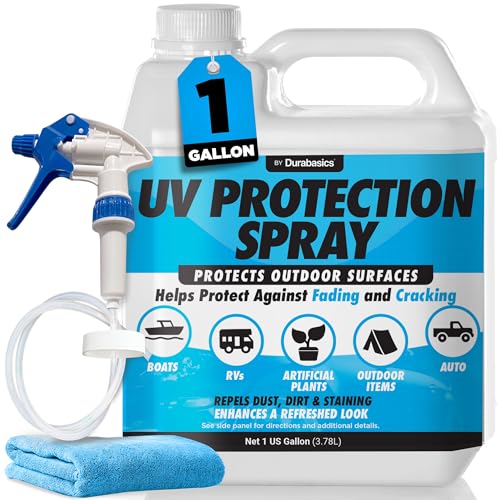
UV Protection Spray, Matte Finish stands apart with a matte, non-greasy finish and a clean-spray-wipe application approach. The maker says it helps reduce fading and cracking on vinyl, rubber, and plastic, and lists uses that include artificial plants, boats, RVs, and patio sets. Its compatible-material range also includes PVC, fiberglass, and metal. Choose it when avoiding a glossy look is important or the decor is an artificial plant. The size measurements describe a package rather than treatment yield, so they do not establish how much surface one application covers.
Bottom line: Pick this when your outdoor item needs a matte finish and its material is on the compatible list.
Scotchgard Outdoor Sun & Water Shield

Scotchgard Outdoor Sun & Water Shield is the fabric-focused alternative rather than a general hard-surface decor treatment. The maker says this 10.5-ounce spray repels water and protects outdoor gear and patio furniture fabric against UVA and UVB rays; it also says the spray dries clean and odorless. That makes it a better fit for fabric cushions or gear than for statues, stone, or painted ornaments. The claims do not give a coverage area, so it is difficult to estimate can count for a large patio set. Confirm the fabric care label allows a topical treatment before applying.
Bottom line: Choose this for outdoor fabric when water repellency matters alongside sun protection.
How to choose UV protectant spray for outdoor decor
Start with the decor material and the finish you want; a treatment made for fabric is not interchangeable with one intended for hard surfaces. UV absorbers can take in ultraviolet energy and release it as heat, while light-stabilizing additives can interrupt some of the chemical reactions that cause fading and embrittlement. Product formulas differ, so match the maker’s materials rather than assuming one spray suits every surface. For example, choose a fabric treatment for cushions, and choose a hard-surface formula for a resin statue only when resin is included. If you want no sheen, select a matte product; if a slight sheen works, a clear semi-gloss coating may suit the decor.
Coverage is another practical decision: SUNGUARD UV Protectant, 2-Pack gives 25 square feet per can on nonporous surfaces, which lets you estimate for a measured area. For an area larger than one can’s coverage, plan for more than one can rather than stretching the coat thin.
Preparing decor before spraying
Clean, dry surfaces give a spray treatment a better chance of adhering evenly; dirt, oils, and moisture can interfere with coating contact. Allow a freshly cleaned piece to dry completely, including crevices and joints, before spraying. Test a hidden patch first, especially on painted, stained, or porous decor, because a clear coating can change sheen even when it does not add color. Apply a light, even pass rather than saturating a small area, and follow the product’s label for distance, coat count, and drying conditions. Outdoor airflow helps disperse spray, but wind can carry mist onto nearby plants, windows, or cars, so shield surrounding surfaces and avoid spraying in gusty conditions.
Aerosol sprays can contain flammable propellants; keep them away from flames, pilot lights, and sparks, and use them in open air or a well-ventilated area. Wear eye protection and avoid breathing the mist.
Choosing between hard-surface and fabric sprays
Hard-surface protectants and fabric treatments solve different problems: the former are aimed at materials such as plastic, metal, or stone, while the latter are formulated for textile surfaces and may add water repellency. A fabric product can change a textile’s feel or appearance, so test a concealed patch and check the fabric’s care guidance before treating cushions. A semi-gloss coating can increase visible sheen on an ornament; a matte formula is the more suitable direction when a low-sheen appearance matters. Neither finish choice alone tells you whether the product is compatible with a particular substrate.
Use the table as a starting point, then verify the material and finish on the product label before treating a whole item.
| Need | Product direction | Decision point |
|---|---|---|
| Mixed-material garden decor | Hard-surface UV protectant | Check the material list and finish |
| Outdoor fabric exposed to rain | Fabric water-and-sun treatment | Check fabric care guidance |
| Matte appearance on outdoor surfaces | Matte finish protectant | Confirm the surface is compatible |
Maintaining outdoor decor protection
Sunlight, rain, abrasion, and cleaning gradually wear down surface treatments, so inspect decor periodically for dulling, uneven sheen, or renewed fading. There is no single reliable reapplication interval for every formula and material; use the package’s recoat guidance and reassess after heavy weather or frequent washing. Gentle cleaning helps avoid removing a coating prematurely, while abrasive pads can scratch finishes and expose the underlying material. Treating a test patch again before a full refresh can reveal whether the existing surface still accepts the spray evenly.
Moveable decor benefits from seasonal storage in a dry, shaded place, which reduces direct UV and weather exposure. For fixed pieces, shade or a protective cover can limit exposure, but ensure fabric covers do not trap moisture against the object.
Frequently Asked Questions
How long should outdoor decor dry after spraying?
The maker says SUNGUARD UV Protectant, 2-Pack dries to the touch in 15 minutes or less. Touch-dry does not necessarily mean fully cured, so use the label’s timing before handling or exposing the item to weather.
Can I use fabric sun shield on a garden statue?
A fabric treatment is intended for textiles such as outdoor gear and patio furniture fabric, not as a general statue coating. Choose a surface treatment whose material list includes the statue’s substrate.
Should I spray outdoor decor in direct sunlight?
Avoid applying a coating to a hot surface or during strong wind, which can make coverage uneven or carry mist away. Shade the item and use calm, ventilated conditions; follow the label’s temperature limits.
How often should outdoor decor spray be reapplied?
Reapplication timing depends on the formula, surface, weather, and cleaning, so there is no universal interval. Inspect after heavy rain or repeated washing and use the product label’s recoat guidance.