
Trader Joe’s Fruit Wash: Ingredients and Alternatives

Trader Joe’s Organic Fruit & Vegetable Wash is the Trader Joe’s fruit wash match, with a 16-fluid-ounce bottle and an ingredient blend that includes distilled white vinegar and grapefruit seed oil. Choose another option if you need a different bottle size or specifically want an unscented spray from another brand.
Produce wash is a cleanser marketed for fruits and vegetables; FDA guidance recommends rinsing produce under running water rather than using commercial produce washes.
We earn a commission if you buy through links on this page. As an Amazon Associate I earn from qualifying purchases. Products are compared on manufacturer specifications, not hands-on testing.
- Best overall: Trader Joe’s Organic Fruit & Vegetable Wash – It is the Trader Joe’s wash named in the search, in a 16-fluid-ounce bottle.
- Best for a spray format: Veggie Wash Spray, 16 fl oz, 2-pack – The 16-fluid-ounce spray is described for spraying firm produce or soaking soft and leafy produce.
- Best for a larger bottle: ATTITUDE Fruit & Vegetable Wash, 27 fl oz – Its 27.1-fluid-ounce bottle is the largest single bottle among these options.
| Product | Best for | Bottle size | Pack count | Formula notes | Shop |
|---|---|---|---|---|---|
| Trader Joe’s Organic Fruit & Vegetable Wash | Trader Joe’s match | 16 fl oz | 1 | Vinegar, grapefruit seed oil | Check Price on Amazon |
| Organic Fruit & Vegetable Wash, 16 fl oz | Similar formula | 16 fl oz | 1 | Vinegar, grapefruit seed oil | Check Price on Amazon |
| Veggie Wash Spray, 16 fl oz, 2-pack | Spray application | 16 fl oz | 2 | Vegetable-derived ingredients | Check Price on Amazon |
| Environne Purely Essential Produce Wash, 16 fl oz | Multi-surface use | 16 fl oz | 3 | Plant-based cleansers | Check Price on Amazon |
| ATTITUDE Fruit & Vegetable Wash, 27 fl oz | Larger bottle | 27.1 fl oz | 1 | 98% naturally derived | Check Price on Amazon |
Trader Joe’s Fruit Wash and Alternatives
Compare the named wash with related produce cleaners by bottle size, formula and format.
Trader Joe’s Organic Fruit & Vegetable Wash

This is the Trader Joe’s match: a 16-fluid-ounce organic fruit and vegetable wash with water, glycerin, distilled white vinegar, quillaja saponaria wood extract and grapefruit seed oil; the starred ingredients are organic. It suits shoppers looking for the specific Trader Joe’s formula rather than a different brand or a larger bottle. The ingredient list distinguishes it from sprays whose specifications emphasize unscented use or other plant-derived ingredients. A produce wash does not replace a thorough rinse: FDA guidance recommends rinsing fruits and vegetables under running water.
Bottom line: Pick this if you want the Trader Joe’s formula and a 16-fluid-ounce bottle.
Organic Fruit & Vegetable Wash, 16 fl oz
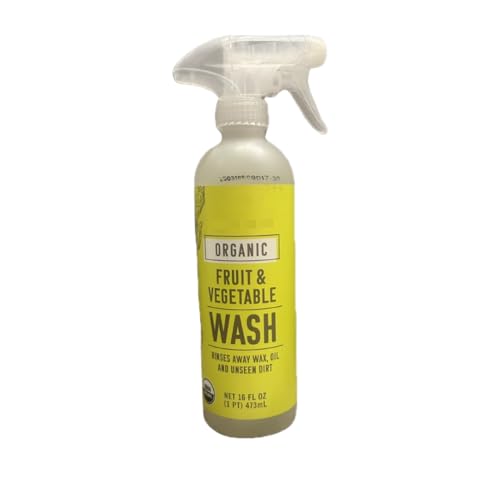
This 16-fluid-ounce wash has the same ingredient blend as Trader Joe’s Organic Fruit & Vegetable Wash, but its name does not identify it as the Trader Joe’s product. It may suit someone comparing a similar formula while prioritizing the ingredient combination of water, glycerin, distilled white vinegar, quillaja saponaria wood extract and grapefruit seed oil. Either way, wash produce under running water before eating; a cleanser is not a substitute for that step.
Bottom line: Choose this if the similar ingredient blend matters more than the Trader Joe’s name.
Veggie Wash Spray, 16 fl oz, 2-pack
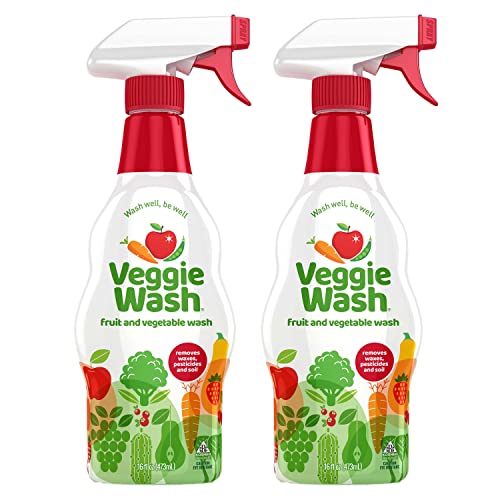
This option separates itself with a spray format and a two-bottle pack, rather than the single-bottle formula in Trader Joe’s Organic Fruit & Vegetable Wash. Its specifications describe vegetable-derived ingredients, no parabens, no preservatives and no harsh surfactants, and say it is intended for spraying firm produce or soaking soft and leafy produce. Its use includes rinsing after spraying or soaking, so plan to rinse thoroughly; no produce wash should replace running-water rinsing.
Bottom line: Pick this if you want a spray-and-soak option in a two-bottle pack.
Environne Purely Essential Produce Wash, 16 fl oz

This Environne wash is positioned for uses beyond produce, including makeup brushes, cutting boards, plastic-container stains, windows and decks, which makes it distinct from the single-purpose options. The product name specifies three 16-fluid-ounce bottles, and its features identify plant-based cleansers along with vegan, gluten-free and cruelty-free credentials. It may suit a household seeking one cleaner for several listed tasks. The specifications do not explain dilution or surface-specific directions, so verify the product label before using it on non-produce surfaces.
Bottom line: Choose this if you want a produce wash also presented for other cleaning tasks.
ATTITUDE Fruit & Vegetable Wash, 27 fl oz

This ATTITUDE wash offers the largest single bottle here at 27.1 fluid ounces, compared with the 16-fluid-ounce choices. Its features call it unscented and fragrance-free, describe the formula as 98% naturally derived, and give a spray, gentle rub or 30-second wait followed by a thorough rinse as use options. That combination may suit a buyer looking for a larger bottle and an unscented formula. The directions still call for rinsing, and FDA guidance favors running-water rinsing for produce.
Bottom line: Pick this if a larger, unscented bottle is your priority.
How to choose a fruit and vegetable wash
Start with the produce and the application format, but make running water the essential rinse step. FDA guidance recommends washing produce under running water and does not recommend soap, detergent or commercial produce washes. For firm produce such as melons or cucumbers, rub the surface under running water; a clean produce brush can help with sturdy rinds. For leafy greens, separate leaves and rinse them individually. A spray can make surface application convenient, while a soak requires enough water to cover the produce; neither approach removes the need to rinse. Choose a formula only if its ingredients or scent profile matter to you, and use the product label for any directions that differ by produce type.
How to rinse produce safely
Rinse fruits and vegetables before cutting, peeling or eating them, because a knife can carry surface dirt into the edible portion. Wash hands with soap and water for 20 seconds before handling produce, and use clean utensils and cutting boards. Remove bruised or damaged areas with a clean knife after rinsing. Keep raw produce separate from raw meat, poultry and seafood to reduce cross-contamination; do not use the same unwashed board for both. Avoid washing produce with household soap, dish detergent or bleach, which are not recommended for food. If you use a produce wash, follow its label and rinse under running water afterward.
Produce wash types and formats compared
Format determines how a wash is applied, not whether rinsing can be skipped. Spray products can be applied directly to produce, while a soaking method can cover leafy or soft produce; wash and rinse one batch at a time instead of reusing dirty water. The specifications here include both spray and general wash formats, as well as a product promoted for other household surfaces. A multi-purpose claim is not a substitute for checking the label for surface directions. FDA recommends water under a running tap as the standard produce-cleaning method, so use the table as a product-format comparison rather than a safety ranking.
| Need | Format to consider | Keep in mind |
|---|---|---|
| Direct application | Spray | Rinse thoroughly afterward |
| Leafy or soft produce | Soak, if the product directs it | Rinse with clean running water |
| Mixed household cleaning uses | Multi-purpose product | Verify surface-specific directions |
| Basic produce cleaning | Running water | FDA recommends this method |
Common produce-washing mistakes
Washing produce before storing it can leave excess moisture that encourages spoilage; wash it just before preparation unless the product’s storage directions say otherwise. Do not soak different batches in the same water, since soil can transfer between items. Avoid using hot water or harsh household cleaners on produce; running potable water and gentle rubbing are the practical baseline. A rinse is also important after any produce wash, because a cleanser’s presence does not mean it should remain on food. For berries and other delicate items, use gentle handling to limit bruising, and discard visibly damaged pieces before serving.
Frequently Asked Questions
Should you rinse fruit wash off before eating?
Yes. Rinse produce thoroughly under running water after using a wash, then dry it with a clean towel or paper towel. FDA recommends running-water rinsing rather than commercial produce washes.
Is Trader Joe’s fruit wash the same as vinegar?
No. The formula combines water, glycerin, distilled white vinegar, quillaja saponaria wood extract and grapefruit seed oil. Vinegar is one ingredient in the blend, not the whole formula.
Should you wash produce before putting it away?
Wash produce just before preparing or eating it, since added moisture can encourage spoilage during storage. Keep cut produce refrigerated within 2 hours, or within 1 hour when the temperature is above 90°F.
Can produce wash remove all pesticides?
No wash should be treated as removing all pesticide residues. Rinse produce under running water and rub firm surfaces; peel or trim when appropriate, while recognizing that washing does not guarantee complete removal.
Do leafy greens need a different rinse?
Separate the leaves and rinse each under running water to remove soil from folds and surfaces. For prewashed packaged greens labeled ready to eat, additional washing is generally unnecessary and can introduce contamination if the sink or hands are unclean.