
Transducer Mounts for Kayaks: 4 Options Compared

For a kayak with a gear track, Brocraft Kayak Track Transducer Arm is the closest match because its arm telescopes from 17 to 25 inches and swivels 360 degrees. Choose a hull-replacement bracket or deck-mount setup instead if your kayak lacks a compatible track or uses a built-in transducer shoe.
A transducer mount holds the sonar sensor in position in the water; placement and compatibility matter as much as the arm style.
We earn a commission if you buy through links on this page. As an Amazon Associate I earn from qualifying purchases. Products are compared on manufacturer specifications, not hands-on testing.
- Best overall: Brocraft Kayak Track Transducer Arm – Its 17- to 25-inch telescoping arm fits kayak track mounting and swivels 360 degrees.
- Best for quick stowing: VINmounts Kayak Fish Finder Mount – Its 11.42- to 17.91-inch arm pivots up out of the water.
| Product | Best for | Mount style | Arm reach | Shop |
|---|---|---|---|---|
| Brocraft Kayak Track Transducer Arm | Track-mounted kayaks | Kayak track | 17–25 in. | Check Price on Amazon |
| VINmounts Kayak Fish Finder Mount | Quick-stow setup | Kayak rack | 11.42–17.91 in. | Check Price on Amazon |
| YakAttack CellBlok with Switchblade Arm | Battery-and-sonar rig | Track-mounted | Adjustable; length not given | Check Price on Amazon |
| Brocraft Deck-Mount Transducer Arm | Deck-mount boats | Deck mount | 17–25 in. | Check Price on Amazon |
Transducer Mounts for Kayaks
Start with the kayak attachment point, then match arm reach and transducer mounting pattern to your setup.
Brocraft Kayak Track Transducer Arm

The track attachment and 17- to 25-inch telescoping reach distinguish this arm from deck- and hull-mounted options. Its marine-grade aluminum arm swivels 360 degrees, and a slip disc provides micro-adjustments. That combination suits a kayak track where you want to move the sensor aside or fine-tune its position. The reach is the key limitation: measure from the track to the desired sensor position before choosing it, especially if your kayak has high freeboard or the track sits far from the hull. The product is intended for kayak track mounting.
Bottom line: Choose this if your kayak has a compatible track and the 17- to 25-inch reach suits your placement.
VINmounts Kayak Fish Finder Mount

The quick-stow arm sets this mount apart: it extends from 11.42 to 17.91 inches and pivots up out of the water. That feature is useful for launch and beaching transitions, when a deployed sensor could encounter shallow ground. The product pairs a transducer arm with a fish finder mount and is described as compatible with Garmin, Lowrance, and Humminbird. Its shorter reach than Brocraft Kayak Track Transducer Arm may suit kayaks with less distance between the attachment point and water, but measure your setup before selecting it. The compatibility information names brands, not specific transducer models.
Bottom line: Pick this for a kayak-rack setup where quick arm stowage matters.
YakAttack CellBlok with Switchblade Arm
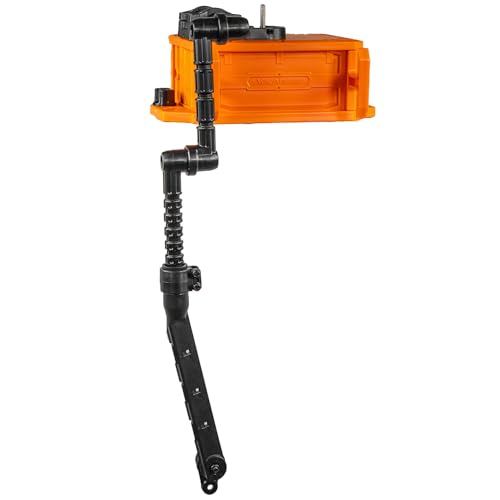
The integrated battery box makes this more than a standalone transducer arm: the CellBlok and SwitchBlade are packaged as a combined kayak fish finder setup. The track-mounted design attaches without drilling to YakAttack GearTrac, MightyMounts, and most kayak tracks from RAM, Scotty, and YakGear. The CellBlok weighs 1.4 pounds and is designed to house 10Ah batteries; the complete product weighs 2.65 pounds. Choose it when combining battery storage and sensor deployment matters more than a specified arm reach.
Bottom line: Choose this if you want a track-mounted battery box and adjustable transducer arm together.
Brocraft Deck-Mount Transducer Arm

The deck-mount base distinguishes this Brocraft arm from the kayak-track model. Its 17- to 25-inch telescoping marine-grade aluminum arm swivels 360 degrees, and the slip disc allows micro-adjustments. The base uses plastic fibre-reinforced engineering nylon. It is described for kayaks as well as powerboats, canoes, pontoons, and inflatable boats, so it can suit a kayak rig that needs a deck attachment rather than a track attachment. The important constraint is the base: confirm the deck offers a suitable mounting surface and that the arm can reach the intended sensor position before choosing this style.
Bottom line: Select this when a deck attachment works better than a kayak track.
How to Choose a Kayak Transducer Mount
Choose the attachment style first: track, deck, or a replacement for a kayak’s factory transducer shoe. Track arms can be repositioned along a compatible rail; deck mounts need a suitable fixed surface; shoe replacements rely on the kayak’s existing hardware pattern. Measure the distance from the mounting point to the intended sensor location, then compare it with the arm’s reach. For example, an arm that extends 17 to 25 inches will not solve a 26-inch gap. Also check the transducer’s bolt pattern and shape, because compatibility with a fish finder brand alone does not guarantee a matching mount.
Keep the sensor’s face level and positioned in clean water flow. Hull turbulence can interfere with sonar readings, so avoid placing a transducer behind features that disrupt water flow.
Where to Position a Kayak Transducer
Position a transducer so its sensing face remains in the water while the kayak is moving, with a clear path beneath and to the sides for the sonar beam. A sensor that sits too high may lose water contact; one placed where water churns can produce unreliable readings. Side-imaging sensors need an unobstructed view to each side, so keep the arm, hull, and other gear out of that path. Set the transducer face level with the water surface unless the sonar maker specifies another orientation for that model.
Before drilling or tightening a fixed base, temporarily position the sensor and inspect its clearance through the kayak’s normal range of movement. Cable slack should allow an arm to pivot or stow without pulling on the transducer connector.
Track, Deck, and Hull-Shoe Mounts Compared
Track mounts favor adjustability, deck mounts favor a fixed installation surface, and hull-shoe replacements fit a narrower combination of kayak and sensor. Use this guide to match the attachment method to the kayak rather than choosing by the arm alone.
| Mount type | Best fit | Check before choosing |
|---|---|---|
| Track arm | Kayaks with compatible gear track | Track compatibility and arm reach |
| Deck mount | Kayaks with a suitable deck surface | Base attachment and sensor clearance |
| Hull-shoe replacement | Specific kayak shoe and bolt pattern | Kayak model and transducer bolt pattern |
Brand compatibility is not the same as a fit guarantee: transducer housings and bolt patterns differ within a brand. A replacement shoe may also require removing factory hardware, so verify that the kayak’s shoe and mounting screws match before installation.
Stowing and Securing a Transducer Arm
Stow or pivot a deployed transducer arm out of the water before beaching, launching in shallow water, or passing over rocks. A sensor positioned below the hull is exposed to impacts, and an arm can transfer force into the mount or cable. Folding or pivoting arms make this easier, while fixed arrangements need an accessible way to lift the sensor clear.
Route the cable with enough slack for the arm’s full movement, but secure loose sections so they do not snag paddles or gear. After positioning an adjustable arm, confirm the sensor remains aligned and its cable does not tighten at either end of the swivel range. Recheck fasteners after the first outing and periodically thereafter, especially on mounts that are moved often.
Frequently Asked Questions
How deep should a kayak transducer sit?
Keep the sensing face in contact with water while underway, but avoid placing the sensor unnecessarily far below the hull where it can strike obstacles. The right position depends on the hull, sensor shape, and mount; test at low speed and adjust if water contact or sonar readings are inconsistent.
Can a fish finder transducer mount on a kayak track?
Yes, if the arm and track interface are compatible. Track mounts are adjustable, but measure the gap from the rail to the sensor position and compare it with the arm’s reach before mounting.
Does a transducer need to be level on a kayak?
Most transducer faces should be aligned level with the water surface for a clear sonar return. Some models require a particular orientation, so use the sensor maker’s mounting orientation when it differs from a level face.
Will one transducer mount fit every fish finder?
No; mounts can depend on the transducer’s bolt pattern, housing shape, and kayak attachment point. A named fish finder brand does not establish that every sensor model from that brand will fit.
When should I lift a kayak transducer arm?
Lift or stow the arm before beaching, launching in shallow water, or crossing rocky shallows. A transducer mounted below the hull can take an impact, and a cable routed too tightly can snag or pull when the arm moves.