
Tulip i-Cord Knitter Machine: Models Compared by Use

The Tulip I-Cord Knitter suits most crafters seeking a manual tool, with a hand crank and a defined hook-and-looper sequence for making cords. Choose an electric alternative if you want powered operation, or a four-needle manual model if compatibility with a wider range of yarn thicknesses matters more.
We earn a commission if you buy through links on this page. As an Amazon Associate I earn from qualifying purchases. Products are compared on manufacturer specifications, not hands-on testing.
- Best overall: Tulip I-Cord Knitter – A hand-crank process and step-by-step hook-and-looper guidance make it the clearest manual option.
- Best for powered knitting: Caydo F1 Electric iCord Knitter – The motorized design is described as automatically knitting yarn into cords.
- Best for varied yarn: Caydo F1 Lite 4-Needle Manual Knitter – Its four-needle setup is designed for a wider range of yarn thicknesses.
| Product | Best for | Operation | Dimensions (L × W × H) | Weight | Shop |
|---|---|---|---|---|---|
| Tulip I-Cord Knitter | Manual cord making | Hand crank | 11.0 × 5.9 × 3.5 in | 0.71 lb | Check Price on Amazon |
| Tulip i-Cord Knitter Machine – Wool | Tulip name match | Not indicated | 36.1 × 54 × 0.5 in | 0.65 lb | Check Price on Amazon |
| Caydo F1 Electric iCord Knitter | Powered cord making | Electric motor | 8.9 × 7.6 × 3.2 in | 1.57 lb | Check Price on Amazon |
| Yocrefun Electric I-Cord Maker | Hands-free operation | Electric, one-press operation | 4 × 2 × 5 in | — | Check Price on Amazon |
| Caydo F1 Lite 4-Needle Manual Knitter | Wider yarn range | Manual, 4 needles | 8 × 6.8 × 3.3 in | 1.10 lb | Check Price on Amazon |
Tulip i-cord knitter machines and alternatives
Compare the manual Tulip tools with powered cord makers and a four-needle alternative by operation and stated size.
Tulip I-Cord Knitter

The Tulip I-Cord Knitter is the direct match for a manual i-cord tool, with a clockwise handle and a hook-and-looper sequence. The process starts when the first hook catches the yarn, then uses a crochet hook to slide yarn behind the second looper before continuing rotation. Its compact stated dimensions are 11.0 × 5.9 × 3.5 inches. Choose it if you want to control the knitting by hand and are comfortable managing the yarn sequence. The limitation is that the maker must turn the handle and guide the yarn rather than relying on a motor.
Bottom line: Pick this if you prefer a hand-cranked tool and can guide yarn through the looper sequence.
Tulip i-Cord Knitter Machine – Wool

The Tulip i-Cord Knitter Machine – Wool is another Tulip-named option, but its maker does not establish an operating mechanism. The dimensions are unusually broad at 36.1 × 54 × 0.5 inches, so do not assume they describe a conventional handheld tool. Its weight is 0.65 pound. This may suit a shopper matching the wool-labelled Tulip name, but it is a less clear choice than a model with a crank or motor. Confirm the physical product size and operation before ordering if those decide whether it will fit your workspace or workflow.
Bottom line: Choose this only if the wool-labelled Tulip version is the exact item you seek and its size and operation are confirmed.
Caydo F1 Electric iCord Knitter

The Caydo F1 stands apart from the manual Tulip tool through electric, automatic cord knitting. Caydo says its custom motor produces cords faster than traditional manual methods and can handle a larger yarn capacity; the maker does not quantify either difference. At 8.9 × 7.6 × 3.2 inches and 1.57 pounds, it is a portable electric alternative for crafters who want to reduce repetitive hand cranking. The tradeoff is that powered operation is its defining feature, so it is not the straightforward choice for someone specifically seeking a manual Tulip knitter.
Bottom line: Pick this if powered, automatic cord making matters more than a manual Tulip tool.
Yocrefun Electric I-Cord Maker
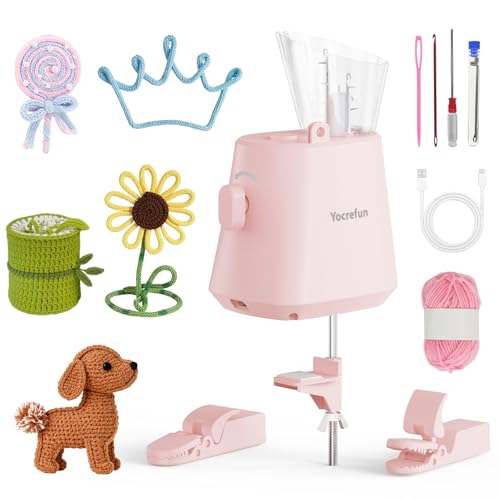
The Yocrefun differs by offering one-press, hands-free electric operation and includes two weighted clips for yarn tension. The maker says its automatic rotation produces cords quickly and consistently; no output rate is given. This option suits crafters who want powered operation and value the included tension clips. It is less suitable for someone who wants the manual handle and yarn-guiding sequence of the Tulip tool.
Bottom line: Pick this for one-press electric operation with two weighted tension clips.
Caydo F1 Lite 4-Needle Manual Knitter
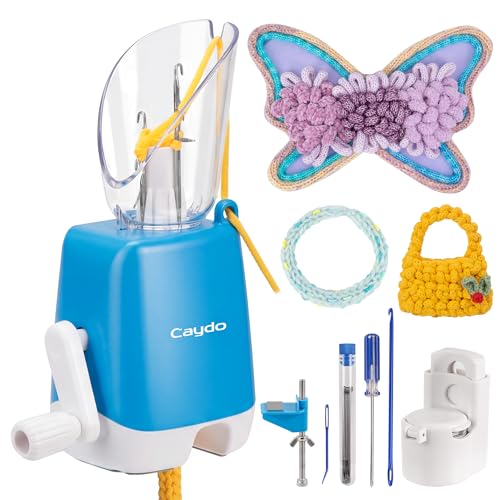
The Caydo F1 Lite is a manual four-needle alternative, distinguished by its wider yarn-thickness compatibility and bead-bracelet use. The maker says it creates consistent stitches, but gives no thickness range or measured speed. Its 8 × 6.8 × 3.3-inch body weighs 1.10 pounds. This is a reasonable fit for crafters exploring yarn types beyond a basic cord project or adding beads to bracelet crafts. The limitation is that “wider” is not a measurable range here, so confirm the intended yarn thickness will work before ordering.
Bottom line: Pick this for a manual four-needle tool when broader yarn compatibility is the priority.
How to choose an i-cord knitter
Choose by operation first: hand-cranked tools require continuous turning and yarn guidance, while electric tools automate rotation. A manual four-needle design can offer a different yarn range, but check that the intended yarn thickness is compatible before committing. I-cord is a narrow knitted tube commonly used for handles, edging, ties and decorative details; it is not the same as a flat knitted strip. For frequent long cords, powered operation may reduce repetitive turning, but automatic operation does not remove the need to feed yarn evenly. For small, controlled projects, manual operation gives direct control over pace. Compare dimensions as well as the mechanism, since tools with similar names can have very different footprints.
Manual and electric i-cord makers compared
Manual makers rely on hand movement, while electric models use a motor or automatic rotation. The Tulip-style crank sequence involves hooks and loopers: the yarn must catch successive hooks as the handle turns. Electric operation can reduce repeated cranking, but the yarn still needs a steady feed and proper tension. Use this quick comparison to match the mechanism to your crafting routine.
| Need | Suitable mechanism | Tradeoff |
|---|---|---|
| Control each turn | Hand crank | Requires ongoing hand movement |
| Reduce repetitive turning | Electric rotation | Requires powered operation |
| Try different yarn thicknesses | Four-needle manual design | Verify compatibility with the chosen yarn |
Do not treat speed claims as a substitute for compatibility: a machine still has to accept the yarn and produce the cord size the project needs.
Yarn feed and tension for even cords
Even i-cord formation depends on consistent yarn feed and loops seated correctly on the needles or loopers. Feed yarn without pulling hard; excessive tension can make stitches tight and difficult to move, while slack feed can produce loose or uneven cord. Begin with a short test cord using the same yarn intended for the project, then inspect whether the stitches look uniform before making a longer length. Weighted clips can help maintain tension on some electric tools, but they do not guarantee a particular result. Stop if loops fail to catch or yarn snags, and reset the yarn path rather than forcing the mechanism. Keep fingers clear of moving parts on motorized machines.
Plan cord length and project fit
Make a short sample before calculating the full cord length, because the finished cord can differ from the length of yarn consumed. For a handle or trim, measure the finished path on the object and allow extra length for attachment and finishing; the extra amount depends on how the ends are secured. A cord maker’s outer dimensions also do not tell you the diameter or length of cord it can produce. If a project depends on a particular cord thickness, verify that specification before choosing a machine. Keep the machine on a stable surface or grip a handheld tool firmly while turning, and avoid pulling a newly formed cord hard enough to disturb the stitches.
Frequently Asked Questions
What is an i-cord used for in knitting projects?
An i-cord is a narrow knitted tube often used for ties, handles, edging and decorative details. Measure the finished path on the project and make a sample before producing a long length.
Can an i-cord knitting machine use any yarn?
No; yarn thickness must suit the machine’s needle or looper arrangement. Test a short length first, and verify compatibility when a project depends on a specific yarn weight.
Why does an i-cord come out uneven?
Uneven yarn feed or loops that miss a hook can produce inconsistent stitches. Keep the yarn moving steadily, check that each loop is seated, and pause to reset rather than forcing a snag.
Do electric i-cord makers need hand tension?
Yes, electric rotation does not eliminate yarn-feed control. Maintain even tension, and use weighted clips when included and appropriate for the tool.
How much extra cord should I make for a handle?
Measure the handle path and add enough length to attach and finish both ends. Make a short sample first, since yarn consumption and finishing needs vary by cord and project.