
Ultrasonic Mice Repellers: 4 Models Compared

For adjustable sound settings, choose Ultrasonic Mouse Repellent, 3-Mode, which offers three modes, including a 22–35 kHz sweep; the specifications do not establish that any model reliably clears mice. These plug-in devices emit ultrasonic sound, above the range most people hear.
Choose a different approach if mice are already entering or nesting: seal entry points and use appropriate trapping rather than relying on sound alone.
We earn a commission if you buy through links on this page. As an Amazon Associate I earn from qualifying purchases. Products are compared on manufacturer specifications, not hands-on testing.
- Best overall: Ultrasonic Mouse Repellent, 3-Mode – Its three settings include a 22–35 kHz sweep and a steady 25 kHz mode.
- Best for multi-unit coverage: Upgraded Indoor Pest Repeller, 6-Pack – The pack contains six units and lists a 10–65 kHz frequency range.
- Best for branded kit: Bell + Howell Ultrasonic Pest Repeller Kit – The Bell + Howell kit contains three plug-in units.
| Product | Best for | Frequency range | Settings | Pack size | Shop |
|---|---|---|---|---|---|
| Ultrasonic Mouse Repellent, 3-Mode | Adjustable sound modes | 22–35 kHz sweep; 25 kHz steady | 3 modes | 2-pack | Check Price on Amazon |
| Upgraded Indoor Pest Repeller, 6-Pack | Multi-room placement | 10–65 kHz | 3 modes in title | 6-pack | Check Price on Amazon |
| Silent Ultrasonic Pest Repeller, 6-Pack | Multi-frequency option | 10–65 kHz | Multi-frequency conversion | 6-pack | Check Price on Amazon |
| Bell + Howell Ultrasonic Pest Repeller Kit | Three-unit branded kit | — | Mixed ultrasonic frequencies | 3-pack | Check Price on Amazon |
Ultrasonic Mice Repellers Compared
Compare the frequency information and settings each model provides, while treating sound as a supplement rather than a stand-alone mouse-control plan.
Ultrasonic Mouse Repellent, 3-Mode

Three selectable settings distinguish this model: ULTRA sweeps from 22–35 kHz, TRANS uses a steady 25 kHz output, and DUO combines them. It also has a TEST mode with audible sound for checking operation during setup. The product is intended for indoor areas such as garages, attics, basements, kitchens, and pantries, so it suits buyers who want setting choices for a particular room. Its sound output is not evidence that mice will leave; seal openings and address signs of activity directly rather than depending on the device alone.
Bottom line: Pick this if selectable modes matter more than a larger pack.
Upgraded Indoor Pest Repeller, 6-Pack
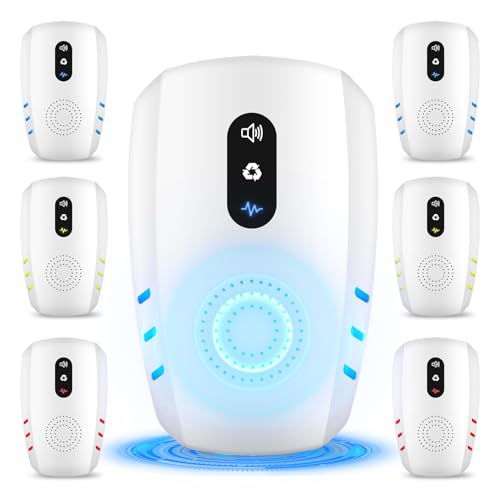
The six-unit pack sets this model apart for buyers considering several indoor locations, and its frequency span is 10–65 kHz. The title also identifies three modes, although their individual settings are not provided. Each unit measures 3.23 inches high, 2.05 inches long, and 1.38 inches wide. This may suit someone seeking multiple plug-in units for a home or office. The broad pest list and frequency span do not demonstrate that mice will be deterred; do not use the devices as a substitute for closing mouse entry points or responding to an infestation.
Bottom line: Choose it when a six-unit pack is the main requirement.
Silent Ultrasonic Pest Repeller, 6-Pack

This model combines a 10–65 kHz conversion range with a six-unit pack, making its frequency span the useful comparison point against devices with specific settings. It is described as a plug-in unit for indoor spaces, including homes, offices, stores, and garages. Its broad claims about household pests do not establish mouse-control results. Use it only as a supplemental measure and prioritize blocking access to food and sealing routes into the building.
Bottom line: Pick this for the multi-frequency approach in a six-pack.
Bell + Howell Ultrasonic Pest Repeller Kit

The Bell + Howell name and a three-unit kit distinguish this option; its specifications describe a mix of ultrasonic frequencies but give no numeric range. Each unit measures 3.5 inches high, 3.2 inches long, and 2 inches wide. It is positioned for rooms such as bedrooms, kitchens, offices, and warehouses, so consider it if those dimensions and a three-unit pack suit the intended placement. Claims that it eradicates rodents are not a guarantee of results. For active mouse problems, pair any supplemental device with exclusion and a direct control plan.
Bottom line: Choose it if a three-unit kit and its dimensions fit your setup.
How to choose an ultrasonic mice repeller
Choose by settings and placement, not by pest-count claims: the products here give different levels of detail about their sound output. Sound above 20 kHz is commonly called ultrasound, but the upper limit of human hearing varies by age and individual, so “ultrasonic” does not mean every person will hear nothing. A frequency range also does not establish coverage, deterrence, or lasting results. Compare the specific controls you can identify: one option has three modes with a 22–35 kHz sweep and steady 25 kHz setting, while other options give a broad range or mixed-frequency description. For a room with active signs of mice, choose exclusion and direct control as the primary plan.
Where to place plug-in mouse repellers
Place a plug-in device where its outlet and intended room use make sense, but do not assume one unit covers a whole home. Sound is blocked or weakened by walls, furniture, and other barriers, so an open line into the area matters more than simply counting rooms. A practical decision rule is to treat each enclosed room as a separate placement area rather than expecting a unit in a hallway to protect rooms behind closed doors. Keep outlets accessible and avoid putting furniture directly in front of the device. For mice, inspect pipe penetrations, door edges, and foundation gaps; mice can pass through openings about 1/4 inch wide, so sealing small gaps matters.
Ultrasonic sound versus mouse exclusion
Ultrasonic devices emit high-frequency sound, while exclusion removes the route mice use to enter; these approaches do different jobs. Research has not established plug-in ultrasonic devices as a dependable stand-alone way to eliminate an infestation, and rodents may become accustomed to repeated stimuli. A mouse can enter through a gap about 1/4 inch wide, so inspect around utility lines, vents, and doors. Use durable materials that mice cannot readily gnaw through to close openings, and store food in sealed containers. The table distinguishes supplemental sound devices from measures that address access or activity; a repeller should not replace the latter when droppings or gnawing are present.
| Approach | Primary role | Use when |
|---|---|---|
| Ultrasonic plug-in | Supplemental sound | You want an additional measure, not sole control |
| Gap sealing | Block entry routes | Openings or gaps are found |
| Traps | Address mouse activity | Signs of an active infestation appear |
Common mistakes with ultrasonic mouse devices
The main mistake is treating a sound-emitting plug-in as proof that mice have left. Droppings, gnawing, and food damage are more useful indicators of continuing activity than whether a device light is on. Another mistake is overlooking small entry gaps: mice can fit through openings around 1/4 inch wide, including gaps around pipes and doors. Do not assume a device works through walls or closed doors; sound does not pass through solid barriers as it does through open air. Keep checking for fresh signs, remove access to food, and close routes in. If activity persists, use an appropriate control method or consult a qualified pest professional.
Frequently Asked Questions
Can ultrasonic repellers get rid of mice by themselves?
They should not be relied on as a stand-alone mouse-control method. Plug-in sound devices have not been established as a dependable way to eliminate an infestation, so seal entry gaps and address active signs directly.
What size gap can a mouse squeeze through?
A mouse can pass through an opening about 1/4 inch wide. Inspect around pipes, vents, doors, and foundations, and close small gaps with durable materials.
Does ultrasonic sound pass through walls?
No, solid walls and closed doors block or weaken the sound, so a plug-in unit should not be expected to cover rooms behind barriers. Consider each enclosed room separately when planning placement.
Can people hear ultrasonic mouse repellers?
Ultrasound generally refers to sound above 20 kHz, beyond the upper limit for most adult hearing. Human hearing varies, however, so the label does not guarantee that every person will find a device inaudible.
What should I do if I still see mouse droppings?
Treat new droppings as a sign that activity may continue, rather than assuming the sound device has worked. Remove food access, seal openings around 1/4 inch and larger, and use an appropriate direct control method.