
Uncle Harry’s Toothpaste: Mint Flavors and Jar Sizes

Uncle Harry’s Peppermint Remineralizing Toothpaste in the 3-ounce single jar is the straightforward pick for trying the peppermint formula; the main differences are jar quantity and mint flavor. Choose another size for a two-jar supply or a larger jar, or the spearmint formula if you prefer that flavor.
These are fluoride-free toothpastes. If you need fluoride for cavity prevention, choose a fluoride toothpaste instead; remineralizing language does not establish that a fluoride-free formula provides the same cavity protection.
We earn a commission if you buy through links on this page. As an Amazon Associate I earn from qualifying purchases. Products are compared on manufacturer specifications, not hands-on testing.
- Best overall: Uncle Harry’s Peppermint Toothpaste, 3 oz – The 3-ounce single jar offers the peppermint formula without committing to a larger quantity.
- Best for two jars: Uncle Harry’s Peppermint Toothpaste, 2-Pack – The package contains two 3-ounce jars of peppermint toothpaste.
- Best for spearmint: Uncle Harry’s Spearmint Toothpaste, 3 oz – The 3-ounce jar uses spearmint flavor instead of peppermint.
- Best for a large jar: Uncle Harry’s Peppermint Toothpaste, 24 oz – The jar contains 24 ounces of peppermint toothpaste.
| Product | Best for | Flavor | Net amount | Jar count | Shop |
|---|---|---|---|---|---|
| Uncle Harry’s Peppermint Toothpaste, 3 oz | Single peppermint jar | Peppermint | 3 oz | 1 | Check Price on Amazon |
| Uncle Harry’s Peppermint Toothpaste, 2-Pack | Two peppermint jars | Peppermint | 6 oz total | 2 | Check Price on Amazon |
| Uncle Harry’s Spearmint Toothpaste, 3 oz | Spearmint flavor | Spearmint | 3 oz | 1 | Check Price on Amazon |
| Uncle Harry’s Peppermint Toothpaste, 24 oz | Large peppermint jar | Peppermint | 24 oz | 1 | Check Price on Amazon |
Uncle Harry’s Toothpaste Compared
Compare the available peppermint and spearmint toothpastes by flavor and package size.
Uncle Harry’s Peppermint Toothpaste, 3 oz
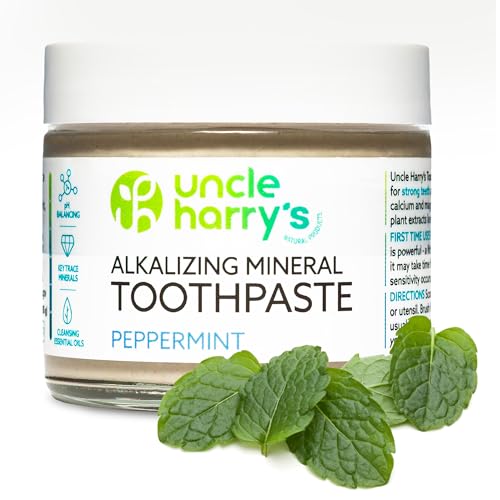
The 3-ounce single jar is the simplest way to choose Uncle Harry’s peppermint formula without buying multiple jars. The brand says the fluoride-free toothpaste uses bentonite clay, calcium carbonate, sea salt and essential oils, and is packaged in a glass jar. It suits buyers who want peppermint flavor and a small quantity to start with. The key limitation is the lack of fluoride: people who want fluoride toothpaste for cavity prevention should select a different formula rather than relying on the product’s remineralizing wording.
Bottom line: Pick this for a single 3-ounce jar of the peppermint formula.
Uncle Harry’s Peppermint Toothpaste, 2-Pack

This option differs from the single jar by including two 3-ounce jars, for 6 ounces total. The brand says its peppermint formula combines mineral clays, sea salt and plant essences, including peppermint, eucalyptus and clove oils. It fits households that prefer to keep a spare jar on hand while sticking with the same flavor. The tradeoff is that the two-pack offers no flavor variety, and, like the other toothpaste jars here, it is fluoride-free; choose fluoride toothpaste if that is part of your cavity-prevention routine.
Bottom line: Choose this when you want two jars of the same peppermint toothpaste.
Uncle Harry’s Spearmint Toothpaste, 3 oz

Spearmint flavor is the distinguishing feature of this 3-ounce jar; the other toothpaste choices use peppermint. The brand says the formula includes bentonite clay, calcium carbonate, sea salt and spearmint among its essential oils, in a glass jar. It suits buyers who want the same general mineral-clay style of toothpaste with a different mint flavor. The limitation is that this is still a fluoride-free formula, so a flavor preference should not override a need for fluoride-based cavity protection.
Bottom line: Pick this if spearmint is your preferred mint flavor.
Uncle Harry’s Peppermint Toothpaste, 24 oz

The 24-ounce jar holds substantially more peppermint toothpaste than the 3-ounce options, making it the large-container choice. The brand says its formula supplies calcium, magnesium and phosphorus and supports enamel; it is also described as fluoride-free and vegan. It may suit someone committed to this specific formula and comfortable with a large jar. The main limitation is the quantity: buyers wanting to try the flavor first or use a smaller container should choose a 3-ounce jar instead. The brand’s enamel claims do not make it a fluoride toothpaste.
Bottom line: Choose this for a single large jar of peppermint toothpaste.
How to choose fluoride-free toothpaste
Start with whether you want fluoride, then compare flavor and container size. The American Dental Association recommends brushing twice daily with fluoride toothpaste to help prevent cavities; these Uncle Harry’s toothpastes are fluoride-free, so they are not a like-for-like substitute for that standard. Remineralizing claims alone do not establish equivalent cavity protection. For an adult who specifically wants a fluoride-free toothpaste, flavor and the amount in the jar become the practical distinctions. If cavity prevention is your priority, look for a toothpaste with fluoride as its active ingredient rather than selecting by mint flavor or mineral ingredients. For children, ask a dentist about fluoride needs and supervision, especially if they may swallow toothpaste.
How jar size changes the choice
The available toothpaste amounts range from 3 ounces in a single jar to 24 ounces in the large jar; the two-pack contains 6 ounces total. Use a small jar if you are trying the flavor or prefer less product at once, and choose the two-pack if you want a spare jar of the same peppermint formula. The 24-ounce container is the largest commitment, so it makes sense only if you already know you want that flavor and formula. Toothpaste should be kept capped and stored away from young children. Do not assume that an open jar stays usable indefinitely; check its packaging for the expiration date and discard it when past that date.
What fluoride-free toothpaste does and does not mean
Fluoride-free means the formula does not provide fluoride as an ingredient for cavity protection. The brand describes these toothpastes as remineralizing and identifies calcium carbonate and bentonite clay among the ingredients, but those points are not proof of the cavity-prevention benefit associated with fluoride toothpaste. The ADA Seal is a useful screening mark: products earning it meet criteria for safety and effectiveness, including evidence supporting their claims. A fluoride-free preference may reflect personal choice, but people at higher cavity risk should discuss options with a dentist instead of assuming a mineral ingredient offsets the absence of fluoride. Do not confuse toothpaste with tooth polish; a polishing product is not automatically a replacement for everyday toothpaste.
Brushing amounts and child safety
For adults, brush twice a day for two minutes with a soft-bristled toothbrush, covering the outer, inner and chewing surfaces. Children need supervision to reduce swallowing: use a smear about the size of a grain of rice for children younger than 3, and a pea-sized amount for ages 3 through 6, following dental guidance. A toothpaste’s flavor can make it appealing to children, but that does not make it safe to eat; store jars out of reach and teach children to spit rather than swallow. If a child needs fluoride toothpaste, check that choice with a dentist instead of treating a fluoride-free formula as equivalent. Avoid using more toothpaste than recommended, especially with young children.
Frequently Asked Questions
Does Uncle Harry’s toothpaste contain fluoride?
The toothpaste options compared here are described as fluoride-free. If you specifically want fluoride for cavity prevention, choose a fluoride toothpaste and ask a dentist about your individual needs.
How often should adults brush their teeth?
Adults should brush twice a day for two minutes with fluoride toothpaste, according to standard dental guidance. Use a soft-bristled brush and clean all tooth surfaces rather than focusing only on the front teeth.
How much toothpaste should a young child use?
Use a rice-grain-sized smear for children younger than 3, and a pea-sized amount for children ages 3 through 6. Supervise brushing so children do not swallow toothpaste, and ask a dentist about fluoride use.
Can remineralizing toothpaste replace fluoride toothpaste?
A remineralizing claim does not establish the same cavity-prevention benefit as fluoride toothpaste. The ADA recommends fluoride toothpaste for cavity prevention, so discuss fluoride-free choices with a dentist if you have elevated cavity risk.
How long should I keep an opened toothpaste jar?
Use the expiration date printed on the packaging rather than assuming a fixed period after opening. Keep the jar capped and discard it after that date.