
Under Armour HOVR Sonic 6: Models Compared by Fit

For the Under Armour HOVR Sonic 6, choose between the two listed color and size combinations; the black size 8 has an 8 mm offset and stated 9.9 oz. weight. Runners wanting that specific configuration should choose Under Armour HOVR Sonic 6 Black, Size 8, while Under Armour HOVR Sonic 6 Gray, Size 7 is the gray size 7 option; Under Armour HOVR Sonic 7 Black, Size 9.5 is the Sonic 7, a different generation.
The HOVR Sonic is a neutral running shoe, meaning it is designed for runners seeking a balance of flexibility and cushioning rather than a stability-focused model.
We earn a commission if you buy through links on this page. As an Amazon Associate I earn from qualifying purchases. Products are compared on manufacturer specifications, not hands-on testing.
- Best overall: Under Armour HOVR Sonic 6 Gray, Size 7 – The Sonic 6 in gray, size 7, has an engineered mesh upper and an external heel counter.
- Best for black color: Under Armour HOVR Sonic 6 Black, Size 8 – The Sonic 6 in black, size 8, includes an 8 mm offset and stated 9.9 oz. weight.
- Best for Sonic 7: Under Armour HOVR Sonic 7 Black, Size 9.5 – The newer-generation alternative has a triple jacquard upper and weighs 9.1 oz.
| Product | Best for | Upper | Outsole | Weight | Shop |
|---|---|---|---|---|---|
| Under Armour HOVR Sonic 6 Gray, Size 7 | Gray, size 7 | Engineered mesh | Carbon and blown rubber | — | Check Price on Amazon |
| Under Armour HOVR Sonic 6 Black, Size 8 | Black, size 8 | Engineered mesh | Carbon and blown rubber | 9.9 oz. | Check Price on Amazon |
| Under Armour HOVR Sonic 7 Black, Size 9.5 | Sonic 7 alternative | Triple jacquard | One-piece rubber | 9.1 oz. | Check Price on Amazon |
Under Armour HOVR Sonic 6 running shoes
Compare the Sonic 6 color and size options first, then consider the Sonic 7 only if you are open to a different generation.
Under Armour HOVR Sonic 6 Gray, Size 7

The gray size 7 option is the Sonic 6 configuration with an engineered mesh upper and an external heel counter. Under Armour says its HOVR cushioning reduces impact, returns energy and helps propel the runner forward; the 3D-molded sockliner is shaped to cradle the foot. The outsole combines carbon rubber and blown rubber, while the seamless forefoot is intended to provide comfort and breathability. This pick suits a buyer looking for this color and size. The weight and offset are not included in the specifications, so choose it by fit and construction rather than comparing those figures.
Bottom line: Choose this if gray in size 7 is the fit you need.
Under Armour HOVR Sonic 6 Black, Size 8
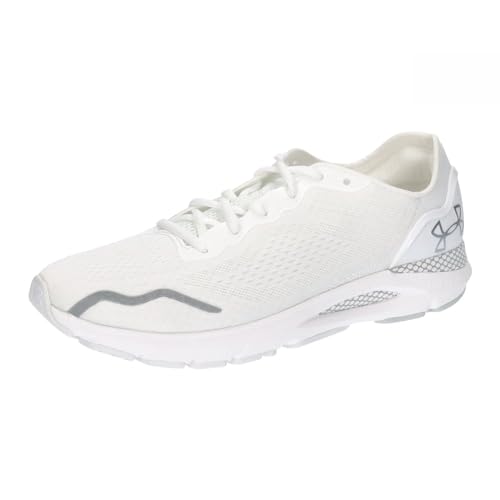
The black size 8 option is the Sonic 6 choice with a 8 mm offset and 9.9 oz. weight. Its engineered mesh upper has a seamless forefoot, and an external heel counter adds structure and lockdown. Under Armour says the responsive HOVR cushioning reduces impact, returns energy and helps propel the runner forward; the outsole combines carbon and blown rubber. The maker also describes the updated outsole as flexible where needed and designed to disperse impact efficiently. This is the better match for a runner who wants the black size 8 configuration and those known figures; confirm that size fits your foot before ordering.
Bottom line: Pick this for the black size 8 option and its offset and weight.
Under Armour HOVR Sonic 7 Black, Size 9.5
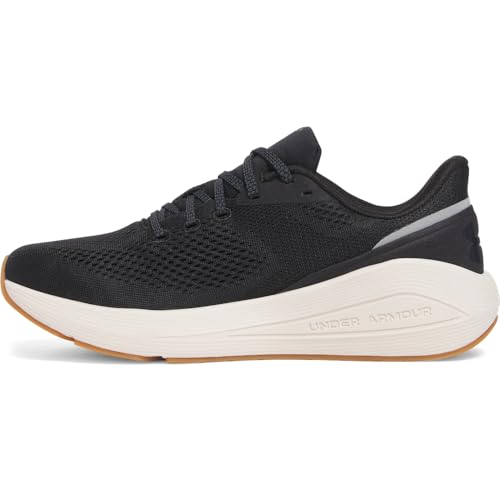
The Sonic 7 is the different-generation alternative, with a triple jacquard upper rather than the Sonic 6 engineered mesh. Under Armour says its softer, lighter HOVR cushioning responds, reduces impact and returns energy; the 3D-molded sockliner is designed to cradle the foot. Its one-piece rubber outsole provides durability and rebound, and the shoe is listed as a neutral model with an 8 mm offset and 9.1 oz. weight. Consider it if you are open to Sonic 7 rather than set on the Sonic 6. Its size 9.5 is also different from either Sonic 6 option here.
Bottom line: Choose this only if a Sonic 7 in size 9.5 suits you better than a Sonic 6.
How to choose an HOVR Sonic running shoe
Start with model generation and shoe fit, then compare known construction and measurements. The Sonic 6 entries here share engineered mesh, an external heel counter, a molded sockliner and a carbon-and-blown-rubber outsole; their sizes and colors differ. The Sonic 7 is a separate generation with a triple jacquard upper and one-piece rubber outsole. For a neutral shoe, check whether its cushioning and flexibility suit your stride; neutral shoes are not a substitute for a stability shoe when a clinician has recommended specific support. Try shoes later in the day, when feet may be slightly larger, and wear the socks you use for running. Leave roughly a thumb’s width, about 0.5 inch, between your longest toe and the front of the shoe. If toes touch the front while standing, choose a different size or fit.
HOVR Sonic 6 sizing and fit checks
A running shoe should hold the heel securely without pinching the forefoot, and the toe box should allow the toes to spread. Compare the two Sonic 6 options by the size printed for each, not by color or generation: one is size 7 and the other size 8. Those numbers alone do not establish which will fit; foot length, width, socks and individual shape matter. Lace the shoe snugly enough to limit heel movement, but loosen it if pressure develops across the top of the foot. A thumb’s width of toe room is a practical starting point, not a guarantee of fit. If you run on slopes or do long downhill sessions, prioritize adequate toe clearance because feet slide forward more during descents.
Sonic 6 and Sonic 7 construction differences
The Sonic 6 and Sonic 7 differ in upper and outsole construction, so generation is more than a color choice. Sonic 6 uses engineered mesh and a combination of carbon rubber and blown rubber; Sonic 7 uses triple jacquard and a one-piece rubber outsole. Rubber compounds and outsole layouts affect how a shoe flexes and where rubber meets the ground, but these specifications do not establish comparative durability or traction. The table summarizes only the differences and stated figures. Use it to narrow the model, then make fit and intended running use the deciding factors. A specified 8 mm offset is the height difference between heel and forefoot; it does not measure cushioning softness or overall shoe height.
| Model | Upper | Outsole | Weight |
|---|---|---|---|
| Under Armour HOVR Sonic 6 Gray, Size 7 | Engineered mesh | Carbon and blown rubber | — |
| Under Armour HOVR Sonic 6 Black, Size 8 | Engineered mesh | Carbon and blown rubber | 9.9 oz. |
| Under Armour HOVR Sonic 7 Black, Size 9.5 | Triple jacquard | One-piece rubber | 9.1 oz. |
When to replace running shoes
Many running shoes are replaced around 300 to 500 miles, but runner weight, terrain, gait and shoe construction can move that range. Track mileage rather than waiting for the outsole to look completely worn: compressed or uneven midsoles, reduced comfort, and outsole wear that exposes underlying material are practical signs to inspect. Rotate shoes only if you already have another suitable pair; rotation does not extend the life of a worn shoe. Check both shoes because wear may differ between feet. Stop using a shoe for running if the sole is separating or the upper can no longer hold the foot securely. The models are neutral road-running shoes, so choose footwear appropriate to the surface rather than assuming outsole rubber makes them suitable for every terrain.
Frequently Asked Questions
How much toe room should running shoes have?
Aim for about 0.5 inch, or a thumb’s width, beyond your longest toe while standing. Recheck the fit in your running socks, and avoid a shoe that lets the heel slip substantially.
What does an 8 mm shoe offset mean?
An 8 mm offset means the heel sits 8 mm higher than the forefoot. Offset is separate from cushioning softness, and runners should prioritize a comfortable fit over matching a number alone.
How long do running shoes usually last?
A common replacement range is 300 to 500 miles, with terrain, runner weight and gait affecting wear. Inspect the midsole and outsole for uneven wear or loss of structure rather than relying on mileage alone.
Are neutral running shoes right for every runner?
Neutral shoes suit runners seeking a balance of flexibility and cushioning, but they are not the right choice for every foot or running need. If a clinician has recommended a stability shoe or a specific support feature, prioritize that guidance.
How should a running shoe fit at the heel?
The heel should feel secure without pinching, while the forefoot has room for toes to spread. If the heel lifts during a short walk or the toe contacts the front when standing, try a different size or fit.