
Valvoline 5W-30 MaxLife Oil API SP Compared

For a high-mileage engine that needs 5W-30 and API SP, Valvoline MaxLife Full Synthetic 5W-30 is the closest match because it combines MaxLife with a full synthetic formula and a 5-quart container. Choose Valvoline MaxLife Synthetic Blend 5W-30 if you prefer a synthetic blend; Valvoline Advanced Full Synthetic 5W-30 is a general-purpose full synthetic in a 1-quart size, not a MaxLife product.
We earn a commission if you buy through links on this page. As an Amazon Associate I earn from qualifying purchases. Products are compared on manufacturer specifications, not hands-on testing.
- Best overall: Valvoline MaxLife Full Synthetic 5W-30 – MaxLife full synthetic in 5W-30 meets API SP and comes in a 5-quart container.
- Best for synthetic blend: Valvoline MaxLife Synthetic Blend 5W-30 – The MaxLife blend provides the high-mileage formulation in a 5-quart container.
- Best for single-quart top-offs: Valvoline Advanced Full Synthetic 5W-30 – A 1-quart bottle may suit buyers needing a small quantity, but it is not MaxLife.
| Product | Best for | Formulation | Container size | API standards | Shop |
|---|---|---|---|---|---|
| Valvoline MaxLife Full Synthetic 5W-30 | High-mileage engines | Full synthetic | 5 qt | API SQ, SP, SN | Check Price on Amazon |
| Valvoline MaxLife Synthetic Blend 5W-30 | High-mileage blend | Synthetic blend | 5 qt | API SQ, SP, SN+ | Check Price on Amazon |
| Valvoline Advanced Full Synthetic 5W-30 | Small quantity needs | Full synthetic | 1 qt | API SQ, SP, SN+ | Check Price on Amazon |
Valvoline 5W-30 MaxLife Oil API SP Options
Compare the MaxLife formulas with a related Valvoline 5W-30 oil that is not part of the MaxLife line.
Valvoline MaxLife Full Synthetic 5W-30
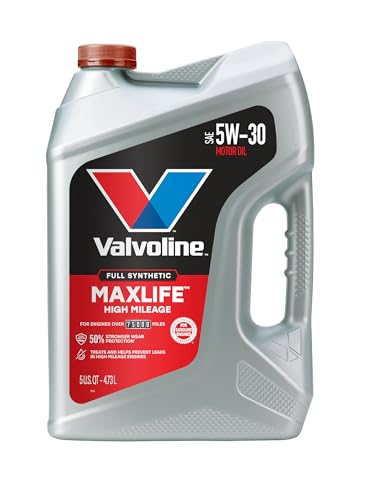
For a 5W-30 high-mileage application where full synthetic is preferred, this MaxLife formula is the direct fit. The maker says it is designed for engines with 75,000 miles or more and includes seal conditioners to help prevent leaks and reduce oil consumption. Its standards include ILSAC GF-7A and API SQ, SP, and SN. The 5-quart container suits an oil change that requires more than a single quart. This choice is specifically aimed at high-mileage engines, so buyers seeking a conventional or synthetic blend oil should consider the other MaxLife formula.
Bottom line: Choose this for a high-mileage engine requiring 5W-30 full synthetic oil.
Valvoline MaxLife Synthetic Blend 5W-30
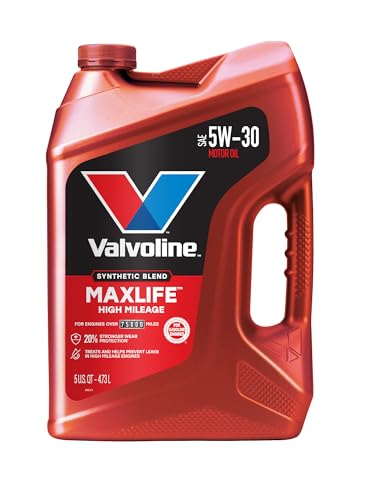
This MaxLife option differs from Valvoline MaxLife Full Synthetic 5W-30 by using a synthetic blend rather than a full synthetic formula. The maker says it is formulated for engines with 75,000 miles or more and uses seal conditioners to help prevent leaks and reduce oil consumption. It meets API SQ and SP, among other standards, and comes in a 5-quart container. The maker also says the formula is suitable for new and rebuilt engines, giving it a wider stated application than a strictly high-mileage use case. Choose another formula if your vehicle manual specifically calls for full synthetic.
Bottom line: Pick this blend for a 5W-30 MaxLife formula in a 5-quart container.
Valvoline Advanced Full Synthetic 5W-30

Unlike the two MaxLife options, this is Valvoline Advanced full synthetic in a 1-quart container. It shares the requested 5W-30 viscosity and API SP standard, but it is not a MaxLife high-mileage formula. The maker says it provides protection against wear, friction, heat, and deposits, and lists ILSAC GF-7A alongside API SQ and SP. A single quart can suit topping off when the correct oil is already confirmed, while a full oil change usually calls for more than one quart. Verify the required oil specification in the vehicle manual before substituting a different product line.
Bottom line: Choose this only when you need a single quart and your manual permits it.
How to choose 5W-30 MaxLife oil
Start with the viscosity and performance standards in the vehicle manual, then choose the formulation. SAE 5W-30 describes how oil flows in cold and operating-temperature conditions; the number alone does not confirm that an oil meets the engine’s required service category. API SP is a gasoline-engine oil category, and newer API SQ oils are backward compatible with API SP applications. For engines at or above 75,000 miles, MaxLife is the high-mileage line in these choices; select full synthetic or synthetic blend according to the vehicle maker’s requirement and your preference.
The decision rule is simple: use a MaxLife option when you specifically want the high-mileage line, and use the 1-quart Advanced oil only when MaxLife is not required. Never choose by mileage alone if the manual specifies a different viscosity or certification.
What API SP means for your oil choice
API SP identifies a gasoline-engine oil service category, not a viscosity grade or a guarantee that every 5W-30 oil is suitable for every vehicle. A 5W-30 oil can carry API SP while still differing in formulation and intended use. API SQ is a newer gasoline-engine category, and oils meeting the newer category can serve API SP applications. The MaxLife options and the Advanced formula here each include API SP in their standards.
Look for the required API category and viscosity together in the manual, rather than treating either mark as a substitute for the other. If the manual calls for a particular manufacturer approval or another specification, confirm that the oil meets it before use.
Full synthetic versus synthetic blend
Full synthetic and synthetic blend oils are different formulations; both MaxLife choices here are 5W-30 high-mileage oils, but only Valvoline MaxLife Full Synthetic 5W-30 is full synthetic. The maker reports stronger wear, sludge, and heat protection claims for Valvoline MaxLife Full Synthetic 5W-30 than for Valvoline MaxLife Synthetic Blend 5W-30, but the percentages use different comparisons and should not be read as a direct head-to-head test. A full synthetic label does not by itself determine whether the oil suits a vehicle.
Use the manual’s specification as the deciding condition. A blend may be appropriate when the vehicle permits it, while a full synthetic may be necessary when explicitly required. The 1-quart Advanced product also uses a full synthetic formula, but it is not a MaxLife high-mileage oil.
Oil change intervals and safe handling
Oil-change timing is set by the vehicle maker, not by the 5W-30 grade alone. Many vehicles use intervals around 5,000 to 7,500 miles under normal driving, while severe service such as frequent short trips, towing, or dusty roads can call for shorter intervals. The owner’s manual or maintenance system should determine the interval for the specific engine.
Check the oil level on level ground using the vehicle’s procedure, and avoid overfilling; excess oil can cause engine problems. Used motor oil should be collected in a sealed container and taken to a recycling or collection site, never poured onto the ground or into a drain.
Frequently Asked Questions
Can API SQ oil replace API SP oil?
Yes, API SQ is a newer gasoline-engine category that is backward compatible with API SP applications. Confirm the vehicle’s viscosity and any other required approvals as well.
Is MaxLife 5W-30 suitable for every high-mileage engine?
No; the manual’s specified viscosity and oil standards decide suitability. The MaxLife formulas here are aimed at engines with 75,000 miles or more, but mileage does not override a different manufacturer requirement.
How much oil does a 5-quart container provide?
A 5-quart container holds 5 quarts of motor oil. Engine capacity varies, so compare that amount with the vehicle’s specified fill volume and allow for checking the dipstick during filling.
When should I change 5W-30 motor oil?
Many normal-service intervals are about 5,000 to 7,500 miles, while severe use can shorten that interval. Use the vehicle maintenance schedule because engine design and driving conditions affect the timing.