
Vibrating Brush for Face: 3 Cleansing Styles Compared

For a vibrating brush for face with five adjustable levels and a silicone surface, choose PRITECH Silicone Facial Cleansing Brush; its settings distinguish cleansing from massage. Choose NågraCoola CLIE 2.0 Silicone Brush for three modes and 13,000 pulsations per minute, or YOUTHLUX Pure Radiance Brush if you want a choice of silicone and bristle heads.
These electric facial brushes pair vibration with a cleanser to loosen surface residue; they are not a substitute for choosing a gentle cleanser or using light pressure.
We earn a commission if you buy through links on this page. As an Amazon Associate I earn from qualifying purchases. Products are compared on manufacturer specifications, not hands-on testing.
- Best overall: PRITECH Silicone Facial Cleansing Brush – Five vibration levels separate cleansing settings from massage settings on the textured back.
- Best for three modes: NågraCoola CLIE 2.0 Silicone Brush – Offers three modes and 13,000 pulsations per minute through silicone touch-points.
- Best for head choice: YOUTHLUX Pure Radiance Brush – Includes two bristle heads and one silicone head, plus a smart timer.
| Product | Best for | Cleansing modes | Head type | Charging/use claim | Shop |
|---|---|---|---|---|---|
| PRITECH Silicone Facial Cleansing Brush | Adjustable settings | 5 vibration levels | Silicone bristles | — | Check Price on Amazon |
| NågraCoola CLIE 2.0 Silicone Brush | Pulse count | 3 modes | Silicone touch-points | 2-hour charge; 60 uses | Check Price on Amazon |
| YOUTHLUX Pure Radiance Brush | Head selection | 3 modes | 2 bristle; 1 silicone | 1.5-hour charge; 30–45 days | Check Price on Amazon |
Vibrating brush for face options
Compare the mode count, cleansing surface, and charging features to match a brush to your routine.
PRITECH Silicone Facial Cleansing Brush
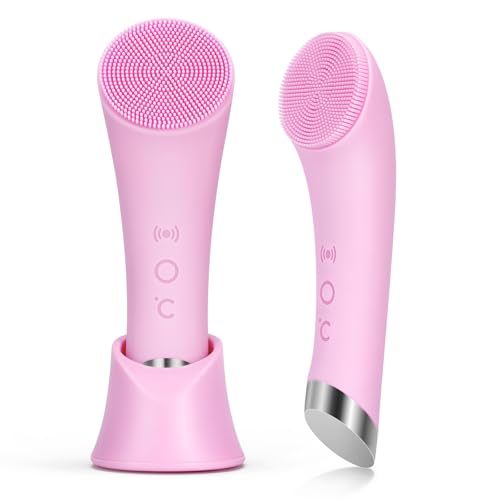
Five vibration levels make this silicone brush distinct: levels 1–3 are cleansing settings, while levels 4–5 use the textured back for massage. The brush has soft silicone bristles, a rechargeable design, and a heat-massage end; the weight is about 0.24 pounds. Brand says the cleansing settings work with facial cleanser to remove oil, dirt, and makeup residue. This suits someone who wants separate cleansing and massage settings on one device. The maker does not give a charging duration or runtime, so buyers who need a specific battery interval should confirm it before ordering.
Bottom line: Choose it if you want five settings and a silicone cleansing surface.
NågraCoola CLIE 2.0 Silicone Brush

The CLIE 2.0 is the only brush here with a pulse rate: Brand says its V-sonic technology delivers 13,000 pulsations per minute through angled silicone touch-points. Three modes cover morning refresh, evening cleansing, and massage. The silicone bristles are built in, and the brush is rechargeable by USB; Brand says a two-hour charge provides 60 uses. Its compact stated dimensions are about 5.43 inches long, 1.97 inches wide, and 1.18 inches high. This is a fit for someone who prefers a single silicone head and a defined pulse figure; it does not offer interchangeable bristle heads.
Bottom line: Pick it if a pulse rate and three silicone brush modes matter to you.
YOUTHLUX Pure Radiance Brush

Three included heads set this brush apart: two bristle options and one silicone option let you change the contact surface. It also has three speeds, a smart timer that pauses briefly every 20 seconds, and a rechargeable design. Brand says a 1.5-hour charge provides 30–45 days of use. The cleansing heads suit someone who wants to select a surface for a routine rather than use silicone alone. The set dimensions are 7.6 inches long, 4.2 inches wide, and 2.7 inches high. This brush requires choosing among detachable heads, unlike the single-surface silicone designs.
Bottom line: Choose it if interchangeable bristle and silicone heads are your priority.
How to choose a vibrating brush for face
Choose by contact surface and settings first: silicone models keep the same surface in place, while a multi-head brush lets you switch between silicone and bristles. A cleanser brush should glide with light pressure; pressing harder does not make cleansing gentler. Start with the lowest setting and a short session, especially if you are new to facial devices or your skin is easily irritated. Cleanse with lukewarm water rather than hot water, which can worsen dryness. For ordinary facial cleansing, a gentle cleanser and fingertips are enough; a vibrating brush is an optional tool, not a requirement. If the brush causes stinging, persistent redness, or tightness, stop using it until the skin settles.
Silicone versus bristle brush heads
Silicone and bristle heads differ in maintenance and contact, not in a guaranteed cleansing result. Silicone touch-points do not have the multiple bristles of a brush head, while detachable bristle heads allow a different surface to be selected. Rinse the brush surface after each use and let it dry fully; moisture left around a head can encourage microbial growth. Replace detachable heads when the maker calls for it or when bristles become misshapen, since worn bristles may scrape rather than flex. For someone who wants to avoid swapping heads, choose a fixed silicone design; for someone who wants head options, choose a multi-head kit. Keep a personal facial brush to yourself, especially when skin is broken or irritated.
How often to use a facial cleansing brush
Begin with one brief use a few times per week, then reduce or stop if skin feels irritated; daily use is not necessary for a clean face. Facial skin can react to repeated friction, and adding a brush on top of scrubs, exfoliating acids, or retinoids can make irritation more likely. Use cleanser as a lubricant rather than brushing dry skin, and move the device without pressing. Avoid the eyelids, cuts, and inflamed areas. A timer can help keep use brief, but a timer does not determine what frequency suits your skin. If you have a skin condition or ongoing irritation, ask a dermatologist before adding mechanical exfoliation.
Using and cleaning an electric face brush
Use a clean brush on wet skin with cleanser, then rinse both your face and the brush head thoroughly. Follow the device’s specific water-use limits: a product described as waterproof still has a defined construction, and charging ports or seals can be damaged by incorrect handling. Keep the device away from its charger while wet, and dry it before charging. Do not share a facial brush; sharing transfers skin oils and microbes between users. Store it where the head can air-dry rather than in a closed damp container. If a detachable head loosens, cracks, or develops rough edges, stop using it until it is replaced.
Frequently Asked Questions
Can I use a vibrating face brush every day?
Daily use is not necessary; start with a few brief sessions per week and cut back if redness or tightness develops. Friction from a brush can compound irritation from scrubs or exfoliating acids.
Should a facial cleansing brush be used with cleanser?
Yes, use it on wet skin with cleanser so the head glides instead of rubbing dry skin. Move it lightly and avoid the eyelids and any cuts or inflamed areas.
How should I clean a silicone face brush?
Rinse the brush surface thoroughly after every use and let it air-dry fully. Do not assume waterproof construction means the brush can be submerged or charged while wet.
Can two people share an electric face brush?
No, keep a facial brush personal because shared contact can transfer skin oils and microbes. If the device has detachable heads, sharing a handle still requires separate, clean heads.
When should I stop using a vibrating facial brush?
Stop if use causes stinging, persistent redness, or tightness, and wait until the skin settles before considering another brief session. Ask a dermatologist about using mechanical exfoliation if irritation continues.