
Vinyl Seat Repair Tape: 4 Self-Adhesive Patches Compared

For vinyl seat repair tape, Gecyfit 4 × 63-Inch Patch offers the widest patch at 4 inches, which can cover broader damage with fewer seams. Choose Besezx 3.1 × 60-Inch Patch, ONine 3 × 60-Inch Patch or Fadoub Fine-Grain 3 × 60-Inch Patch instead for a 3-inch roll when the damaged area is narrower or matching the existing patch width matters.
We earn a commission if you buy through links on this page. As an Amazon Associate I earn from qualifying purchases. Products are compared on manufacturer specifications, not hands-on testing.
- Best overall: Gecyfit 4 × 63-Inch Patch – Its 4-inch width offers more coverage per strip than the 3-inch alternatives.
- Best for no-tool application: Besezx 3.1 × 60-Inch Patch – The maker says the patch needs no heat, tools, ironing or sewing.
- Best for cut-to-fit repairs: ONine 3 × 60-Inch Patch – The maker gives a simple cut-and-attach method for its 3 × 60-inch patch.
| Product | Best for | Patch size | Application | Claimed features | Shop |
|---|---|---|---|---|---|
| Gecyfit 4 × 63-Inch Patch | Wider damage | 4 × 63 in | Clean, dry, cut, peel, paste | Waterproof, scratch-resistant | Check Price on Amazon |
| Besezx 3.1 × 60-Inch Patch | Tool-free repairs | 3.1 × 60 in | No heat, ironing, tools or sewing | Waterproof, wear- and scratch-resistant | Check Price on Amazon |
| ONine 3 × 60-Inch Patch | Simple patching | 3 × 60 in | Cut and attach | Waterproof, scratch-proof | Check Price on Amazon |
| Fadoub Fine-Grain 3 × 60-Inch Patch | Curved surfaces | 3 × 60 in | Cut to fit | Waterproof, wear-resistant | Check Price on Amazon |
Vinyl Seat Repair Tape Compared
Compare patch dimensions and application steps before choosing a strip for a vinyl seat repair.
Gecyfit 4 × 63-Inch Patch

The 4-inch width gives this patch more coverage per strip than the 3-inch options, while its 63-inch length provides a longer roll. The maker describes a four-step application: clean and dry the area, cut the patch, peel the backing and press it on. The product is described as waterproof, scratch-resistant and easy to clean, and the maker says it works on leather and vinyl items including car seats, couches and chairs. The larger width may be less convenient for narrow damage where a slim patch is easier to shape.
Bottom line: Choose it for wider damage where a 4-inch strip can reduce seams.
Besezx 3.1 × 60-Inch Patch
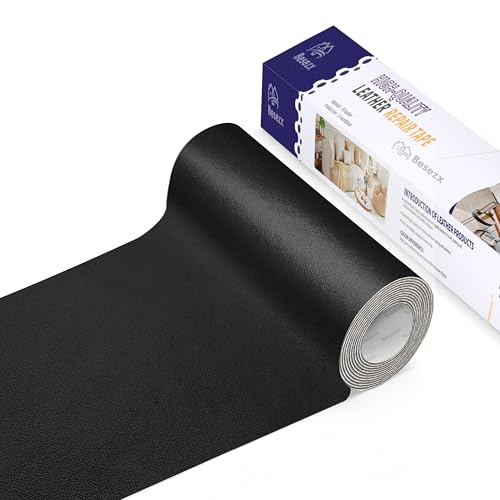
Unlike the alternatives, this 3.1-inch patch is specifically described as requiring no heat, ironing, tools or sewing. The maker says the smooth, self-adhesive material is waterproof, wear-resistant and scratch-resistant, and can be cut to repair tears, holes, scratches, burns and scuffs on synthetic leather and vinyl. Its width sits between the 3-inch rolls and the 4-inch option, a useful middle ground for patches that need a little more coverage than a narrow strip. The maker does not give a step-by-step surface-preparation method, so buyers should verify surface compatibility before applying it.
Bottom line: Pick it when no-tool application and a 3.1-inch patch width suit the repair.
ONine 3 × 60-Inch Patch
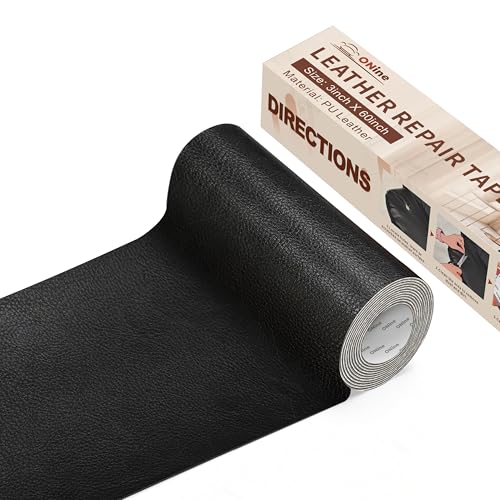
The ONine patch is the clearest choice for a straightforward cut-and-attach approach in a 3-inch width. Its maker says to cut the patch to size and attach it to the damaged area, and characterizes the surface as smooth, waterproof, scratch-proof and durable. The 3 × 60-inch format matches the size of Fadoub Fine-Grain 3 × 60-Inch Patch, so the choice turns on the application and surface claims rather than roll dimensions. A 3-inch strip offers less coverage per pass than the 4-inch patch and may take more pieces on a broad tear.
Bottom line: Choose it for simple, cut-to-fit patches on narrower damaged areas.
Fadoub Fine-Grain 3 × 60-Inch Patch

Fadoub specifically says its patch can be used on uneven or curved surfaces, a distinction from the other options. The fine-grain black patch measures 3 × 60 inches and can be cut to suit a repair. Its maker describes the material as waterproof and wear-resistant, with a self-adhesive backing intended for worn, scratched, torn or stained upholstery. The same width and length as ONine 3 × 60-Inch Patch mean this choice is driven by surface shape: for a flat, broad damaged section, a wider patch may cover more area with fewer strips.
Bottom line: Pick it when the seat has an uneven or curved repair area.
How to Choose Vinyl Seat Repair Tape
Choose a patch based on damaged-area width, surface shape and the repair steps you can perform. Adhesive upholstery patches cover a tear or worn spot; they do not replace a torn seam or restore missing seat foam. As a practical rule, if the damaged area is wider than 3 inches, a 4-inch patch can cover it with fewer strips; narrow scuffs are easier to fit with a narrower strip. Clean and dry the surface before applying adhesive, since dust, oil and moisture can interfere with adhesion. Press the patch onto sound material around the damage, not just across the gap, so the adhesive has a border to hold.
Patch Width and Coverage
A patch’s roll width sets the maximum coverage of one strip, while its length lets you cut multiple repair pieces. For these options, widths range from 3 to 4 inches and lengths from 60 to 63 inches. Measure the damaged area and allow overlap onto intact vinyl; do not size a patch only to the visible hole. Curves, seat bolsters and stitched edges can make a wide strip harder to position smoothly, so a smaller cut piece may fit better. Test placement without removing the backing, and avoid stretching vinyl while applying the patch because tension can pull at the adhesive edge.
Preparing and Applying a Vinyl Patch
Clean, dry vinyl gives a self-adhesive patch a better chance of bonding than a dusty or damp surface. Trim loose, ragged edges without enlarging the tear, then cut a rounded-corner patch so corners are less likely to catch and peel. Keep the patch flat as you lower it onto the seat, working from the center toward the edges to reduce trapped air. Allow the adhesive to settle before putting the seat under friction or pressure; exact dwell times depend on the adhesive, so confirm the product’s directions before use. Avoid applying patches over hot surfaces or near open flames.
When Tape Is Not the Right Repair
Adhesive tape is best suited to surface-level vinyl damage with firm material around the tear. A split seam, a large missing section or exposed cushioning needs a repair approach that can rebuild or re-stitch the upholstery rather than simply cover it. On a seat that flexes often, a patch edge can lift if the repair crosses a fold or lands on loose, cracked vinyl; place the repair on stable material where possible. For vehicle seats, keep repairs clear of airbag seams and deployment zones, since covering or altering those areas could interfere with safety systems. Verify the vehicle manual or an upholstery professional’s guidance before working near those seams.
Frequently Asked Questions
How much wider should a vinyl seat patch be than a tear?
Allow the patch to overlap intact vinyl around the tear, rather than matching the hole exactly. A wider border gives adhesive more sound surface to grip; the needed margin depends on the damage shape and available uncracked material.
Can vinyl repair tape go on a curved car seat?
A patch can be used on a curved area if it lies flat without stretching or wrinkling. Smaller pieces are easier to position on tight curves, while a wide strip can bridge a contour and lift at its edges.
Should I clean a vinyl seat before patching it?
Yes, the surface should be clean and dry before applying an adhesive patch. Dust, oils and moisture can weaken the bond, and any cleaner should be fully dry before the patch goes on.
Can repair tape fix a split seat seam?
Tape is generally suited to covering surface damage, not reconstructing a failed seam. If stitches have separated or the tear reaches an edge, upholstery repair or sewing may be needed to restore the seam.
How do I keep patch corners from peeling?
Cut rounded rather than sharp corners and press the patch onto intact material around the damaged spot. Avoid placing the edge across a high-flex fold, where repeated bending can encourage lifting.