
Pool Crack Repair Epoxy: 4 Putty Kits Compared

For most pool crack repairs, Atlas Epoxybond Pool Putty, 14 oz is the strongest fit because its 14-ounce two-part putty is hand-moldable and can be applied underwater or above water. Choose AQUABOND DMK-5000, 50 ml instead if a compact 50 ml kit suits a smaller repair, or 17.6 oz Pool Putty, White if you need a larger 17.6-ounce quantity.
Pool epoxy putty is a two-part material mixed before application; submerged work avoids draining only when the product is made for underwater curing. Match the material to the pool surface and assess whether the crack may indicate structural movement before patching.
We earn a commission if you buy through links on this page. As an Amazon Associate I earn from qualifying purchases. Products are compared on manufacturer specifications, not hands-on testing.
- Best overall: Atlas Epoxybond Pool Putty, 14 oz – 14 ounces of hand-moldable putty for underwater or above-water crack and leak repairs.
- Best for a compact kit: AQUABOND DMK-5000, 50 ml – A 50 ml underwater repair kit for concrete, fiberglass and PVC.
- Best for larger repairs: 17.6 oz Pool Putty, White – 17.6 ounces of two-part putty for cracks, holes and uneven surfaces.
| Product | Best for | Amount | Color | Application | Shop |
|---|---|---|---|---|---|
| Atlas Epoxybond Pool Putty, 14 oz | General pool repairs | 14 oz | White or black | Underwater or above water | Check Price on Amazon |
| AQUABOND DMK-5000, 50 ml | Compact repairs | 50 ml | White | Underwater | Check Price on Amazon |
| Atlas Epoxybond Pool Putty + Video Bundle | Guided application | 14 oz | White | Underwater | Check Price on Amazon |
| 17.6 oz Pool Putty, White | Larger patch areas | 17.6 oz | White | Underwater or above water | Check Price on Amazon |
Pool Crack Repair Epoxy Putty Kits
Compare these pool repair putties by quantity, color and intended application before choosing one for a crack.
Atlas Epoxybond Pool Putty, 14 oz
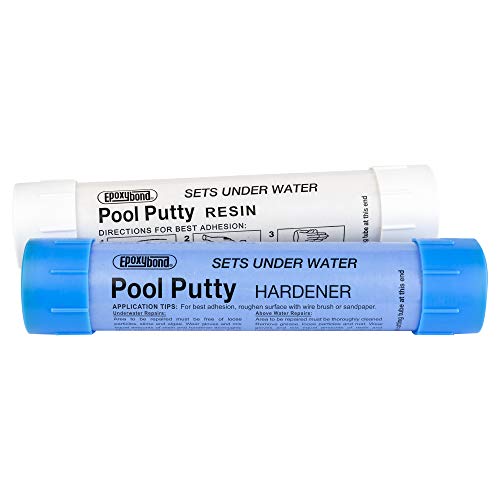
Atlas Epoxybond Pool Putty, 14 oz is a versatile choice for pool repairs, with 14 ounces of two-part putty mixed at a 1-to-1 ratio. The maker says it can be applied underwater or above water and hardens underwater without shrinking or sagging. It is intended for cracks, leaks, and chipped or broken tile on concrete, fiberglass, and other surfaces. White and black color options give buyers a choice for visible patches. Because moldable putty is thicker than a liquid sealant, it may be difficult to press into a narrow hairline crack; this format suits gaps or chips that can be reached and packed.
Bottom line: Choose this for a moldable patch on a pool crack or damaged tile, including submerged areas.
AQUABOND DMK-5000, 50 ml

AQUABOND DMK-5000, 50 ml is the compact option, with a 50 ml kit rather than the larger putty quantities offered by the other choices. The maker says it is designed for underwater application without draining and lists concrete, fiberglass, and PVC among compatible materials. The kit is aimed at cracks and leaks, with reinforcing fiberglass and PVC components also mentioned. Its modest volume may be limiting for a long crack or multiple repairs, so estimate the patch area before choosing a small kit. The maker does not establish a mix ratio or cure time, so those details matter if your repair has a narrow work window.
Bottom line: Pick this for a limited submerged repair where a small kit and PVC compatibility matter.
Atlas Epoxybond Pool Putty + Video Bundle

Atlas Epoxybond Pool Putty + Video Bundle pairs 14 ounces of white underwater epoxy putty with instructional videos, making it distinct for buyers who want guidance on mixing and placement. The maker says the repair can be done without draining and that the cured putty can be sanded, drilled, or sawed. It is presented for pool, spa, home, auto, and boat uses, so the bundle extends beyond pool cracks. Unlike Atlas Epoxybond Pool Putty, 14 oz, the maker does not specify a black color option or a 1-to-1 mixing ratio. The video element may be less useful to someone already comfortable handling two-part putty.
Bottom line: Choose this if application guidance is a priority alongside white underwater putty.
17.6 oz Pool Putty, White

17.6 oz Pool Putty, White offers the largest quantity here at 17.6 ounces, for buyers anticipating a broader patch or several areas to fill. Its two-part epoxy putty is intended for underwater and above-water repairs on tile, concrete, fiberglass, cement, and other surfaces. The maker describes applications that include leaks, cracks, holes, and uneven surfaces, and says the cured material is hard and durable. Only white is identified, so it may not blend well where a darker finish is needed.
Bottom line: Pick this when the repair calls for more putty than the smaller kits provide.
How to choose pool crack repair epoxy
Choose the epoxy putty by water exposure, pool surface, and patch size. A submerged repair needs a formulation explicitly intended to cure underwater; an ordinary repair epoxy may need a dry surface and a drained pool. Check whether the compatible materials include your finish, such as concrete, fiberglass, PVC, or tile, rather than assuming every epoxy bonds equally well. Quantity also affects the choice: the options here range from 50 ml to 17.6 ounces. For a shallow chip, a hand-moldable putty is easy to shape; for a fine hairline, a thick putty may be hard to press into the full crack. If a crack is widening or crosses a structural joint, investigate movement or leakage before covering it.
| Repair condition | What to prioritize |
|---|---|
| Submerged area | Product explicitly made for underwater curing |
| Small isolated patch | Smaller kit quantity and compatible material |
| Several patches or broad gap | More putty and enough working time |
| Visible tile or finish | Color and adhesion to the specific surface |
Underwater versus drained pool repairs
Underwater epoxy putty can avoid draining a pool, but it does not remove the need to prepare the repair area. Remove loose material and algae, then clear grit from the crack so the putty can contact a sound surface. A drained, dry repair may be preferable when the crack needs cleaning, inspection, or a thin application that cannot be pressed into place underwater. Water pressure and current can dislodge putty before it firms, so keep the work zone calm and hold the patch in place as directed by its maker. Pool water chemistry also matters after repairs: wait until the patch is fully cured before returning the area to normal circulation or swimming.
Pool crack size and surface fit
Match the repair method to the crack rather than treating every line as a surface defect. A small stable chip or localized leak is a reasonable putty-patch candidate; a crack that continues through a pool shell, changes width, or reappears can signal movement that a surface patch will not resolve. Concrete, fiberglass, PVC, cement, and tile have different bonding surfaces, so use only a product that names the material or confirm compatibility before committing to a patch. As a practical rule, if the crack is actively widening or spans a structural seam, stop and get the pool assessed instead of simply adding more epoxy. Color affects appearance, not structural suitability.
Mixing and curing pool epoxy putty
Two-part putty needs thorough mixing of resin and hardener before application; unmixed streaks can leave soft areas. One option gives a 1-to-1 mix ratio, but do not assume that ratio applies to other kits. Knead only an amount you can place promptly, press it firmly over and into the prepared repair, and smooth the edges to reduce snagging. Cure duration and return-to-service time vary by formulation and water conditions, so verify the cure window for the selected kit before planning swimming or restarting equipment. Keep uncured epoxy away from skin and eyes, use gloves, and follow its safety label; do not handle uncured resin with bare hands.
Frequently Asked Questions
Can pool epoxy putty cure underwater?
Some pool putties are made to harden underwater, while others require a dry surface. Choose a product that explicitly permits submerged application and avoid working where current or pressure can pull the patch loose.
Should I drain the pool to patch a crack?
Not always: underwater-rated putty can be applied without draining for localized repairs. Drain or lower the water only when the repair needs a dry inspection or the chosen epoxy requires dry conditions; avoid lowering a pool without considering groundwater pressure and shell risk.
How much pool crack repair epoxy should I buy?
Estimate the crack length, width, and depth, then allow extra material for pressing a patch beyond the crack edges. The available kits range from 50 ml to 17.6 ounces, but coverage per kit is not established by these specifications.
Can epoxy putty fix a structural pool crack?
A surface putty may seal a localized, stable defect but cannot correct ongoing shell movement. A crack that widens, crosses a structural seam, or returns after patching should be assessed before applying another surface repair.
How long should I wait before swimming after a repair?
Wait until the specific putty has fully cured, since cure time varies by formulation and conditions. Verify its cure and return-to-water guidance before swimming or restarting circulation.