
Vivitar Compact Sport Binoculars: Models Compared

Vivitar Digital Camera Binocular is the closest match for sports and travel because it combines binocular viewing with photo and video capture in a compact body. The exact Vivitar compact sport binocular model is not among these options; choose Occer 12×25 Compact Binoculars or POLDR 12×25 Pocket Binoculars instead if you want standard optical binoculars without camera features.
Camera binoculars combine viewing optics with image recording, while conventional binoculars are built for looking through rather than capturing footage.
We earn a commission if you buy through links on this page. As an Amazon Associate I earn from qualifying purchases. Products are compared on manufacturer specifications, not hands-on testing.
- Best overall: Vivitar Digital Camera Binocular – Combines binocular viewing with 16MP photos and 2.7K video in a compact design.
- Best for eyeglass wearers: Occer 12×25 Compact Binoculars – Pull-down eyecups and long eye relief are intended to accommodate glasses.
- Best for night viewing: Vivitar Night Vision Binocular Camera – Includes infrared night vision, a 2.7-inch display, and 4x optical magnification.
| Product | Best for | Magnification | Image capture | Field of view | Shop |
|---|---|---|---|---|---|
| Vivitar Digital Camera Binocular | Sports recording | — | 16MP photos; 2.7K video | — | Check Price on Amazon |
| Occer 12×25 Compact Binoculars | Eyeglass wearers | 12x | — | 273 ft at 1,000 yd | Check Price on Amazon |
| POLDR 12×25 Pocket Binoculars | Pocket portability | 12x | — | 126 ft at 1,000 yd | Check Price on Amazon |
| 20×50 High-Powered Binoculars | High magnification | 20x | — | 504 ft at 1,000 yd | Check Price on Amazon |
| Vivitar Night Vision Binocular Camera | Infrared night viewing | 4x optical | 16MP photos; 1080p video | — | Check Price on Amazon |
Vivitar Compact Sport Binoculars and Alternatives
Compare camera-equipped Vivitar models with conventional binoculars by how you plan to view and record distant subjects.
Vivitar Digital Camera Binocular

Unlike conventional binoculars, this Vivitar model adds photo and video capture to binocular viewing, making it the closest match here for recording sports and travel outings. It has a compact design, a soft rubber exterior, 16MP photo capture, and 2.7K video. The camera functions also make it a different kind of option from a simple pair of viewing binoculars.
Bottom line: Choose this if recording what you see matters as much as looking through binoculars.
Occer 12×25 Compact Binoculars

Among the conventional binoculars here, this pair has the widest field of view: 273 feet at 1,000 yards. Its 12x magnification and 25mm objective lenses suit general outdoor viewing, and adjustable eyecups can be lowered for glasses or raised for viewing without glasses. The product also specifies FMC coating and BAK4 prisms. Unlike the Vivitar camera binoculars, it does not add photo or video capture, so it is a better fit for buyers who want an optical viewing tool rather than a recording device.
Bottom line: Pick this for conventional viewing with adjustable eyecups and a wide field of view.
POLDR 12×25 Pocket Binoculars
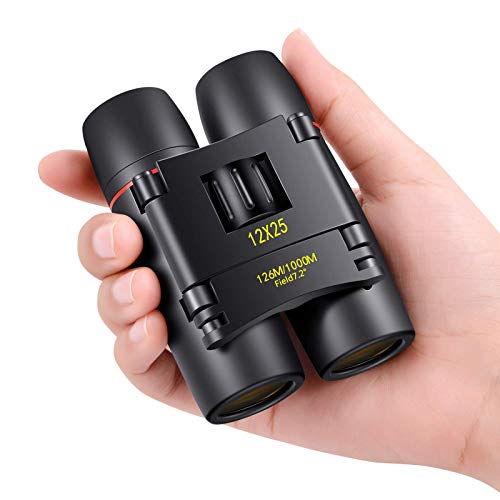
At about 0.36 pounds, this is the lightest option with a weight, making it the clearest choice for minimizing carried gear. These compact 12×25 binoculars use a center-focus knob and a separate right-eye adjustment, with BAK4 prisms. Their field of view is 126 feet at 1,000 yards, narrower than the other conventional binocular with a field-of-view figure. That tradeoff matters when scanning a broad scene, such as a moving game or a wide landscape; this pair suits buyers who put pocketable size ahead of a broad view.
Bottom line: Choose this when low carried weight matters more than a wide field of view.
20×50 High-Powered Binoculars

With 20x magnification, this pair offers the highest magnification among the conventional binoculars in the group. It has 50mm objective lenses and a field of view of 504 feet at 1,000 yards. The product describes the body as compact, but its weight is about 1.96 pounds, which is more than the lighter pocket models here. This makes it a less natural choice for long walks or hands-free travel; consider it when higher magnification is the priority and carrying the additional weight is acceptable.
Bottom line: Pick this when higher magnification outweighs the burden of carrying a heavier pair.
Vivitar Night Vision Binocular Camera
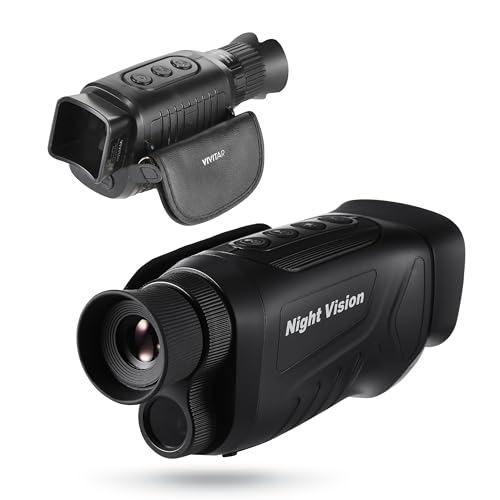
For nighttime use, this Vivitar camera binocular is distinct from the sport-oriented digital model because it specifies infrared viewing up to 300 meters and includes a 2.7-inch display. It has 4x optical magnification, 5x digital zoom, 16MP photo capture, and 1080p video. The product also gives a 0.5-meter close-observation distance. Those camera and infrared features make it a specialized option rather than a straightforward daylight sports binocular; choose it for night observation and recording, not when the main goal is a familiar high-magnification optical view.
Bottom line: Choose this for infrared night observation and onboard image recording.
How to Choose Compact Sport Binoculars
Choose based on whether you need only a view or also want to record it. Conventional binoculars provide optical viewing; camera binoculars add a sensor and controls, and some include a screen. Magnification and objective-lens diameter appear as paired numbers such as 12×25: 12x is magnification and 25mm is the objective lens diameter. A wider field of view helps when following motion, while higher magnification narrows the view and makes hand movement more noticeable. For sports from the stands, a broad view can make tracking action easier than maximizing magnification. Compare the field of view at the same distance, commonly 1,000 yards, rather than comparing unlike units or distances.
Magnification, Field of View, and Handheld Viewing
Higher magnification does not automatically make handheld binoculars easier to use. At 20x, small hand movements are magnified along with the subject; a support can help steady the view, while lower magnification is generally easier to hold steady. Field-of-view figures also help distinguish models: a figure expressed as feet at 1,000 yards describes the width of the scene at that distance. For moving sports, favor a wider stated field when the other requirements are similar. Compare the 12x models by their field figures, and treat camera zoom separately: optical magnification and digital zoom are different functions, not interchangeable ways to assess binocular viewing.
Camera Binoculars Versus Optical Binoculars
Camera binoculars are the better fit when saving photos or video is part of the goal; conventional binoculars are the simpler choice when viewing is enough. A camera model may give separate figures for optical magnification, digital zoom, photo resolution, and video resolution. These numbers describe different things: megapixels refer to captured still images, video resolution describes recording, and optical magnification describes the viewing optics. A digital zoom crops or enlarges the image electronically, so do not treat it as additional optical magnification. For daytime sports, consider whether you will actually use recording controls; for night use, check the infrared range and display features rather than assuming a camera model has usable night vision.
Fit and Comfort for Glasses
Eyecup position and eye relief determine how comfortably many glasses wearers can see the full image. Fold-down or adjustable eyecups can help bring glasses closer to the eyepiece, and longer eye relief is useful when lenses keep the eye farther back. The Occer pair specifically includes pull-down eyecups and long eye relief; do not assume every compact pair offers the same fit. If possible, look for an eye-relief measurement and adjustable eyecups in the specifications. For viewers without glasses, raised eyecups can help position the eyes consistently. Keep the binoculars steady and adjust focus while viewing a stationary target before following fast action.
Reading the Specifications Without a Common Mistake
Compare only like measurements: magnification with magnification, field of view at the same distance, and optical zoom with optical zoom. A field listed in feet should be converted before comparing with a field listed in yards; 1 yard equals 3 feet. The 20×50 format means 20x magnification and a 50mm objective lens, not a 50x zoom. Weight also matters for travel: a heavier pair can be tiring to carry for hours, even if a compact label appears in its name. For safe viewing, never aim binoculars at the sun; concentrated sunlight can cause severe eye injury.
Frequently Asked Questions
What does 12×25 mean on binoculars?
The first number is magnification, and the second is the objective lens diameter in millimeters. A 12×25 pair magnifies the view 12 times and has 25mm front lenses.
Are 20x binoculars good for watching sports?
They can show distant details, but 20x magnification also makes hand shake more noticeable and gives a narrower view than lower magnification. For tracking fast action without a support, a wider field of view and steadier handheld image may matter more.
What field of view is useful for sports?
A wider field helps keep moving subjects in view, so compare each model’s field at the same distance. The feet-per-1,000-yards figure is a useful common format; larger numbers mean a wider scene at that distance.
Can I use binoculars while wearing glasses?
Yes, if the eye relief and eyecup design let your eyes see the full field through your glasses. Fold-down eyecups can help, and the Occer pair specifically has adjustable eyecups and long eye relief.
Are camera binoculars the same as night vision binoculars?
No. Camera binoculars record images, while night vision models use features such as infrared illumination to support viewing in darkness. Check for an infrared range rather than assuming any camera binocular can see at night.