
WallaBuds Pro Earbuds Compared by Fit and Use

WallaBuds Pro Dot is the WallaBuds Pro choice for side sleepers because its low-profile design sits nearly flush in the ear. Choose a different model for workouts or open ear awareness: WALLA SOUND Sport Earbuds has stabilizing fins, while WallaBuds Fit Open Ear uses an open-fit design.
We earn a commission if you buy through links on this page. As an Amazon Associate I earn from qualifying purchases. Products are compared on manufacturer specifications, not hands-on testing.
- Best overall: WallaBuds Pro Dot – Its low-profile design and 28-hour total playtime target overnight listening.
- Best for workouts: WALLA SOUND Sport Earbuds – Twist-in stabilizing fins are designed to hold the earbuds during exercise.
- Best for awareness: WallaBuds Fit Open Ear – The open-fit design lets you listen while remaining aware of your surroundings.
| Product | Best for | Design | Battery life | Shop |
|---|---|---|---|---|
| WallaBuds Pro Dot | Side sleepers | Low-profile in-ear | 28 hours with case | Check Price on Amazon |
| WALLA SOUND Sport Earbuds | Workout stability | In-ear with twist-in fins | 50 hours with case | Check Price on Amazon |
| WallaBuds Fit Open Ear | Open ear awareness | Open fit | 28 hours with case | Check Price on Amazon |
| S53 Wireless Earbuds | Long case runtime | In-ear | 48 hours with case | Check Price on Amazon |
WallaBuds Pro Earbuds and Alternatives
Compare the sleep-focused in-ear model with sport, open-fit and general-purpose wireless options.
WallaBuds Pro Dot

WallaBuds Pro Dot stands apart with a low-profile shape intended to sit nearly flush in the ear, making it the most directly relevant choice for side sleepers. Each bud weighs 6 grams, and the case is described as supporting 28 hours of playtime; the earbuds are IPX4 water resistant. WALLA SOUND says the design is intended for sleeping, reading and listening to audio at night. Buyers who want an exercise-oriented hold or open ear awareness should look at a different design, since this model prioritizes a small in-ear fit.
Bottom line: Choose it for low-profile overnight listening and side-sleeping comfort.
WALLA SOUND Sport Earbuds

WALLA SOUND Sport Earbuds is the workout-oriented alternative, with an in-ear shape and twist-in stabilizing fins rather than the sleep-focused low profile of WallaBuds Pro Dot. WALLA SOUND says the USB-C charging case has an LED display and supports 50 hours of battery life; the earbuds use Bluetooth 5.3 and have an IPX5 waterproof rating. The fins may suit exercise when a more secure-feeling fit matters. This shape is not the open design for environmental awareness, and buyers choosing it specifically for sleep should weigh its finned form against a flatter profile.
Bottom line: Pick it when a fin-stabilized fit matters more than a sleep-focused shape.
WallaBuds Fit Open Ear
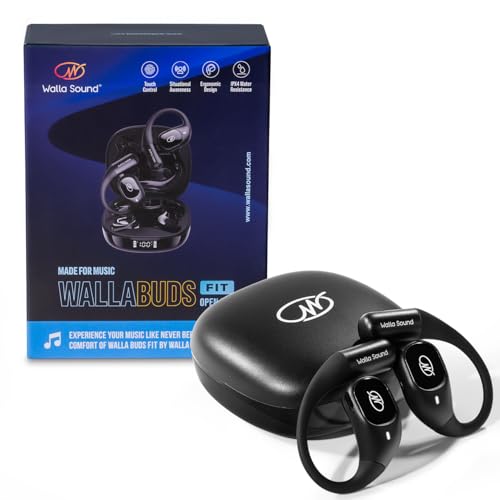
WallaBuds Fit Open Ear differs from the in-ear alternatives by using an open-fit design intended to preserve awareness of nearby surroundings. The product name and features identify Bluetooth 5.3, USB-C case charging, IPX4 water resistance and 28 hours of battery life. WALLA SOUND describes it for workouts, commuting and office use, where hearing the environment can be useful. Open-fit earbuds do not provide the same enclosed ear fit as an in-ear pair, so listeners who want a sealed, low-profile sleep fit should choose another style.
Bottom line: Choose it if hearing your surroundings while listening is the priority.
S53 Wireless Earbuds

S53 Wireless Earbuds is a general-purpose in-ear alternative with a claimed 48 hours of playback from the earbuds and case, including up to 8 hours on one charge. Its features give Bluetooth 5.3, a transmission range of up to 33 feet, automatic pairing and an IPX7 waterproof rating. The white, one-size model is not specifically designed for side sleeping, exercise stability or open ear awareness. Its longer stated case runtime may appeal to buyers focused on fewer charging stops, but its fit purpose is less specialized than the Walla models.
Bottom line: Consider it for its 48-hour case-inclusive playback rather than a specialized fit.
How to choose WallaBuds Pro earbuds
Choose by fit first: a low-profile in-ear shape is suited to pillow contact, while fins target a steadier workout fit and an open design keeps the ear less enclosed. Battery totals can be misleading when compared without checking whether they include the charging case; single-charge runtime and case-inclusive runtime are different measures. For movement, prioritize a fit that stays secure during head turns, and test the seal gently before exercising. A snug in-ear seal can affect bass and stability, while forcing a tip or bud into a sore ear is a poor fit. For overnight wear, consider whether any part presses against the pillow when lying on your side.
| Need | Design to compare |
|---|---|
| Side sleeping | Low-profile in-ear |
| Exercise hold | In-ear with stabilizing fins |
| Nearby-sound awareness | Open fit |
What IPX water-resistance ratings mean
IPX4 indicates protection against splashing water, while IPX5 indicates resistance to water jets under the IP rating system; neither rating means an earbud is intended for swimming. IPX7 is a different level, associated with temporary immersion under defined laboratory conditions, generally up to 1 meter for 30 minutes. A rating describes water ingress protection, not sound quality or fit. For workouts, sweat and splashes are common concerns, but avoid treating an IP rating as permission to submerge a product unless its maker explicitly allows that use. Dry the charging contacts before placing damp earbuds in a case.
How to compare earbud battery claims
Case-inclusive playtime combines listening between charges with recharges available from the case; it does not mean one uninterrupted session. Per-charge runtime is the better figure for a long commute or overnight audio, and playback time generally changes with volume, call use and other operating conditions. Compare totals only when the products use the same basis. Charging cases also add bulk, so a longer total may trade against pocketability. For sleep, avoid running audio louder than needed and make sure alarms or other essential sounds remain audible through a separate device or setting.
How to fit and care for wireless earbuds
In-ear buds should sit securely without pain; a poor seal can weaken bass and make the earbuds easier to dislodge. Open-fit designs do not seal the ear canal in the same way, so they may not isolate outside sound. Keep mesh and charging contacts free of lint, and wipe moisture off before storing the buds. Never clean earbuds while they are charging, and do not insert sharp objects into speaker openings. Water resistance can decline with wear or impact, so avoid relying on a rating for damaged hardware. For prolonged listening, keep volume moderate and take breaks if your ears feel uncomfortable.
Frequently Asked Questions
Can I sleep on my side with wireless earbuds?
A low-profile earbud is generally the most suitable shape for side sleeping because less of it protrudes toward the pillow. Pillow firmness, ear shape and sleeping position still affect pressure, so stop wearing any bud that causes pain.
Does IPX4 mean earbuds are waterproof?
No; IPX4 is a splash-resistance rating, not a swimming rating. IPX5 addresses water jets, while IPX7 refers to temporary immersion under defined test conditions.
How long do earbuds last on one charge?
Check the per-charge runtime separately from the case-inclusive total, since the case adds extra listening time after recharging the buds. Actual playback can change with volume, calls and other use.
Are open ear earbuds good for running outdoors?
Open ear designs can let more surrounding sound reach the listener, which can help with awareness outdoors.