
Best Magnetic Toilet Cleaners: What Works and Why

For most households, zuylikxy Magnetic Toilet Cleaners, 4-Pack is the practical pick because it includes four cleaners, but magnetic toilet cleaners should not be relied on to remove or prevent hard-water scale. A magnet does not remove dissolved calcium and magnesium; choose a suitable descaler for existing deposits instead.
Choose a different approach if your goal is dependable scale removal: mineral deposits require cleaning or water treatment, not just a magnet placed in the tank.
We earn a commission if you buy through links on this page. As an Amazon Associate I earn from qualifying purchases. Products are compared on manufacturer specifications, not hands-on testing.
- Best overall: zuylikxy Magnetic Toilet Cleaners, 4-Pack – The four-piece pack provides the largest quantity among these options.
- Best for a single cleaner: HOME-X Magnetic Toilet Descaler, 1-Pack – The one-piece option suits buyers who want to try one magnet rather than buy a multi-piece set.
- Best for replacements: Dimsile Magnetic Toilet Cleaners, 3-Pack – The three-piece set provides extras for later replacement or multiple toilets.
| Product | Best for | Quantity | Cleaner size | Claimed service life | Shop |
|---|---|---|---|---|---|
| zuylikxy Magnetic Toilet Cleaners, 4-Pack | Multi-toilet households | 4 | 4.06 × 0.98 in | — | Check Price on Amazon |
| Dimsile Magnetic Toilet Cleaners, 3-Pack | Replacement spares | 3 | 4.33 × 1 in | Up to 5 years | Check Price on Amazon |
| HOME-X Magnetic Toilet Descaler, 1-Pack | Single-toilet trial | 1 | — | — | Check Price on Amazon |
| Magnetic Toilet Cleaner, 2-Pack | Two-toilet homes | 2 | — | Up to 5 years | Check Price on Amazon |
Magnetic Toilet Cleaners
These tank magnets differ mainly in pack size and dimensions, while their mineral-control claims should be treated cautiously.
zuylikxy Magnetic Toilet Cleaners, 4-Pack

The four-piece pack has the largest quantity among these choices, which may suit a home with several toilets or provide spares. Each plastic cleaner with a magnet measures 4.06 × 0.98 inches, and the maker says to place it in the tank. The maker presents the set as a way to simplify cleaning, but a tank magnet is not a dependable descaler: it does not remove dissolved hard-water minerals. Choose this set for its quantity, not as a substitute for cleaning scale or addressing hard water.
Bottom line: Pick this set if you want four tank magnets and understand they are not a proven scale-removal method.
Dimsile Magnetic Toilet Cleaners, 3-Pack
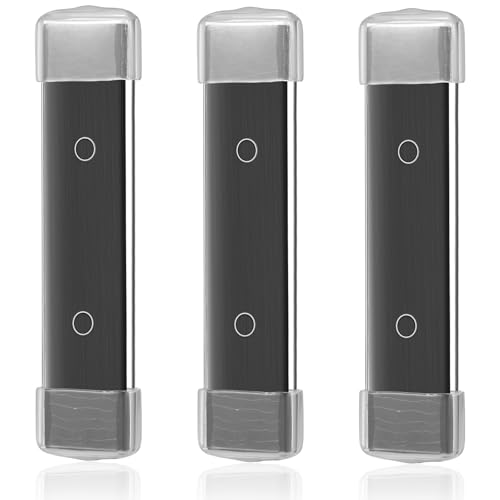
The Dimsile set is the only option here with a service-life claim: the maker says each cleaner can be used for up to five years. The package contains three pieces, each 4.33 × 1 inch, so it offers replacements without the four-piece quantity of zuylikxy Magnetic Toilet Cleaners, 4-Pack. The maker claims the magnetic field prevents lime and stains, but magnets do not remove calcium or magnesium from water. This set may appeal to buyers seeking a chemical-free tank accessory, but it is not a substitute for a descaler when mineral deposits are already visible.
Bottom line: Choose this set if a long service-life claim and three pieces suit your needs.
HOME-X Magnetic Toilet Descaler, 1-Pack

The HOME-X option is a single cleaner, unlike the multi-piece sets, so it suits someone who wants to try one tank magnet. The maker claims it attracts minerals to reduce lime stains in the tank and bowl. That mechanism should not be confused with descaling: a magnet does not dissolve established calcium deposits or remove dissolved hardness minerals. The specifications give no dimensions, so confirm that it can fit without interfering with the toilet’s float or flush mechanism before placing it in the tank.
Bottom line: Pick the single unit if you want to try a tank magnet and can confirm its fit.
Magnetic Toilet Cleaner, 2-Pack

The two-piece set offers a middle quantity between the single cleaner and the larger packs. The maker says each magnet lasts up to five years and claims it helps prevent mineral buildup and stains without harsh chemicals. Those are maker claims, not a reason to expect scale removal: minerals already deposited in a toilet need an appropriate cleaning method, and dissolved hardness is not eliminated by a tank magnet. The specifications provide no dimensions, so buyers should confirm the cleaner will sit clear of moving tank parts.
Bottom line: Choose this pair if two cleaners are useful and you are treating the long-life claim as the maker’s estimate.
How magnetic toilet cleaners work
A tank magnet sits in the toilet’s refill water, but it does not filter or remove dissolved hardness minerals. Hard water contains dissolved calcium and magnesium; when water evaporates, these minerals can remain as scale, commonly calcium carbonate. Magnetic-cleaner makers claim the magnets change how minerals behave, but a magnet is not a reliable descaling treatment. For existing deposits, use a toilet-compatible cleaner intended for mineral scale, following its label and keeping it away from incompatible tank components. If scale returns quickly, reducing hardness at the water supply with appropriate treatment is more direct than relying on an in-tank accessory.
Choosing between magnetic toilet cleaner packs
Pack size is the clearest measurable difference among these options: the products include one, two, three, or four cleaners. Match the count to the number of toilets you intend to equip, rather than assuming that more magnets will improve scale control. Two products give dimensions—4.33 × 1 inches and 4.06 × 0.98 inches—while the other two do not, so confirm tank clearance when fit is uncertain. Toilet tanks contain moving parts such as a float and flush valve; a cleaner must not obstruct their movement. Choose a cleaner-free approach if you cannot confirm a safe position or if the toilet maker warns against tank accessories.
What removes hard-water scale from a toilet
Acid-based cleaners dissolve mineral deposits more directly than magnets, while water-softening treatment reduces hardness before water reaches the toilet. For a small deposit, choose a product labeled for toilet mineral scale and follow its contact-time and compatibility directions. Never combine bleach with an acid cleaner or ammonia: dangerous gases can form. Tank parts may include rubber seals and plastic components, so do not assume a bowl cleaner is suitable for the tank. A simple decision rule is to use a tank magnet only as an optional accessory; for visible crusty scale, select an appropriate descaler instead.
Toilet tank cleaning and safety
Keep tank cleaning products compatible with the toilet’s internal parts, because seals and flush mechanisms can be damaged by unsuitable chemicals or accessories. Do not mix cleaning products, especially bleach with acids or ammonia, and ventilate the room while using cleaners. A magnet must sit clear of the float and flush valve so it cannot interfere with refilling or flushing. If mineral deposits repeatedly return despite cleaning, address the hard water rather than adding more magnets; dissolved calcium and magnesium remain in the supply water until treated.
Frequently Asked Questions
Can a magnet remove hard-water stains?
No; a magnet does not dissolve or remove calcium and magnesium deposits. Use a toilet-compatible mineral-scale cleaner for existing stains.
Do magnetic toilet cleaners soften water?
No, tank magnets do not remove hardness minerals from the water supply. Water softening requires treatment such as an ion-exchange system.
Can a magnetic cleaner go in every toilet tank?
No single accessory is assured to fit every tank. Keep it clear of the float and flush valve, and avoid tank accessories if the toilet maker advises against them.
How do you clean mineral scale safely?
Use a toilet-compatible descaler according to its label and keep it away from incompatible tank parts. Never mix bleach with acidic cleaners or ammonia.
Why does toilet scale keep coming back?
Repeated scale usually reflects ongoing hard-water mineral content in the supply. Cleaning removes deposits, while suitable water treatment addresses hardness before it enters the toilet.