
Waterproof Bags for Swimming: 3 Types Compared

For most swimmers carrying only a phone, ID and cash, AiRunTech Waterproof Fanny Pack is the closest fit because its maker claims protection underwater to 32 feet. Choose HEETA 5L Roll-Top Dry Bag instead for larger belongings in a 5-liter roll-top backpack, or Crenova Waterproof Pouches, 2-Pack if you want a two-pouch set with a shorter stated submersion limit.
These products suit different loads: a small pouch is for essentials, while a dry bag has more room. Waterproof claims do not make a bag a flotation device or a substitute for swimming safety equipment.
We earn a commission if you buy through links on this page. As an Amazon Associate I earn from qualifying purchases. Products are compared on manufacturer specifications, not hands-on testing.
- Best overall: AiRunTech Waterproof Fanny Pack – Its maker claims triple-zip protection underwater to 32 feet, and the pouch is sized for small valuables.
- Best for larger loads: HEETA 5L Roll-Top Dry Bag – The 5-liter roll-top backpack has adjustable shoulder straps and a side handle.
- Best for a spare pouch: Crenova Waterproof Pouches, 2-Pack – The two-piece set has a maker-claimed submersion limit of 4.9 feet for around 30 minutes.
| Product | Best for | Capacity or size | Carry style | Maker-claimed water protection | Shop |
|---|---|---|---|---|---|
| HEETA 5L Roll-Top Dry Bag | Larger belongings | 5 L | Backpack straps; side handle | Accidental submersion | Check Price on Amazon |
| AiRunTech Waterproof Fanny Pack | Small valuables | 8.5 × 5.8 in | Fanny pack | Maker claims protection to 32 ft underwater | Check Price on Amazon |
| Crenova Waterproof Pouches, 2-Pack | Two small pouches | 8.66 × 6 in each | Adjustable strap, 27–45.1 in | Maker claims 4.9 ft for around 30 min | Check Price on Amazon |
Waterproof Bags for Swimming
Match the bag’s size and closure style to what you plan to carry, and treat immersion claims as product-specific limits.
HEETA 5L Roll-Top Dry Bag
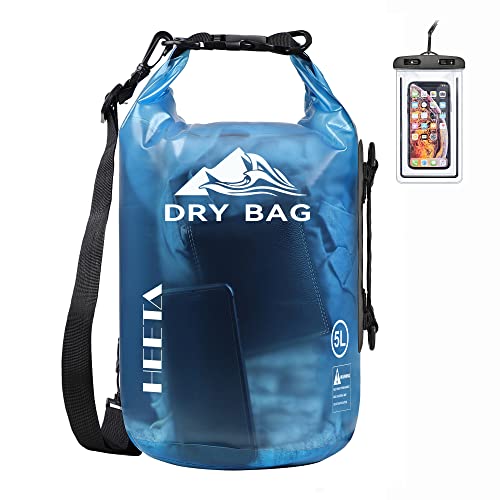
For clothing or several larger belongings, HEETA 5L Roll-Top Dry Bag offers more room than the compact waist pouches. The 5-liter PVC bag uses a roll-top closure, adjustable shoulder straps and a side handle, so it can be carried as a backpack or by hand. The maker says its seamless construction handles accidental submersion but cautions against keeping it underwater for extended periods. Its 13-by-8-by-8-inch dimensions also make it bulkier than a valuables pouch; swimmers carrying only a phone and cards may prefer a smaller option.
Bottom line: Choose this if you need a 5-liter carry bag rather than a small valuables pouch.
AiRunTech Waterproof Fanny Pack
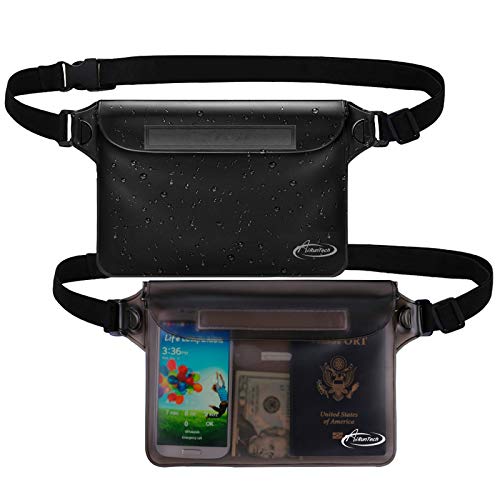
For small valuables carried close to the body, AiRunTech Waterproof Fanny Pack is a compact fanny pack-style pouch rather than a backpack. Its maker claims triple-zip protection to 32 feet underwater and says the translucent pouch allows touch-screen use; the opaque pouch is intended for items such as ID, cash and cards. At 8.5 by 5.8 inches, it is suited to essentials, not a change of clothes or bulky gear. The underwater depth is a maker claim, so stay within that stated limit and ensure the seals are fully closed before swimming.
Bottom line: Pick this for a close-fitting pouch for phone-sized essentials and documents.
Crenova Waterproof Pouches, 2-Pack

For carrying essentials in two separate pouches, Crenova Waterproof Pouches, 2-Pack comes as a blue-and-black set with an adjustable strap. The maker says its triple zip locks and hook-and-loop strip protect contents when submerged below 4.9 feet for around 30 minutes. Each pouch measures 8.66 by 6 inches, making it a compact option for a phone, cards or similar small items rather than spare clothing. That stated depth and duration are narrower than AiRunTech Waterproof Fanny Pack’s underwater claim, so this set suits shallow-water use within its limit.
Bottom line: Choose this set if two compact pouches and a shorter stated immersion limit suit your swim.
How to choose a waterproof swimming bag
Choose by the load first: a valuables pouch is easier to keep close, while a 5-liter dry bag can carry larger items. A roll-top dry bag seals by folding its open neck down before fastening; a zip-seal pouch depends on fully engaging each closure. Compare the maker’s immersion depth and duration claims rather than treating the word “waterproof” as a universal rating. IEC 60529 defines IP ingress-protection ratings; for example, IPX7 describes a specified temporary immersion test, while IPX8 conditions are set by the manufacturer. Neither rating alone tells you whether a bag’s seams, closure and intended use match your swim. If you will be swimming rather than wading, do not use a bag as flotation or safety equipment.
How to prepare a bag for swimming
Before putting valuables inside, test the empty bag with a dry tissue and inspect it for trapped debris, damaged seams or worn closure parts. Close the bag exactly as designed: roll-top dry bags need the top folded down and fastened, while zipper pouches need every seal fully engaged. A closure that looks shut may still have a corner or channel left open. Keep the claimed depth and duration as upper limits, not targets, and avoid prolonged submersion when the maker warns against it. For a swim where you will be moving continuously, secure the strap so the pouch does not swing or interfere with your arm movement. A sealed bag is not a substitute for a life jacket or other required safety gear.
How the swimming bag types differ
Small waterproof pouches prioritize carrying essentials; roll-top dry bags prioritize volume and hand or shoulder carry. Pouch claims often give a depth and time, while a dry bag claim may distinguish accidental immersion from extended underwater use, so compare like conditions. The table summarizes what each form in this group is intended to carry.
| Need | Bag form | Trade-off |
|---|---|---|
| Phone, cards and ID | Small pouch | Compact, limited room |
| More gear or clothing | Roll-top dry bag | More volume, bulkier to carry |
| Two separated small loads | Two-pouch set | Separate storage, still limited to pouch size |
Pick based on the actual contents, not just the bag’s carry style: a pouch is not a dry sack for wet towels or spare clothes.
What immersion claims mean
Immersion claims apply only within the depth, duration and closure conditions specified by the maker. IPX7 is a defined temporary-immersion test under IEC 60529, while IPX8 is for conditions agreed or specified by the manufacturer; IP68 therefore does not mean every bag withstands the same depth and time. A product’s own stated limit matters more than a generic assumption about the word waterproof. Salt water, sand and repeated opening can also leave residue around closures, so rinse and dry the bag after use when appropriate. Do not assume a pouch that protects valuables will keep them dry indefinitely, and do not rely on any bag to keep a person afloat.
Frequently Asked Questions
Can I swim with my phone in a waterproof pouch?
A pouch can carry a phone only within its closure and immersion limits. For example, one maker claims protection to 32 feet underwater, but that claim does not establish protection outside its conditions or after wear.
How should I test a swimming bag before use?
Put a dry tissue in the empty bag, close it completely and briefly submerge it in a basin, then check the tissue for moisture. Repeat after inspecting the seals if the closure was not fully engaged.
Is IP68 enough to choose a swim pouch?
No; IP68 does not give one universal depth-and-time limit. Under IEC 60529, IPX8 immersion conditions are set by the manufacturer, so use the bag’s specific stated conditions.
Can a waterproof pouch keep me afloat?
Do not count on a pouch to keep you afloat, even if its maker calls it floating. Use appropriate flotation and swimming safety equipment instead of relying on a valuables bag.
How much can a 5-liter dry bag hold?
A 5-liter bag has a nominal capacity of 5 liters, but bulky shapes may not pack efficiently. Check the bag’s dimensions against the largest item you plan to carry.