
Waterproof Bandage for Stitches: 3 Options Compared

For stitches, Transparent Film Dressing 4 x 4.75 in, 30 Count is the closest match because its 4-by-4.75-inch transparent film is sized for covering a larger area; check that it covers the incision without stretching or pulling at the skin. Choose a smaller dressing if the wound is minor and fits its pad, or ask your clinician which dressing to use.
Waterproof covers can help keep splashes off, but they do not make a healing incision safe for swimming or soaking. Follow your clinician’s wound-care instructions, especially about bathing and when to change the dressing.
We earn a commission if you buy through links on this page. As an Amazon Associate I earn from qualifying purchases. Products are compared on manufacturer specifications, not hands-on testing.
- Best overall: Transparent Film Dressing 4 x 4.75 in, 30 Count – The 4-by-4.75-inch film format can cover a larger incision area.
- Best for smaller coverage: Nexcare Tegaderm Transparent Dressing, 8 Count – The transparent dressing measures 2.375 by 2.75 inches.
| Product | Best for | Format | Size | Count | Shop |
|---|---|---|---|---|---|
| Transparent Film Dressing 4 x 4.75 in, 30 Count | Larger coverage | Film dressing | 4 x 4.75 in | 30 | Check Price on Amazon |
| Nexcare Tegaderm Transparent Dressing, 8 Count | Smaller film cover | Transparent film dressing | 2.375 x 2.75 in | 8 | Check Price on Amazon |
| HEALQU Transparent Film Dressing 4 x 4.7 in, 10 Pack | Post-surgical cover | Film dressing | 4 x 4.7 in | 10 | Check Price on Amazon |
Waterproof Bandages for Stitches
Compare the dressing format and size, then make sure the cover suits your incision and your clinician’s care instructions.
Transparent Film Dressing 4 x 4.75 in, 30 Count

Transparent Film Dressing 4 x 4.75 in, 30 Count is the largest film format here, with a 4-by-4.75-inch transparent dressing for covering a broader area. The maker says the polyurethane film is breathable and waterproof, and the clear surface lets you view the covered site. The box contains 30 pre-cut dressings. This format may suit an incision that needs more surrounding coverage than a small adhesive bandage can provide, provided the adhesive does not pull on the wound or nearby skin. A film cover is not a reason to swim or soak stitches; follow your clinician’s advice on water exposure.
Bottom line: Choose this if you need a larger transparent film cover and your clinician approves it.
Nexcare Tegaderm Transparent Dressing, 8 Count
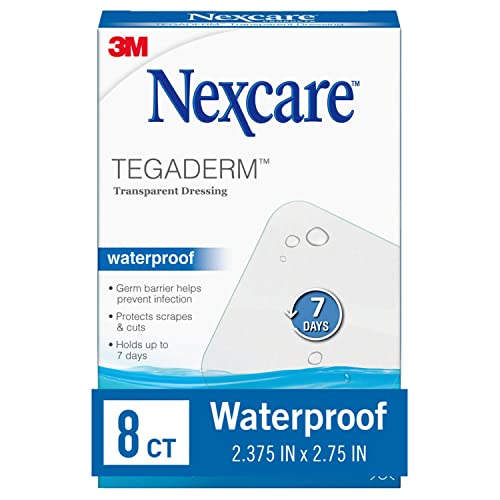
Nexcare Tegaderm Transparent Dressing, 8 Count offers a smaller transparent film dressing, measuring 2.375 by 2.75 inches, rather than the broad sheets in the assortment. The maker says it protects minor burns, scrapes, cuts, blisters, and abrasions and stays on during bathing and showering. Its eight-count pack may suit a smaller site when one dressing can cover the incision with room around it. The uses focus on minor wounds, so do not assume this is appropriate for every surgical incision or suture; check with your care team if the wound is fresh, draining, or under specific dressing instructions.
Bottom line: Pick this for a smaller area when your clinician approves a transparent film dressing.
HEALQU Transparent Film Dressing 4 x 4.7 in, 10 Pack

HEALQU Transparent Film Dressing 4 x 4.7 in, 10 Pack is a large transparent film dressing with a usable size of 4 by 4.7 inches after removing the paper rim. The maker says the polyurethane film is waterproof and breathable and describes the adhesive as latex-free and hypoallergenic. Its post-surgical and IV-shield positioning makes it relevant to incision coverage, while the 10-pack is smaller than the 30-count alternative. The maker’s water-resistance claim does not establish that a stitched wound can be immersed; avoid swimming or soaking until your clinician clears it, and use the dressing style they recommend.
Bottom line: Consider this for a post-surgical site when the size and dressing style match care instructions.
How to choose a waterproof bandage for stitches
Choose by wound coverage first, not by the word “waterproof.” A dressing should cover the incision and surrounding skin without stretching the skin or pulling across the stitches; compare its usable dimensions with the area your clinician wants covered. Transparent film and pad-centered adhesive bandages work differently: film covers a broader area, while a conventional bandage has a central absorbent pad. Fresh surgical wounds may have specific dressing instructions, so ask the treating clinician before changing the type. A waterproof cover limits water reaching the site while the seal holds, but it does not mean soaking or swimming is safe. Keep the wound out of pools and baths until your care team says immersion is appropriate.
Film dressings and adhesive bandages compared
Film dressings provide a clear sheet over a wider area, while adhesive bandages place a pad over a smaller spot. The right format depends on the incision’s length, where it sits, and whether the care plan calls for a particular dressing. A transparent surface can make the covered area visible, but it does not replace wound checks or clinician instructions. Adhesives may irritate sensitive skin or pull on fragile skin during removal; stop and seek care-team advice if removal is painful or the skin reacts.
Use this format comparison to narrow the choice, then confirm coverage and suitability with your clinician.
| Need | Format to consider | Key check |
|---|---|---|
| Broad area | Transparent film sheet | Usable size covers the site |
| Small, localized wound | Pad-centered bandage | Pad fully covers the wound |
| Healing surgical incision | Clinician-directed dressing | Match the care plan |
When stitches can get wet
Brief shower exposure and immersion are different: a clinician may allow showering while still advising against baths, pools, and hot tubs. Follow the instructions for your particular closure and dressing rather than treating a waterproof seal as permission to soak. If a dressing becomes wet, loose, or dirty, use the change instructions from your care team; do not leave a compromised cover in place just because it is labeled waterproof. Redness that spreads, increasing pain, warmth, pus, or fever can signal a wound problem and warrants prompt medical advice. For stitches, the care team’s plan takes priority over a bandage maker’s general water-resistance claims.
Frequently Asked Questions
Can I swim with stitches under a waterproof bandage?
Avoid swimming and soaking a stitched wound until your clinician clears immersion. A waterproof cover can help resist splashes, but its seal does not establish that a healing incision is safe in pool or bath water.
Can I shower with stitches covered by film?
Many care plans allow a brief shower, but recommendations vary by wound and closure. Keep to the clinician’s instructions, and ask what to do if the dressing loosens or gets wet.
How large should a dressing be for stitches?
Choose a dressing that covers the full incision and the surrounding area your clinician wants protected without stretching the skin. Measure the usable cover area, since a paper rim may make a film dressing’s actual coverage smaller.
When should I change a dressing over stitches?
Use the change schedule given by the clinician who treated the wound; a universal interval does not fit every closure. Change guidance may differ if the cover becomes wet, dirty, loose, or saturated.
What signs around stitches need medical attention?
Get medical advice for spreading redness, increasing pain, warmth, pus, or fever. A bandage can cover the area, so check the wound as directed rather than relying only on the outer surface.