
Waterproof Headband for Swimming: 4 Options Compared

For swimming with earplugs, Sync Hair Guard & Ear Guard is the most versatile choice because its silicone band can be worn alone or under a swim cap. Choose an adjustable neoprene style instead if you need a closure that can be tightened, but a headband alone should not be treated as a watertight ear seal.
We earn a commission if you buy through links on this page. As an Amazon Associate I earn from qualifying purchases. Products are compared on manufacturer specifications, not hands-on testing.
- Best overall: Sync Hair Guard & Ear Guard – Silicone construction and under-cap or standalone wear give it two ways to cover hair or ears.
- Best for adjustable fit: Adjustable Neoprene Swim Ear Band – Stretch neoprene and a hook-and-loop closure are designed to fit kids through medium-sized adults.
- Best for holding earplugs: Mack’s Swimming Headband – The neoprene band is intended to hold earplugs or custom ear molds in place.
| Product | Best for | Material | Fit | Shop |
|---|---|---|---|---|
| Sync Hair Guard & Ear Guard | Silicone versatility | 100% silicone | Adult | Check Price on Amazon |
| Earvolution Ear Band-It Ultra | Earplug security | — | All ages | Check Price on Amazon |
| Adjustable Neoprene Swim Ear Band | Adjustable fit | Neoprene | Kids to medium adult | Check Price on Amazon |
| Mack’s Swimming Headband | Custom ear molds | Neoprene | — | Check Price on Amazon |
Waterproof Headbands for Swimming
Compare how each swimming headband is built and intended to fit before choosing one for use with earplugs or a swim cap.
Sync Hair Guard & Ear Guard

Sync Hair Guard & Ear Guard is the only silicone band in this group, and it can be worn under a swim cap or by itself. Its maker says the band can extend a cap for hair coverage or provide ear coverage alone; it is also designed to hold earplugs. The adult-size band suits swimmers who want one soft silicone layer for pool, lake, or beach use. Its adult sizing is less adaptable than an adjustable closure, so choose another option if you need to fine-tune the fit for a smaller head.
Bottom line: Choose this if you want silicone and the option to wear the band beneath a swim cap.
Earvolution Ear Band-It Ultra

Earvolution Ear Band-It Ultra focuses on keeping earplugs secure rather than extending a swim cap for hair coverage. The maker positions it for ear protection and says it is intended to be used with Putty Buddies earplugs, which are sold separately. That combination may suit swimmers seeking an extra layer over earplugs, including those who need to accommodate ear tubes. The band is not a substitute for a correctly fitted earplug, and its fields give no closure or material to compare; verify fit and suitability with a clinician when managing ear tubes.
Bottom line: Choose this for a band specifically intended to secure earplugs.
Adjustable Neoprene Swim Ear Band

Adjustable Neoprene Swim Ear Band is the adjustable option, using stretchy neoprene and a hook-and-loop closure rather than a fixed silicone shape. The maker says the design fits most kids through medium-sized adult heads and can be rinsed and air-dried after use. Its broader activity range includes water sports and bathing, and the band can help keep hair away from the face. The fit tops out at medium-sized adults, so swimmers with larger heads should check fit before choosing it; it is meant to help secure earplugs, not replace them.
Bottom line: Choose this if a closure you can tighten matters more than a silicone construction.
Mack’s Swimming Headband
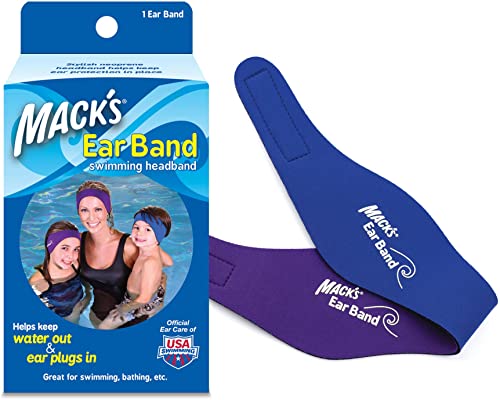
Mack’s Swimming Headband specifically names custom ear molds as well as earplugs, making it the distinct choice for swimmers who already use either. Its maker describes the neoprene band as an added layer over earplugs and says it helps discourage children from removing ear protection. It is intended for water activities and is sold as a single blue band. Full water blocking is described for pairing the band with separate putty earplugs, so this option is not a standalone waterproof seal.
Bottom line: Choose this if you want a neoprene band over earplugs or custom ear molds.
How to choose a swimming headband
Choose by the fit you need and whether you will wear earplugs: a headband helps hold ear protection in place, but the band alone is not a reliable waterproof seal. Silicone gives a molded, stretchy style, while neoprene bands often use a closure or compression to stay positioned. For a simple under-cap layer, pick a band explicitly designed to fit beneath a swim cap; for a more adjustable fit, look for a hook-and-loop closure. If your priority is keeping water out of the ear canal, use correctly fitted swimming earplugs with the band, rather than relying on fabric or silicone over the outside of the ear.
Swimming headbands do not replace a swim cap: caps cover hair and may reduce drag, while ear bands focus on coverage around the ears.
How to get a secure ear fit
A secure ear band should sit evenly over both ears without sliding or pinching, and earplugs should fit before the band is added. A loose band can shift during strokes, while an overly tight band may be uncomfortable or leave pressure marks. Adjustable hook-and-loop styles allow fit changes; fixed adult-size styles offer fewer adjustments. If the band is intended to hold earplugs, position it over the plugs after they are seated, not instead of them.
For children with ear tubes or ongoing ear concerns, ask their clinician which earplugs and water precautions are appropriate; a headband cannot guarantee that water will stay out. Do not force a plug into the ear canal. Keep the ear band snug enough to stay in place, but remove or reposition it if it causes pain or numbness.
Silicone and neoprene headbands compared
Silicone and neoprene serve different fit preferences: silicone is flexible and can work under a swim cap, while neoprene models commonly emphasize coverage and a band closure. Choose a product by its actual intended fit rather than assuming every material blocks water on its own. The table gives a practical way to match construction to use.
| Need | Better match | Reason |
|---|---|---|
| Wear beneath a swim cap | Silicone band designed for under-cap use | It is intended to sit below the cap |
| Adjust around different head sizes | Stretch neoprene with hook-and-loop | The closure can be tightened |
| Keep earplugs or molds in place | Ear band designed for ear protection | Its role is to secure protection over the ear |
None of these constructions should be treated as a guarantee of a watertight ear canal; use properly fitted earplugs when that protection matters.
Care and use after swimming
Rinse a swimming headband with clean water after use to remove pool chemicals, salt, and residue, then let it dry fully before storage. Air-drying in a ventilated place helps neoprene avoid staying damp between swims; avoid storing a wet band in a closed bag. Silicone is flexible, but sharp nails, jewelry, or rough edges can damage it, so handle and store it away from puncturing objects.
Inspect the band before each swim for tears, stretched areas, or a closure that no longer holds. Replace a damaged band if it cannot stay in position, and do not share earplugs between swimmers. Ear bands do not clean the ear canal; avoid inserting cotton swabs deeply after swimming, since that can irritate the canal.
Frequently Asked Questions
Can a swimming headband keep water out of ears?
A swimming headband alone cannot guarantee that water stays out of the ear canal. Use properly fitted swimming earplugs beneath a band designed to keep them in place when ear protection is needed.
Should I wear earplugs under a swim headband?
Yes, if your goal is to help limit water entering the ear canal, the earplugs do the sealing and the band helps hold them in place. Seat each plug as directed for that plug type before positioning the band.
Can a swim headband fit under a swim cap?
Some can; choose a band specifically designed for under-cap use. A bulky or poorly positioned band can shift or create pressure, so check that the cap and band sit comfortably before entering the water.
How should I dry a neoprene swim headband?
Rinse it after swimming and air-dry it fully in a ventilated place before storage. Keeping it wet in a closed bag can leave it damp between sessions.
Are swimming headbands suitable for children with ear tubes?
A headband may help keep earplugs in place, but it does not guarantee water exclusion. Ask the child’s clinician which earplugs and water precautions are suitable for their ear tubes.