
Waterproof Pens for Watercolor: 3 Options Compared

For most watercolor artists adding crisp outlines, Sakura Pigma Micron 6-Pack is the best starting point because its six waterproof points span 0.20 mm to 0.50 mm. Choose Muchcute 14 Micro Fineliners instead if you want a wider range of marks, including brush tips; pick a single-width set when you mainly need consistent medium-fine lines.
We earn a commission if you buy through links on this page. As an Amazon Associate I earn from qualifying purchases. Products are compared on manufacturer specifications, not hands-on testing.
- Best overall: Sakura Pigma Micron 6-Pack – Six waterproof point sizes cover precise outlines from 0.20 mm to 0.50 mm.
- Best for varied marks: Muchcute 14 Micro Fineliners – Fourteen tips span 0.15 mm to 3.0 mm and include two brush tips.
- Best for six-point variety: Grabie 6 Black Micro Fineliners – Six black pigment-ink tips cover 0.20 mm to 0.50 mm.
| Product | Best for | Tip range | Tip count | Ink | Shop |
|---|---|---|---|---|---|
| Sakura Pigma Micron 6-Pack | Fine outlines | 0.20–0.50 mm | 6 | Black, waterproof pigment | Check Price on Amazon |
| Grabie 6 Black Micro Fineliners | Fine-line variety | 0.20–0.50 mm | 6 | Black, waterproof pigment | Check Price on Amazon |
| Muchcute 14 Micro Fineliners | Broad tip range | 0.15–3.0 mm, plus brush | 14 | Black, waterproof archival pigment | Check Price on Amazon |
Waterproof Pens for Watercolor Compared
Match the pen’s tip range to the line weight and level of detail you want over watercolor.
Sakura Pigma Micron 6-Pack
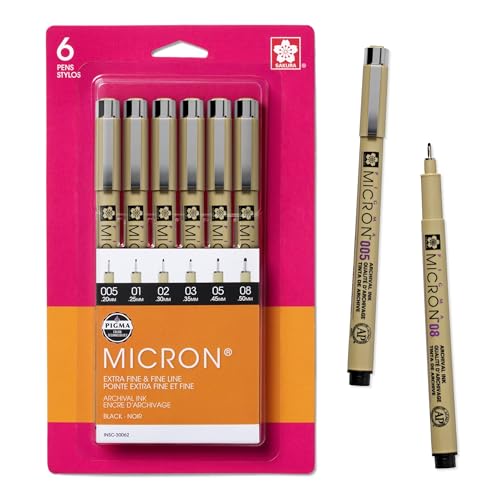
For a six-point black set with archival ink, Sakura Pigma Micron 6-Pack offers the familiar fine-liner range from 005 through 08, or 0.20 mm to 0.50 mm. The brand says the pH-neutral ink is quick-drying, waterproof, fade-resistant and bleed-free; the pens also carry an AP certification seal. That combination suits watercolor sketches where you want a narrow outline before adding washes. The set stays within fine-line widths, so artists who need broader strokes or brushlike marks should choose a wider-ranging option instead.
Bottom line: Choose this set for controlled black outlines across six fine widths.
Grabie 6 Black Micro Fineliners

Grabie 6 Black Micro Fineliners also covers six line widths from 0.20 mm to 0.50 mm, but distinguishes itself with metal-clad nibs. The brand says its fast-drying pigment ink is waterproof and smudge-resistant, making the set relevant for artists who want fine marks alongside watercolor. Its range suits detailing and outlining rather than broad fills; painters seeking substantial line-width variation beyond the narrow six-point spread should look at the set with tips up to 3.0 mm. Allow ink to dry before brushing water over it, since drying time can vary with paper and ink application.
Bottom line: Pick this set if metal-clad nibs matter for fine outlining.
Muchcute 14 Micro Fineliners

Muchcute 14 Micro Fineliners provides the broadest tip range here: sizes from 0.15 mm to 3.0 mm plus two brush tips. The brand describes its archival pigment ink as waterproof, quick-drying and fade-resistant. That spread suits artists switching from tiny details to heavier lines without changing pen families. The tradeoff is a larger assortment with tip options that may go beyond a watercolor sketcher’s usual outlining needs; if you only want consistent fine outlines, a six-point set is more focused. As with any pen-and-wash workflow, test the ink on the same paper before painting over it.
Bottom line: Choose this set when one assortment should cover fine and broad marks.
How to choose waterproof pens for watercolor
Choose by line width first: 0.20 mm to 0.50 mm is a useful fine-line span for detailed outlines, while a 1.0 mm or broader tip makes heavier marks. A brush tip changes width with pressure, so it offers expressive strokes rather than a fixed measured line. Pigment fineliners are a common choice for pen-and-wash because they make defined marks; however, waterproof on a pen label does not guarantee immediate water resistance on every paper. Drying time, ink load, paper coating and the amount of water in a wash all affect whether a line remains crisp. Make a small test mark on your intended paper, let it dry, then brush a wash across it before committing to a finished piece.
How to test ink before painting
Test the exact pen, paper and wash combination before using it in a finished watercolor. A practical check is to draw a short line, wait until it is fully dry, then pull a clean damp brush across it; if the stroke feathers or transfers, give it more drying time or use less water. Cold-pressed paper has a textured surface that can interrupt fine lines, while smoother paper generally supports more continuous detail. Watercolor paper is commonly sold by weight, with 140 lb paper a widely used starting point; heavier paper tends to buckle less but still benefits from suitable stretching or taping for wet washes. Keep the test area small and avoid saturating the sheet.
Waterproof fineliners and brush tips compared
Fine fineliners suit controlled contours, while wider tips and brush pens accommodate stronger marks. Tip measurements are nominal line widths; the actual mark can change with pressure, angle, paper texture and wear. Use this guide to match the format to the kind of line you need.
| Marking need | Useful tip format | Tradeoff |
|---|---|---|
| Tiny details | 0.15–0.25 mm fineliner | Fine points can catch on rough paper |
| General outlines | 0.30–0.50 mm fineliner | Fixed-width line |
| Bold accents | 1.0–3.0 mm tip or brush | Less precise for small details |
Common pen-and-wash mistakes
The most common mistake is painting over ink before it has dried completely; wait until the line has no sheen and test it with a damp brush first. Another is choosing an ultra-fine nib for heavily textured paper: a 0.15 mm to 0.20 mm point can skip across prominent grain, so use a broader point when a continuous contour matters more than hairline detail. Keep pressure light because pressing hard can damage delicate tips and make lines wider. Avoid dragging wet brush water through fresh marks, and do not assume a waterproof claim means the ink cannot transfer under every combination of paper, water volume and drying time.
Frequently Asked Questions
How long should waterproof pen ink dry before watercolor?
Let the line dry until it has no visible sheen, then test it with a damp brush on scrap paper. Drying time changes with ink amount, paper surface and room conditions, so a test is more reliable than a fixed wait.
Will waterproof fineliner ink work on rough watercolor paper?
It can, but rough paper may interrupt a fine line or catch a narrow nib. For prominent texture, try a 0.30 mm or broader tip and test the line before painting.
What pen tip size works for watercolor outlines?
A 0.20 mm to 0.50 mm fineliner range covers many detailed outline needs. Choose the narrow end for small details and the broader end when the contour needs to read clearly over a wash.
Can I use a brush pen for watercolor outlines?
Yes, a brush tip can make variable-width contours and expressive accents. Keep a fine fineliner nearby for small details, since brush width changes with pressure and angle.
Does waterproof ink prevent watercolor paper from buckling?
No, ink resistance and paper buckling are separate issues. A 140 lb watercolor sheet is a common starting weight, while heavier paper usually resists warping better during wet washes.