
Waterproof Sealant for Showers: 5 Options Compared

For a shower joint that needs a flexible, water-ready seal, GE Advanced Silicone Caulk is the closest match, with the maker saying it can face water after 30 minutes. Choose a liquid coating or adhesive tape instead only when you are sealing a surface or covering a seam rather than filling a joint.
Waterproof shower sealant usually means silicone caulk applied to a clean, dry joint; liquid coatings and tapes work differently and are not interchangeable with caulk.
We earn a commission if you buy through links on this page. As an Amazon Associate I earn from qualifying purchases. Products are compared on manufacturer specifications, not hands-on testing.
- Best overall: GE Advanced Silicone Caulk, Clear – Flexible 100% silicone caulk with maker-claimed 30-minute water readiness.
- Best for a 10 oz cartridge: Gorilla 100% Silicone Caulk, White, 10 oz – 10 oz cartridge, indoor/outdoor use, and maker-claimed ASTM C-920 Class 35.
- Best for covering seams: Fixmend Self-Adhesive PVC Caulk Tape – Self-adhesive PVC caulk tape is shaped for linear seams and includes a smoothing tool.
| Product | Best for | Form | Quantity | Color | Shop |
|---|---|---|---|---|---|
| GE Advanced Silicone Caulk, Clear | Shower joints | Silicone caulk | 2.8 fl oz | Clear | Check Price on Amazon |
| Gorilla 100% Silicone Caulk, White, 10 oz | Longer caulk runs | Silicone caulk | 10 oz | White | Check Price on Amazon |
| Fixmend Self-Adhesive PVC Caulk Tape | Straight surface seams | Adhesive PVC tape | 1.5 in × 10.5 ft per roll | White | Check Price on Amazon |
| Xmntdo Transparent Waterproof Agent, 35 oz | Surface crack coating | Liquid coating | 35 oz | Transparent | Check Price on Amazon |
| TUFINEIN Clear Waterproof Coating, 70 oz | Large surface coating | Water-based coating | 70 oz | Clear | Check Price on Amazon |
Waterproof Sealant for Showers Compared
Match the sealant form to the repair: flexible caulk fills joints, while coatings and tape cover surfaces or seams.
GE Advanced Silicone Caulk, Clear

For a small shower joint repair, this 2.8 fl oz tube gives you clear, 100% silicone caulk rather than a surface coating or tape. The maker says it stays flexible, resists shrinking and cracking, and is ready for water in 30 minutes. It adheres to common shower surfaces including glass, ceramic and porcelain tile, and granite. The small tube suits touch-ups or short seams; a larger cartridge may be more practical for long runs. The formula includes chemical ingredients with a caution, so use care during application.
Bottom line: Choose this for a small, clear shower-joint repair where flexibility and the maker-claimed 30-minute water readiness matter.
Gorilla 100% Silicone Caulk, White, 10 oz

The 10 oz cartridge gives this white 100% silicone caulk more volume than the small squeeze tube, making it a better fit for longer shower seams or several small repairs. The maker says it is water-ready in 30 minutes, remains flexible, and resists mold and mildew; it also cites ASTM C-920, Class 35. Its indoor/outdoor use includes showers, sinks, windows, and doors. White caulk is a visible color choice, so it may not suit a joint where a clear finish is needed.
Bottom line: Pick this for a longer white caulk run and when the maker-claimed mold and mildew resistance is useful.
Fixmend Self-Adhesive PVC Caulk Tape
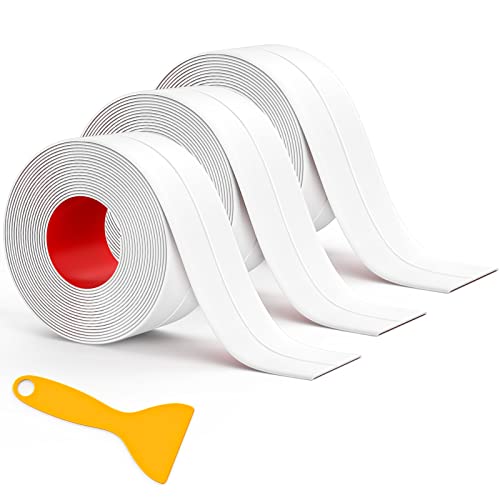
Unlike silicone caulk, this product covers a seam with white self-adhesive PVC tape; it is a surface strip rather than a joint-filling sealant. Each roll measures 1.5 inches by 10.5 feet, and the package includes three rolls and a sealing tool. The maker’s installation guidance calls for a clean, dry surface, peeling the backing, warming the tape with a hair dryer, then pressing and smoothing it. The strip is suited to straight, accessible seams, but it is not the same choice as flexible caulk for filling a moving or irregular gap.
Bottom line: Choose the tape for a clean, straight seam you want to cover without applying liquid caulk.
Xmntdo Transparent Waterproof Agent, 35 oz

This 35 oz transparent liquid coating is aimed at cracks and leaks on surfaces, not at forming a bead of silicone in a shower joint. The maker says it can be applied to tile and concrete on interior or exterior surfaces, using a brush, roller, dipping, or pouring after mixing. That makes the product a different approach for a surface area or small gap than a cartridge caulk. Its broad application claim does not establish that it is suitable for every shower joint, so match the coating to the surface and repair rather than substituting it automatically for caulk.
Bottom line: Consider this for a surface crack or coating task, not as a direct replacement for shower-joint caulk.
TUFINEIN Clear Waterproof Coating, 70 oz

The 70 oz container is a much larger volume of water-based clear coating than the caulk tubes, intended for broad surface coverage rather than precision joint filling. The maker describes a semi-transparent liquid that cures into a clear waterproof membrane and gives bathrooms as one of several use settings. Its compatible surfaces include ceramics, wood, concrete, brick, and metal. A coating is not interchangeable with flexible silicone at a shower’s movement-prone joints, so this is a better fit for a compatible surface coating task than for a corner bead or fixture seam.
Bottom line: Choose this for a compatible broader surface-coating job, not for filling a shower corner joint.
How to choose shower sealant by repair type
Use silicone caulk for a joint that needs a flexible bead; use liquid coating for a surface and tape for a straight seam cover. Shower corners, tub-to-wall joints, and fixture edges move slightly as temperature and moisture change, so a flexible caulk is generally the appropriate form for those gaps. A coating spreads over a surface and a tape bridges a line, but neither has the same joint-filling profile. For a bead under 1/4 inch wide, a caulk tube can offer more control than spreading a coating. Pick color to suit the visible grout or fixture edge, and make sure the product’s surface compatibility matches the material.
| Repair | Form to consider | Reason |
|---|---|---|
| Corner or fixture joint | Flexible silicone caulk | Fills a gap as a bead |
| Broad compatible surface | Liquid coating | Spreads across an area |
| Straight, clean seam | Adhesive tape | Covers a line |
Preparing a shower joint before sealing
A clean, dry joint gives sealant a better chance to adhere than a damp or soap-filmed one. Remove loose old caulk and residue, then let the seam dry fully before applying new material; trapped moisture can interfere with adhesion. Painter’s tape on each side of the gap helps keep a straight bead, and a caulk-smoothing tool or damp finger can shape the bead before it skins. Apply only enough silicone to bridge the joint without leaving a thin, discontinuous line. For tape, the maker specifically calls for a clean, dry surface and pressing the strip smooth; its suggested hair-dryer warming step is for that tape, not a general instruction for silicone caulk.
Water-ready time and shower use
A 30-minute water-ready claim is not the same as a universal cure time for every bead and condition. Two silicone products here carry a maker-claimed 30-minute water readiness, but bead depth, temperature, and humidity can affect curing. Keep the shower unused until the sealant’s package directions allow water exposure, especially for a deep joint or a cool bathroom. A surface coating may have a different curing schedule from caulk, so do not transfer a caulk timing claim to a coating product. Ventilate the room during application and avoid skin or eye contact with uncured sealant; observe any product-specific caution on the packaging.
Common shower-sealing mistakes
Applying new caulk over mildew, soap film, or loose old sealant is a common cause of a failed bond; clean and dry the surface first. Another mistake is filling a movement joint with a rigid surface coating or covering an uneven gap with tape. Tape is intended for smooth, linear seams, while caulk is easier to tool around corners and changes in direction. Match the material, color, and form to the visible repair, and do not assume that a general bathroom-use claim means every product suits every shower joint. If a leak continues behind tile or through a wall, surface sealant alone may not address the underlying source.
Frequently Asked Questions
How long before a shower can get wet after caulking?
Some silicone caulks make a 30-minute water-ready claim, but cure time can vary with bead depth, temperature, and humidity. Keep water off the joint for the package-directed period.
Should I use silicone or caulk tape in a shower?
Flexible silicone caulk is generally the better choice for filling a corner or fixture joint; adhesive tape covers a straight, smooth seam. Use tape only where the surface is clean, dry, and linear.
Can waterproof coating replace shower silicone?
A liquid coating is meant to spread over compatible surfaces, while silicone caulk forms a flexible bead in a joint. Do not use a coating in place of caulk at movement-prone corners or fixture edges.
How wide should a shower caulk bead be?
A bead should bridge the full gap and contact both sides; for a gap under 1/4 inch, a caulk tube generally allows controlled application. For wider or deeper gaps, verify the sealant’s joint-size limits before ordering.
Can I caulk over old shower caulk?
Remove loose or failed caulk rather than layering over it, and clean and dry the joint before applying a new bead. New sealant cannot reliably bond through soap film, mildew, or detached material.