
White Dye for Wood: 4 Options Compared by Use

Rustins Quick Dry White Wood Dye, 250 ml is the closest match for white dye for wood because it is a water-based penetrating dye for bare or stripped wood. Choose Varathane Whitewash Wood Enhancer, Half Pint or Varathane Less Mess Whitewash Stain, 4 oz instead if you want a whitewash effect, while Alumilite White Liquid Dye, 1 oz is formulated primarily for resin.
We earn a commission if you buy through links on this page. As an Amazon Associate I earn from qualifying purchases. Products are compared on manufacturer specifications, not hands-on testing.
- Best overall: Rustins Quick Dry White Wood Dye, 250 ml – A water-based penetrating wood dye made for new or stripped bare wood.
- Best for larger surfaces: Varathane Whitewash Wood Enhancer, Half Pint – Covers up to 275 square feet per quart, according to the maker.
- Best for small touch-ups: Varathane Less Mess Whitewash Stain, 4 oz – The built-in sponge applicator is designed for crafts and small projects.
| Product | Best for | Formula | Container size | Application | Shop |
|---|---|---|---|---|---|
| Rustins Quick Dry White Wood Dye, 250 ml | Bare wood | Water-based penetrating dye | 250 ml (8.5 fl oz) | Brush or cloth | Check Price on Amazon |
| Varathane Whitewash Wood Enhancer, Half Pint | Whitewashed surfaces | Whitewash enhancer | Half pint | Application technique varies | Check Price on Amazon |
| Varathane Less Mess Whitewash Stain, 4 oz | Small touch-ups | Water-based whitewash stain | 4 oz | Built-in sponge tip | Check Price on Amazon |
| Alumilite White Liquid Dye, 1 oz | Resin projects | Concentrated resin dye | 1 oz | Add to resin or epoxy | Check Price on Amazon |
White Dye for Wood Compared
Compare these options by the surface and application style each formula is made for.
Rustins Quick Dry White Wood Dye, 250 ml

Unlike the whitewash enhancers and resin colorant here, this is a penetrating white dye made for new or stripped bare wood. Its water-based formula is low odor, dries quickly, and can be applied with a brush or cloth; the maker says it can be finished with any Rustins wood finish. It suits projects where you want to color exposed wood before applying a finish. The main limitation is its bare-wood focus: choose a whitewash product instead if your project calls for coloring over an existing stain.
Bottom line: Choose this for coloring new or stripped bare wood before finishing.
Varathane Whitewash Wood Enhancer, Half Pint
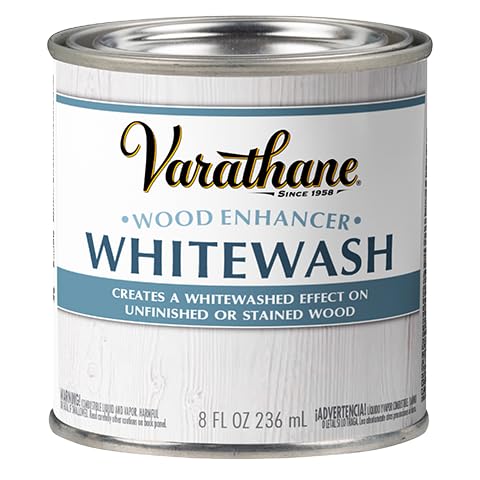
Unlike a penetrating dye, this whitewash enhancer can go on bare wood or over stain, so it suits a project where you want a pale, layered look rather than a bare-wood dye. The maker says different application techniques can create modern farmhouse or shabby chic effects, and that it covers up to 275 square feet per quart and dries in one hour. It comes in a half pint container. That coverage figure is given per quart, so it does not describe the yield of this smaller container.
Bottom line: Pick this for a whitewashed look on bare or previously stained wood.
Varathane Less Mess Whitewash Stain, 4 oz

Unlike the larger wood colorants here, this 4-ounce whitewash stain combines a built-in sponge tip with a formula intended for crafts and small projects. The water-based, low-odor stain cleans up with soap and water, and its semi-transparent color can be built up with multiple coats. The sponge tip provides color control for small applications on furniture, cabinets, doors, and trim, according to the maker. The small container is the key limitation: for broad coverage, choose a product sold in a larger size.
Bottom line: Choose this for controlled whitewash touch-ups and small projects.
Alumilite White Liquid Dye, 1 oz

Unlike the wood-focused colorants, this concentrated white dye is primarily intended to tint clear or opaque resin and epoxy. The maker says it can be used with different materials, including wood, and that up to 5% dye may be used to reach a desired color; opaque dye should be stirred to keep its fillers from settling. That makes it a related option for mixed-material crafts, not the straightforward choice for coloring a wood surface. Choose a dedicated wood dye or whitewash stain for a wood-only project.
Bottom line: Pick this for resin crafts that also involve wood.
Choose a White Dye or Whitewash Stain
A penetrating dye is the closer fit when you want to color bare wood, while a whitewash stain or enhancer is intended to create a more translucent, layered appearance. Wood dyes color fibers below the surface; many stains leave more color at or near the surface, though the exact result depends on the formula and wood. For a white finish, the grain and the wood’s starting color affect how visible the pattern remains. If the project is already stained, favor a formula explicitly described for use over stain; otherwise, work on bare wood. Test the chosen product on a hidden area or offcut first, because one coat and multiple coats can look different. A clear finish can also change the apparent color, so test the full finish system rather than colorant alone.
Prepare Bare Wood for White Color
Sand bare wood evenly, commonly finishing around 120 to 150 grit for many staining projects; finer sanding can reduce absorption and make color less even. Remove sanding dust before applying dye, and use an offcut from the same board when possible because species and grain affect uptake. Apply color in the direction of the grain, keeping a wet edge to reduce lap marks. For boards with large differences in absorption, a consistent sanding process matters more than adding extra dye. If the surface has an old finish or stain, do not assume a penetrating dye will absorb through it: choose a product that specifically allows application over stain or strip the finish first.
Match the Container to the Project
Choose a small applicator bottle for crafts and touch-ups, and a larger container when the work spans furniture or trim. Coverage depends on the wood’s porosity, surface preparation, and application method, so a coverage figure is not a guarantee for every project. One coat may leave more grain visible than several; build color gradually on a test piece before treating the finished surface. For a project larger than a few small parts, compare the package quantity with the area to be coated and allow for test applications. A decision rule: if the work is a small touch-up, a 4-ounce built-in applicator is suited to that scale; for broader areas, select a larger container and confirm its coverage is adequate.
Apply and Finish White Wood Colorants
Use a brush or cloth when the product allows either method, and follow the grain to keep the color even. Water-based formulas can be easier to clean from tools with soap and water, but keep application tools separate from food-preparation surfaces and ventilate the work area. Let the color dry before adding a compatible clear finish; a finish may deepen or shift the appearance, so a complete sample test helps avoid surprises. For a smooth result, avoid leaving excess color pooled in corners or joints. Keep wet products away from children and pets, and follow the product label for handling and drying precautions.
Frequently Asked Questions
Can white wood dye go over an existing stain?
Only choose a formula that explicitly allows application over stain. Penetrating dyes are generally intended for bare wood, where the color can absorb into the fibers.
How many coats of white wood colorant should I use?
Start with one coat on a hidden area or offcut, then add coats only if the color is too light. Semi-transparent stain colors can build with multiple coats, but the appearance depends on the wood and formula.
Should I seal wood after applying white dye?
A compatible clear finish can protect a colored wood surface, but test it with the dye on an offcut first because the finish can change the appearance. Let the color dry before applying the finish.
How do I avoid blotchy white dye on wood?
Sand evenly, remove dust, and apply color consistently along the grain. Test a scrap of the same wood first, since differences in grain and absorption can make color uneven.
Can resin dye be used instead of wood dye?
Resin dye is formulated primarily to tint resin or epoxy, not as a dedicated wood colorant. Use a wood dye or stain for a wood-only project, and reserve resin dye for compatible mixed-material crafts.