
Wonder Boner Fish Deboner: 4 Tools Compared

The Wonder Boner fish deboner isn’t among these options, but Fish Bone Pliers and Tweezers Set is the closest match for removing pin bones because it pairs serrated pliers with precision tweezers. Choose a different set if you want extra tweezer styles or a compact spring-action tool.
We earn a commission if you buy through links on this page. As an Amazon Associate I earn from qualifying purchases. Products are compared on manufacturer specifications, not hands-on testing.
- Best overall: Fish Bone Pliers and Tweezers Set – Combines serrated pliers with fine-tipped tweezers for different pin bone sizes.
- Best for multiple tip styles: Three-Piece Pin Bone Tool Set – Includes a serrated plier plus flat- and slant-tip tweezers.
- Best for compact handling: Asahi Fish Bone Tweezers III – A 4.7-inch spring-action tweezer has a curved tip.
| Product | Best for | Tools included | Length | Shop |
|---|---|---|---|---|
| Fish Bone Pliers and Tweezers Set | Two-tool versatility | Pliers and tweezers | 6.29 in. | Check Price on Amazon |
| Three-Piece Pin Bone Tool Set | Multiple tweezer tips | Pliers and 2 tweezers | 5.12 in. | Check Price on Amazon |
| Two-Piece Fish Bone Tool Set | Multi-task prep | Pliers and tweezers | 5.1 in. plier | Check Price on Amazon |
| Asahi Fish Bone Tweezers III | Compact tweezer work | Tweezers | 4.7 in. | Check Price on Amazon |
Fish Deboner Tools
Compare the gripping style, tool count and size to match the set to your fish-prep routine.
Fish Bone Pliers and Tweezers Set

Fish Bone Pliers and Tweezers Set pairs serrated-jaw pliers with fine-tipped tweezers, so the set covers both a firm grip and more delicate pin bone work. The handles have an ergonomic, non-slip design, and the tools are food-grade stainless steel. The 6.29-inch length gives the set a longer reach than the compact tweezers in this group. The maker says the serrated jaws grip bones without damaging delicate fish flesh. Choose this set for two distinct handling styles; buyers who want multiple tweezer-tip shapes should consider a three-piece set instead.
Bottom line: Pick this set if you want pliers and fine-tip tweezers in one pair of tools.
Three-Piece Pin Bone Tool Set

Three-Piece Pin Bone Tool Set is the only set here with two tweezer tip styles: flat for a broader grip and slant for reaching at an angle, alongside serrated-jaw pliers. The pliers are high-carbon steel; the set is described as rust-resistant. The length is about 5.12 inches. The maker says the serrations are intended to hold slippery pin bones securely. This configuration suits cooks who want separate tools for different angles and bone sizes. The material detail applies to the pliers, so buyers who need to know the tweezers’ material should confirm it before ordering.
Bottom line: Choose it if flat- and slant-tip tweezers are useful additions to your prep tools.
Two-Piece Fish Bone Tool Set
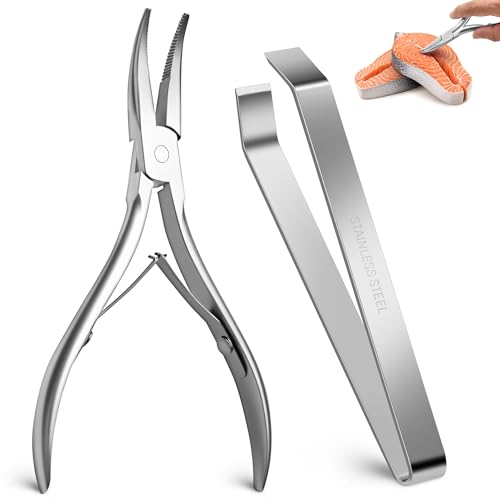
Two-Piece Fish Bone Tool Set includes one fish bone plier and one tweezer, with the plier measuring 5.1 inches and the tweezer 4.2 inches. Its serrated jaws and curved tips are intended to improve grip on fish bones. The maker also describes the tools for small meat bones and fine poultry feathers, which may appeal if you want them for other kitchen-prep jobs. The set does not offer the extra tweezer-tip choice of a three-piece kit. Choose it for a straightforward pair of tools, especially if the secondary prep uses matter to you.
Bottom line: Pick this pair if you want one plier and one tweezer for fish and other small prep tasks.
Asahi Fish Bone Tweezers III

Asahi Fish Bone Tweezers III is a single stainless-steel tweezer rather than a plier-and-tweezer set, and its 4.7-inch length makes it the shortest measured option here. A narrow pincher head and curved tip are designed for precise bone removal. The spring between the handles is intended to reduce hand fatigue, and the maker says the handle and spring can be disassembled for more thorough handwashing. This is a focused choice for cooks who prefer one compact tool and do not need pliers or multiple tweezer tips. Handwashing is the cleaning approach.
Bottom line: Choose the compact single tweezer if a spring-action grip matters more than having a second tool.
How to choose a fish deboner
Choose a fish deboner by matching the gripping surface to the bones you remove most often. Fish pin bones are small, firm bones embedded in fillets, and tweezers or narrow pliers let you grip them without taking a large bite of flesh. Serrated jaws can help hold a slippery bone; a narrow or slanted tweezer tip helps reach bones at awkward angles. A set with both pliers and tweezers gives you more than one grip style, while a single tweezer keeps the kit simple. For routine fillet prep, run a fingertip gently along the flesh to locate pin bones before pulling them; use clean hands and avoid pressing hard enough to mash the fillet.
Fish deboner types compared
Plier-style deboners suit bones that need a firmer grip, while precision tweezers suit smaller bones or close work. Serrated jaws add texture to the gripping surface; flat and slant tips change how the tweezer meets the bone. Use the table to choose by task rather than by the number of pieces alone.
| Tool style | Useful when | Trade-off |
|---|---|---|
| Serrated pliers | You want a broader, firm grip | Less suited to the tiniest bones |
| Fine-tip tweezers | You need precise access | Requires steady placement |
| Flat and slant tweezer set | You want different contact angles | More pieces to clean and store |
For frequent prep across different fish, a plier-and-tweezer set offers flexibility. If you remove only occasional pin bones, a single tweezer may be enough.
How to remove pin bones cleanly
Pull each pin bone in the direction it points, generally toward the head end of the fillet, to reduce damage to the flesh. First locate the bones by running a clean fingertip along the fillet; then grip one close to the skin with the tool and pull steadily rather than jerking. A small cutting board and good lighting make it easier to see the bone and keep the fillet stable. After deboning, check the same line again with a fingertip because neighboring bones can be easy to miss. Wash the tool promptly with hot, soapy water and dry it fully; fish residue left around a joint or spring can be difficult to clean later.
Cleaning and safe handling
Wash fish deboning tools after every use, especially around serrations, joints and springs where raw fish residue can collect. Use hot, soapy water, rinse thoroughly and dry before storage to limit corrosion and keep the grip surfaces clean. Do not assume a tool is dishwasher-safe unless its maker expressly permits it; spring assemblies and disassemblable handles may need particular care. Keep the small tool away from children, since pointed tips can puncture skin. Deboning does not guarantee that every bone has been removed, so inspect the fillet before serving, especially when preparing food for someone who may have difficulty noticing or removing a bone.
Frequently Asked Questions
How do you find pin bones in a fish fillet?
Run clean fingertips gently along the fillet, usually along its center line, to feel for firm tips. Good lighting helps you spot each bone before gripping it.
Which direction should you pull a fish pin bone?
Pull steadily in the direction the bone points, generally toward the head end of the fillet. Avoid yanking upward, which can tear the flesh.
Can fish tweezers remove every fish bone?
No tool guarantees a completely bone-free fillet. Check the flesh again with a fingertip after removing visible pin bones, particularly along the center line.
How should fish deboning pliers be cleaned?
Wash them promptly with hot, soapy water, rinse and dry thoroughly, paying attention to serrations and joints. Use dishwasher cleaning only if the maker permits it.
Are fish bone tweezers safe for children to handle?
Keep fish bone tools out of children’s reach because narrow, pointed tips can puncture skin. An adult should handle deboning and inspect the fillet before serving.