
Wrap-Around Bluetooth Headphones: 4 Fits Compared

For wrap-around Bluetooth headphones that sit outside the ear canal, RTUSIA Small Wrap-Around Headphones is the closest match because its behind-head design rests over the ears rather than inside them. Choose another style if you want open-ear awareness with an ear-hook fit or adjustable earbuds instead of a band behind your head.
We earn a commission if you buy through links on this page. As an Amazon Associate I earn from qualifying purchases. Products are compared on manufacturer specifications, not hands-on testing.
- Best overall: RTUSIA Small Wrap-Around Headphones – Its behind-head frame rests outside the ear canal, matching the wrap-around fit requested.
- Best for outdoor awareness: SHOKZ OpenRun Pro 2 – Its open-ear design is intended to keep you aware of your surroundings.
- Best for adjustable hooks: Soundcore V20i Open-Ear Earbuds – Four hook positions let you adjust how the earbuds sit around your ears.
| Product | Best for | Fit style | Battery life | Shop |
|---|---|---|---|---|
| RTUSIA Small Wrap-Around Headphones | Behind-head fit | Behind-head frame | 12 hours | Check Price on Amazon |
| SHOKZ OpenRun Pro 2 | Outdoor workouts | Unibody frame with ear hooks | 12 hours | Check Price on Amazon |
| Soundcore V20i Open-Ear Earbuds | Adjustable ear hooks | Open-ear earbuds with adjustable hooks | 36 hours | Check Price on Amazon |
| Ortizan Open-Ear Headphones | Lightweight open-ear | Air-conduction ear cradle | — | Check Price on Amazon |
Wrap-Around Bluetooth Headphones
Compare the behind-head frame with open-ear and hook-style options to choose the fit that suits your routine.
RTUSIA Small Wrap-Around Headphones
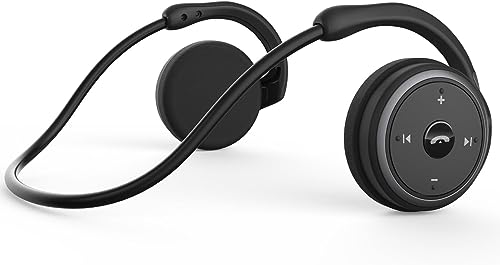
Unlike the ear-hook and earbud options here, RTUSIA Small Wrap-Around Headphones uses a behind-head frame and speakers that rest outside the ear canal. The compact, foldable design is suited to people who dislike earbuds or want a fit that can work with glasses. The maker says the battery lasts 12 hours. Its main limitation is the fixed behind-head style: buyers who prefer a separate hook around each ear or a fully open-ear design should choose another shape. The maker gives no water rating, so it is a less clear match for workouts where sweat or rain protection is a priority.
Bottom line: Pick this if you want a behind-head frame and speakers outside your ear canals.
SHOKZ OpenRun Pro 2

SHOKZ OpenRun Pro 2 differs from a conventional behind-head headphone by combining bone- and air-conduction drivers in an open-ear design with a unibody frame and ergonomic ear hooks. The maker says its battery provides 12 hours of playback, and its IP55 rating is a defined dust- and water-ingress rating rather than a promise of full waterproofing. The open-ear approach suits runners and cyclists who want to hear more of their surroundings, but it is not the same fit as a small frame resting over the ears. Choose another option if that specific behind-head shape is your priority.
Bottom line: Choose this for an open-ear, hook-secured fit during outdoor activity.
Soundcore V20i Open-Ear Earbuds

Soundcore V20i Open-Ear Earbuds uses separate open-ear earbuds rather than a single wraparound head frame, making its four adjustable hook positions the key distinction. The maker says the earbuds provide 36 hours of playtime; the specifications do not clarify whether that total includes charging-case capacity, so treat it as the combined playtime rather than a single-charge figure. Its IP55 rating can help distinguish it from models without a rating, but it does not mean the earbuds are suitable for swimming. The separate-earbud format is a limitation if you specifically want a band that stays behind your head.
Bottom line: Pick these if adjustable open-ear hooks matter more than a behind-head band.
Ortizan Open-Ear Headphones

Ortizan Open-Ear Headphones takes an air-conduction approach, cradling the ears without entering the ear canal; unlike the behind-head design, it is described as a lightweight open-ear wearable. IPX6 indicates resistance to powerful water jets under a rating test, not suitability for swimming or submersion. This style may suit someone seeking a light ear-cradling fit, but buyers who want a conventional band behind the head should choose RTUSIA Small Wrap-Around Headphones instead.
Bottom line: Choose this for a light, ear-cradling open-ear style with an IPX6 rating.
How to Choose Wrap-Around Bluetooth Headphones
Start with the way the headphones secure: a behind-head band, a unibody frame with hooks, or separate open-ear earbuds each feels different. A band can suit people who dislike anything inside the ear canal, while individual hooks can be adjusted without a band joining the sides. For outdoor exercise, favor a design that leaves your ears open if hearing nearby traffic or people matters. Check the battery figure against your longest planned session: a 12-hour run time covers a longer workout than a short commute, but advertised totals can describe different usage conditions. If you need water protection, compare the actual IP rating rather than assuming every sports model tolerates sweat or rain.
| Need | Fit to consider |
|---|---|
| Band resting behind the head | Behind-head frame |
| Open ears with hooks | Hook-secured open-ear style |
| Separate earbuds with adjustable fit | Open-ear earbuds |
Behind-Head Bands and Ear Hooks Compared
Behind-head headphones connect the sides with a frame, while ear-hook styles secure around each ear; those shapes are not interchangeable. A frame can be easier to keep together when removing or storing the pair, whereas separate earbuds offer individual adjustment. Open-ear products also differ in how they deliver sound: bone conduction sends vibration through the bones of the head, while air conduction sends sound through air toward the ear. Open-ear listening does not guarantee that you will notice every hazard, especially in loud environments. For cycling or running near roads, keep volume low enough to hear traffic and pause audio when crossing or handling a complex situation.
Water Ratings and Workout Use
IP ratings use two digits when both dust and water ingress are rated; IP55 and IPX6 therefore do not mean the same thing. The X in IPX6 means the rating does not specify a dust-protection level, while the 6 refers to water-jet resistance in standardized testing. Neither rating by itself means a device is safe to swim with: water-jet protection is not a submersion rating. Sweat and rain exposure can still depend on seals, wear, and care, so dry headphones before charging and never connect wet charging contacts. If your routine includes swimming, select gear specifically rated for immersion rather than treating a workout rating as permission to submerge it.
Fit and Listening Safety
A secure fit should stay in place during your movement without painful pressure; adjust hooks before increasing volume to compensate for poor positioning. Ear-canal-free designs can help keep the canal unobstructed, but they do not eliminate listening risk: high volume over long periods can still damage hearing. A practical decision rule is to reduce volume whenever you cannot comfortably hear a nearby conversation or warning sound. For outdoor use, stay alert at crossings and avoid relying on headphones to provide all-around awareness. If a frame presses against glasses, changes position when you turn your head, or interferes with a helmet, choose another fit rather than forcing the frame into place.
Frequently Asked Questions
Are wrap-around headphones better than earbuds?
Wraparound styles can suit listeners who do not want an earbud inside the canal, while earbuds offer a separate fit in each ear. The right choice depends on comfort and whether you prefer a band, hooks, or individual earpieces.
Can open-ear headphones be used for cycling?
Open-ear headphones leave the ear canal unobstructed, which can make nearby sounds easier to hear than with sealed earbuds. Keep volume low and remain alert; an open design does not replace checking traffic or surroundings.
What does an IP55 headphone rating mean?
IP55 rates protection against dust ingress and water jets under standardized testing. It does not mean the headphones can be submerged or used for swimming.
How long should Bluetooth headphone battery life last?
Battery life varies by model and playback conditions, so compare the hours with your longest session. A 12-hour figure covers a longer use window than a 36-hour figure only if both describe the same kind of charge or total playtime.
Can wrap-around headphones be worn with glasses?
Some behind-head frames can be worn with glasses, but fit depends on where the frame and ear pieces contact the head. Try the fit with your glasses and helmet, if applicable, before a long workout.