
Best Tone Up Cream: 4 Options Compared by Finish

COSNORI W. Dress Tone-Up Cream is the best tone up cream for most people here because it is made for both face and body and has a luminous finish. Choose NDP Vitamin B9 Tone-Up Cream instead if you want a primer-style formula, or AOU Tone-Up Dazzling Cream 01 White for a soft-matte finish and larger container.
Tone-up creams are complexion products that create a more even-looking tone; they can be worn alone or under makeup, depending on the formula.
We earn a commission if you buy through links on this page. As an Amazon Associate I earn from qualifying purchases. Products are compared on manufacturer specifications, not hands-on testing.
- Best overall: COSNORI W. Dress Tone-Up Cream – Its luminous finish and face-and-body use make it the most versatile pick.
- Best for makeup prep: NDP Vitamin B9 Tone-Up Cream – It is positioned as a tone-up primer and tinted moisturizer.
- Best for a soft-matte finish: AOU Tone-Up Dazzling Cream 01 White – Its buildable formula sets to a soft-matte finish and can be used on face and body.
- Best for a moisturizing glow: MIESCHER Sakura Tone-Up Cream – Its sakura-themed formula is marketed as a face moisturizer with a glow.
| Product | Best for | Size | Finish | Intended use | Shop |
|---|---|---|---|---|---|
| COSNORI W. Dress Tone-Up Cream | Versatile face and body | 1.69 fl oz | Luminous | Face and body | Check Price on Amazon |
| NDP Vitamin B9 Tone-Up Cream | Makeup base | 2.19 fl oz | Lightweight | Primer and moisturizer | Check Price on Amazon |
| AOU Tone-Up Dazzling Cream 01 White | Soft-matte coverage | 3.38 fl oz | Soft-matte | Face and body | Check Price on Amazon |
| MIESCHER Sakura Tone-Up Cream | Dry-skin moisture | 1.06 fl oz | Radiant | Face moisturizer | Check Price on Amazon |
Best tone up creams
Compare the formulas by size, finish, and how you plan to wear them.
COSNORI W. Dress Tone-Up Cream

Unlike the primer-focused and soft-matte options, this cream is designed for a luminous, natural-looking finish on both face and body. COSNORI says it can be worn alone or mixed with foundation, and describes the formula as moisturizing with aloe vera and essential oils. The 1.69-fl-oz size suits someone who wants one tone-up product for more than the face. Its glow-oriented finish may be a less natural match for shoppers who specifically want a matte result; choose a different finish if shine is not your preference.
Bottom line: Pick this if you want a luminous tone-up cream for face and body.
NDP Vitamin B9 Tone-Up Cream

This is the most explicitly makeup-prep-oriented option: NDP positions it as both a tone-up primer and a tinted moisturizer. The 2.19-fl-oz cream is silicone-free and includes cica extract, according to its name and supplied features. NDP says the formula provides 12-hour breathable hydration and recommends following it with sunscreen. That makes it a fit for someone building a morning routine around a makeup base, rather than seeking a face-and-body product. Its use as a primer is the key distinction; shoppers who prioritize a defined soft-matte finish may prefer another option.
Bottom line: Choose this if you want tone-up coverage that doubles as a makeup base.
AOU Tone-Up Dazzling Cream 01 White
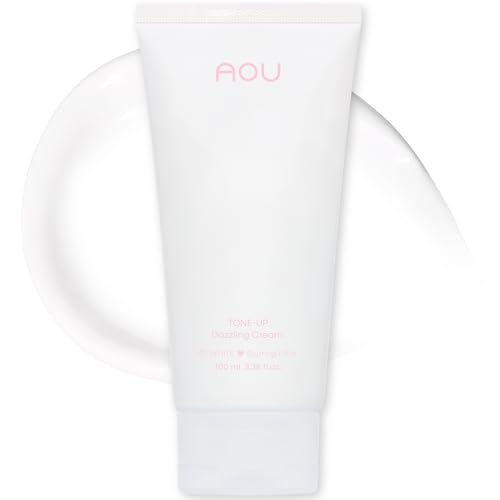
At 3.38 fl oz, this is the largest option here, and its soft-matte finish sets it apart from the glow-focused creams. AOU says the formula is sheer at first and buildable, and is designed for face, neck, and body use with everyday water and sweat resistance. That combination may suit someone who wants adjustable tone-up coverage across larger areas. The shade name is 01 White, so assess whether that color direction works with your complexion before choosing it; those seeking a luminous look may prefer a glow-focused formula.
Bottom line: Pick this for buildable, soft-matte tone-up coverage across face and body.
MIESCHER Sakura Tone-Up Cream

This is the smallest cream in the group at 1.06 fl oz, with a moisturizer-first positioning and sakura essence. MIESCHER says it is intended to moisturize dry skin and can be worn on its own or before BB cream or foundation. That makes it a straightforward choice for someone who wants a glowy face product within a simple makeup routine. The features also make broad coverage claims; treat tone-up creams as cosmetic finish products, not as a substitute for skin treatment. Its smaller size may matter if you plan to apply it to the body.
Bottom line: Choose this if you want a small, moisturizer-style face cream with a radiant finish.
How to choose a tone up cream
Choose a tone-up cream by deciding first whether you want glow, matte finish, or makeup prep. Tone-up is a cosmetic term rather than a regulated product category, so formulas can range from tinted moisturizers to primers and sunscreen hybrids. Match the product’s use to where you plan to apply it: face-only products are not automatically intended for the neck or body. If you want coverage that looks natural, start with a thin layer and add more only where needed; a thick layer can make a pale or mismatched cast more noticeable. For face and body use, check that the product explicitly supports both areas.
Test a small amount along the jawline in daylight before applying it broadly. A visible boundary between face and neck is a sign to use less or choose a closer shade direction.
Tone-up cream does not replace sunscreen
For sunscreen, dermatologists commonly recommend about 1 ounce to cover exposed adult body skin, while face-and-neck coverage takes roughly 1 teaspoon; reapply every 2 hours outdoors and after swimming or sweating. Makeup layers can make it difficult to use enough sunscreen, so apply sunscreen as its own even layer and allow it to set before makeup. These steps matter even when a complexion product looks like it creates a protective finish.
For a new face product, patch test a small area first, especially if your skin is reactive. Stop use if irritation develops.
Where tone-up creams fit in a routine
Apply a tone-up cream after moisturizer and before makeup, unless its packaging gives a different order. A primer-style cream can act as a makeup base, while a moisturizer-style cream may be worn alone for a lighter routine. The product’s intended use and finish are more useful guides than the phrase “tone up” by itself.
Use this quick guide to match a finish or purpose to the formula type.
| Need | Formula direction | What to check |
|---|---|---|
| Glow | Luminous or radiant cream | Whether the finish suits your skin and makeup |
| Matte look | Soft-matte cream | Shade and buildability |
| Makeup prep | Primer-style cream | Compatibility with your foundation |
| Sun protection | Sunscreen with labeled SPF | Broad-spectrum label and reapplication needs |
Common tone-up cream mistakes
The most common mistake is choosing a tone-up cream by its name alone instead of checking its finish, shade direction, and intended area. White or pink-toned formulas can look different across skin tones, so test the amount you expect to wear rather than judging a tiny dab. A sheer cosmetic layer is not equivalent to a full sunscreen application.
Layering too much can also cause pilling, especially when skincare and makeup formulas do not sit well together. Let each layer settle, then apply a small amount and build gradually. If you plan to use the product on the body, compare container size with the area you intend to cover.
Frequently Asked Questions
Can tone up cream replace foundation?
Yes, if you want a lighter, more natural-looking finish rather than foundation-level coverage. Tone-up formulas vary, so apply a small amount first and build only where you want more visible evening.
Should sunscreen go under tone up cream?
Use about 1 teaspoon for face and neck, and reapply every 2 hours outdoors.
How do I prevent tone up cream from looking ashy?
Test the product along your jawline in daylight and use a thin layer first. A pale or mismatched cast is more visible when the shade direction is far from your complexion or the application is too heavy.
Can I use tone up cream on my body?
Use it on the body only when the product is intended for face and body. Face-only formulas may come in smaller amounts and may not be designed for broad-area application.
When should I apply tone up cream in makeup?
Apply it after moisturizer and before foundation or other makeup. If the formula includes sunscreen, keep it as an even final skincare layer and avoid mixing it with foundation.