
Yellow Night Driving Glasses: Compare Fit and Lenses

ZILLERATE Yellow Night Driving Glasses is the leading pick among these yellow night driving glasses because it combines a 64 mm lens width with a TR90 frame and included case, strap and cloth. Yellow-tinted lenses may reduce headlight glare, but they also reduce light reaching your eyes, so choose clear lenses if visibility on dark roads is your priority.
These glasses use yellow-tinted lenses intended to alter contrast; they do not replace properly functioning headlights, a clean windshield or an up-to-date vision prescription.
We earn a commission if you buy through links on this page. As an Amazon Associate I earn from qualifying purchases. Products are compared on manufacturer specifications, not hands-on testing.
- Best overall: ZILLERATE Yellow Night Driving Glasses – Its 64 mm lens width and included case, retainer strap and cleaning cloth distinguish the package.
- Best for leopard pattern: Tnnaiko Yellow Night Driving Glasses – The yellow-lens option is identified as A.yellow Leopard.
- Best for medium fit: FIMILU Medium Tortoise Glasses – The size is Medium, as opposed to One Size.
| Product | Best for | Size | Shop |
|---|---|---|---|
| ZILLERATE Yellow Night Driving Glasses | Accessory bundle | One Size | Check Price on Amazon |
| Tnnaiko Yellow Night Driving Glasses | Leopard pattern | One Size | Check Price on Amazon |
| FIMILU Medium Tortoise Glasses | Medium fit | Medium | Check Price on Amazon |
| Myiaur Medium Tortoise Glasses | UV400 feature | Medium | Check Price on Amazon |
Yellow Night Driving Glasses Compared
Compare frame sizing and documented extras, while treating nighttime glare-reduction claims as maker claims rather than a substitute for clear visibility.
ZILLERATE Yellow Night Driving Glasses
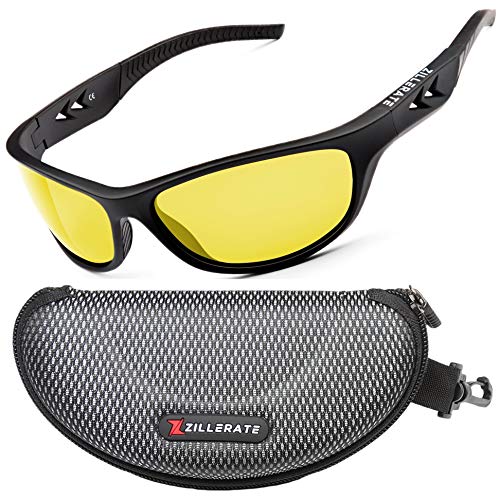
ZILLERATE Yellow Night Driving Glasses stands out for its 64 mm lens width and the included hard-shell case, retainer strap and microfiber cloth. Its lightweight TR90 frame has rubber padding, and the package also includes a user manual. The maker says its polarized yellow lenses reduce glare and enhance clarity in low light. This choice suits buyers who want several storage and care extras with their glasses. One limitation matters for night use: a yellow tint can reduce incoming light, so it is not a replacement for clear lenses when road visibility is limited.
Bottom line: Choose this if the 64 mm lens width and included carrying and cleaning accessories suit your needs.
Tnnaiko Yellow Night Driving Glasses

Tnnaiko Yellow Night Driving Glasses is the option with an A.yellow Leopard color designation, while its size is One Size. The maker says the polarized yellow lenses are intended to sharpen contrast and reduce glare, including at dawn, dusk, in rain or fog. It may suit a buyer seeking this particular color pattern and a general-size frame. The text provided does not give a lens width or accessory bundle, so prioritize fit over assumed dimensions; yellow tint may also cut the light available on a dark road.
Bottom line: Pick this for the leopard-pattern color option, provided its one-size frame fits.
FIMILU Medium Tortoise Glasses

FIMILU Medium Tortoise Glasses differs by giving a Medium size and Tortoise color, making it the clearest size choice in this group. The maker says its polarized yellow lenses are designed to reduce bright-light glare and sharpen outlines, and also presents the glasses for use in rain or fog. This may suit someone who specifically wants the medium-size, tortoise-style option. No lens width is included in the product text, so do not infer that Medium will fit a particular face; tinted lenses can reduce light transmission when driving after dark.
Bottom line: Choose this if Medium is the size you need and the tortoise color suits you.
Myiaur Medium Tortoise Glasses

Myiaur Medium Tortoise Glasses is also a Medium, tortoise-style option, but its product name specifically identifies UV400 polarized lenses. The maker says the yellow lenses are intended to enhance contrast and reduce glare, and mentions night driving, rain and fog. That UV400 label is a lens feature; it does not establish how much visible light passes through the yellow tint. This choice suits a buyer looking for the named UV400 feature in a medium frame. The maker gives no lens width, so check fit measurements before choosing it over another Medium option.
Bottom line: Pick this if the UV400 feature is a priority and Medium is your fit.
How to choose yellow night driving glasses
Start with visibility and fit, not a promise that a tint makes night driving safer. Yellow lenses filter some light, and any reduction in light transmission can matter on unlit roads, in heavy rain or for drivers with reduced night vision. A clear, clean lens is generally the safer choice for driving in low light. If you still want yellow lenses for glare comfort, use them only if road signs, pedestrians and hazards remain easy to see. Frame size also matters: compare lens width, bridge width and temple length with glasses that already fit, rather than relying on a One Size or Medium label. Never wear eyewear that blocks peripheral vision or slips while you drive.
What yellow lenses can and cannot do
Yellow tint changes the color balance of incoming light; it cannot add light to a dark scene. A polarized filter is primarily useful for reducing reflected glare, especially from horizontal surfaces such as wet pavement, but it does not remove the brightness of every oncoming headlight. Tint and polarization are separate features, so check which the product actually identifies. Dark adaptation also takes time: after moving from a brightly lit area into darkness, vision may need roughly 20 to 30 minutes to adapt. Avoid switching to a darker lens during that period. If glare persists, clean the windshield inside and out and have prescription needs checked rather than relying on tinted glasses.
Frame fit and lens measurements
A frame’s size is not a standardized promise of fit across brands. The common three-number frame convention gives lens width, bridge width and temple length in millimeters; for example, a 52-18-140 frame has a 52 mm lens, 18 mm bridge and 140 mm temple. Compare all three dimensions when available and check that the frame does not press at the temples or slide down the nose. In this group, only one option gives a lens width, at 64 mm; the two Medium options do not establish identical dimensions. Confirm the fit measurements before ordering if you need a precise fit or plan to wear these over prescription glasses.
Safer visibility while driving at night
Use clear, clean lenses and a clean windshield when visibility is the goal; yellow tint is not a substitute for safe lighting. Keep headlights aimed and functioning correctly, and slow down enough to stop within the distance illuminated ahead. At 55 mph, a vehicle travels about 81 feet per second, so even a short delay in seeing a hazard consumes substantial road distance. Do not use any lens that makes dark objects, lane markings or pedestrians harder to distinguish. If glare suddenly worsens or night vision declines, arrange an eye examination; persistent glare can have causes that tinted eyewear cannot address. In rain, reduce speed and increase following distance rather than assuming yellow lenses restore lost contrast.
Frequently Asked Questions
Do yellow glasses improve night driving visibility?
Yellow lenses do not add light to a dark scene. Because tint can reduce the light reaching your eyes, clear lenses are generally the better choice when night visibility is the priority.
Are polarized lenses useful for nighttime driving?
Polarization can reduce reflected glare, but it does not eliminate every headlight glare source. A yellow tint can also reduce available light, so judge any lens by whether road hazards remain clearly visible.
How should night driving glasses fit?
Compare lens width, bridge width and temple length in millimeters with a frame that fits you. A Medium or One Size label alone does not establish the same fit across brands.
Can I wear yellow driving glasses in rain or fog?
Rain and fog reduce contrast and visibility, and a tinted lens may further reduce light. Slow down, increase following distance and use clear lenses if the tint makes signs or hazards harder to see.
Are yellow night driving glasses a replacement for prescription glasses?
No; these products are described as tinted driving glasses, not corrective lenses. If you need vision correction to drive safely, use eyewear with your current prescription.