
Zap Collars for Dogs: 5 Models Compared by Range

Dog Training Collar, 4,200-Foot suits most buyers who want a long-range zap collar for dogs: its maker claims up to 4,200 feet of range, and it fits dogs weighing 10–120 pounds. Choose another model if you need a two-dog remote, a no-shock mode, or a fit range that includes dogs under 10 pounds.
A zap collar, also called an e-collar, uses remote cues such as sound, vibration, or static stimulation during training.
We earn a commission if you buy through links on this page. As an Amazon Associate I earn from qualifying purchases. Products are compared on manufacturer specifications, not hands-on testing.
- Best overall: Dog Training Collar, 4,200-Foot – It combines a claimed 4,200-foot range with a 10–120-pound fit range.
- Best for maximum range: Dog Training Collar, 4,500-Foot – Its maker claims a 4,500-foot remote range, the longest among these options.
- Best for two dogs: Bousnic Dog Training Collar, 3,300-Foot – Its dual-channel remote supports training two dogs simultaneously.
| Product | Best for | Remote range | Modes | Dog fit | Shop |
|---|---|---|---|---|---|
| Dog Training Collar, 4,200-Foot | Long-range training | 4,200 ft | Beep, vibration, shock, emergency | 10–120 lb | Check Price on Amazon |
| Dog Training Collar, 4,500-Foot | Maximum range | 4,500 ft | Beep, vibration, shock, boost | 10–120 lb; neck 7.8–24.4 in | Check Price on Amazon |
| Bousnic Dog Training Collar, 3,300-Foot | Two-dog training | 3,300 ft | Beep, vibration, shock | 5–120 lb | Check Price on Amazon |
| Snsng Dog Training Collar, 1,600-Foot | Simpler cue options | 1,600 ft | Beep, vibration, static | 15–110 lb | Check Price on Amazon |
| Dog Training Collar with Flashlight, 2,000-Foot | Flashlight included | 2,000 ft | Flashlight, beep, vibration, shock | 8–150 lb | Check Price on Amazon |
Zap Collars for Dogs Compared
Compare the range, cue options, and fit range against your training setup before choosing.
Dog Training Collar, 4,200-Foot

Dog Training Collar, 4,200-Foot stands out for its combination of a claimed 4,200-foot range and a smaller receiver. The maker says it offers beep, vibration at 1–9 levels, shock at 1–99 levels, and an emergency mode; it also describes the receiver as 30% smaller and lighter than its comparison point. The collar fits dogs weighing 10–120 pounds. It may suit owners who want multiple cue choices and room to practice recall outdoors. The fit range excludes dogs under 10 pounds, so choose a different option for a smaller dog.
Bottom line: Choose it if you want multiple cue modes and a long claimed range.
Dog Training Collar, 4,500-Foot

Dog Training Collar, 4,500-Foot has the longest claimed remote range here, at 4,500 feet, and includes a no-shock option. The maker says its controls include beep levels 1–8, vibration levels 1–16, shock levels 0–99, and a shock boost 10% higher than the selected stimulation. It fits dogs weighing 10–120 pounds, with a neck range of 7.8–24.4 inches. This setup may fit buyers who want an option to disable shock or practice at greater distances. Its minimum weight is 10 pounds, so it is not the fit choice for smaller dogs.
Bottom line: Pick it for the longest range or an available no-shock setting.
Bousnic Dog Training Collar, 3,300-Foot
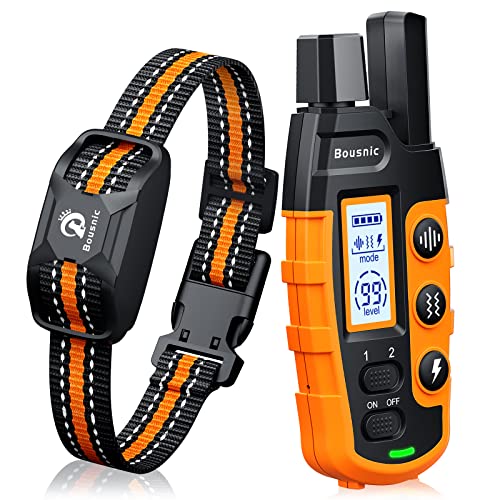
Bousnic Dog Training Collar, 3,300-Foot is the only option here whose maker specifically says its dual-channel remote can train two dogs simultaneously. The maker claims a range of up to 3,300 feet and lists beep at 1–8 levels, vibration at 1–16 levels, and shock at 1–99 levels. Its fit covers dogs weighing 5–120 pounds, extending lower than the other models in this group. That makes it a possible match for a smaller dog or a two-dog household. Choose another model if a no-shock mode or a longer stated range is essential.
Bottom line: Choose it when training two dogs or fitting a dog as small as 5 pounds.
Snsng Dog Training Collar, 1,600-Foot
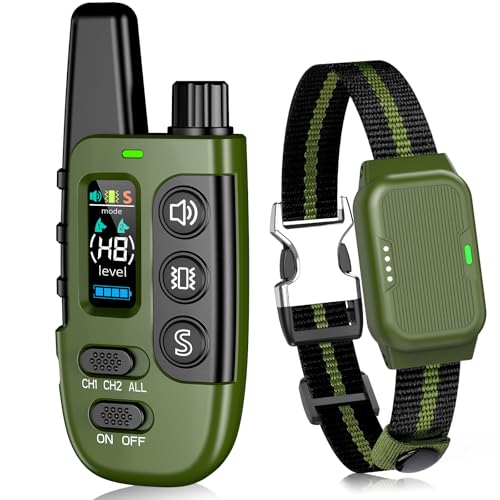
Snsng Dog Training Collar, 1,600-Foot uses three modes—beep, vibration, and static—and its maker claims a remote range of up to 1,600 feet. The controls include eight beep tones, vibration at 1–16 levels, and static at 1–99 levels. The fit range is 15–110 pounds, and the maker says the remote can operate two separate channels or send a command to both dogs in 1+2 mode. This may suit buyers who want two-dog control without needing the longest range. Its 15-pound lower limit rules it out for smaller dogs.
Bottom line: Pick it for two-channel control and a shorter training range.
Dog Training Collar with Flashlight, 2,000-Foot

Dog Training Collar with Flashlight, 2,000-Foot is the only option in this group with a flashlight among its four modes. Its maker claims a 2,000-foot range and describes the other modes as beep, vibration, and adjustable shock. The fit range of 8–150 pounds reaches the highest maximum weight among these collars and includes dogs under 10 pounds. It may suit owners who value that added feature or need coverage for a larger dog. The range is shorter than the 3,300- to 4,500-foot claims on three alternatives.
Bottom line: Choose it if you want a flashlight mode or fit for a dog up to 150 pounds.
How to Choose a Zap Collar for Dogs
Start with your dog’s weight and neck measurement, then decide whether the remote range and cue controls fit your training environment. These five collars span stated weight ranges from 5–120 pounds to 8–150 pounds, and claimed remote ranges from 1,600 to 4,500 feet. A longer advertised range does not guarantee that the remote will work through walls, trees, or terrain; radio range is usually measured in open conditions. For a dog weighing under 10 pounds, only two options here include that weight. For more controlled training, prioritize a model with a no-shock choice and begin with sound or vibration cues rather than escalating stimulation. A remote collar should not replace reward-based training or supervision.
Fit and Safe Collar Use
Fit the receiver so its contact points touch the skin without pinching; loose placement can prevent reliable contact, while excessive tightness can irritate skin. Check the fit often, especially on a growing dog or one with a thick or changing coat. Remove the collar when training is over and inspect the neck for redness or soreness before reuse. Do not leave a training collar on continuously or use it unattended: pressure and friction can injure skin. The products here specify dog weight, but only one also gives a neck-size range, so measure the dog’s neck and confirm the collar’s adjustment range before ordering if fit is uncertain. Stop using the collar if irritation appears.
Compare Collar Modes and Range
Mode labels do not mean identical signal strength or timing across brands, so compare the available controls rather than assuming that matching level numbers feel the same. A beep is an audible cue; vibration and static stimulation are different signals, and a higher numbered level is not a standardized intensity across products. Practice in a quiet, enclosed area before attempting off-leash recall, and pair cues with rewards so the dog learns what action earns reinforcement. Treat advertised distance as a ceiling under favorable conditions, not a safe working distance in every setting. The table summarizes the distinction that matters most for selecting a setup.
| Training need | Useful feature | Selection check |
|---|---|---|
| Small dog | Lower minimum weight | Confirm both weight and neck fit |
| Two dogs | Dual-channel remote | Check separate versus shared controls |
| Outdoor recall | Longer claimed range | Allow for barriers and terrain |
| Non-static cue option | Beep or vibration mode | Practice at low cue intensity |
Training Mistakes to Avoid
Do not use a remote collar to punish a dog for behavior you have not taught a replacement for; timing errors can associate a cue with the wrong person, animal, or event. Begin at the lowest effective cue in a low-distraction area, reward the desired response immediately, and increase distractions gradually. Short sessions of about 5–10 minutes help keep practice focused, particularly for puppies and inexperienced dogs. Avoid using stimulation when the dog is frightened, aggressive, or unable to understand the cue; consult a qualified, reward-based trainer for those situations. Keep the dog leashed or in a secure area until recall is reliable, since an electronic cue cannot physically prevent a dog from running into danger.
Frequently Asked Questions
How tight should a dog training collar fit?
A training collar should be snug enough for its contact points to touch the skin without pinching or restricting breathing. Check the skin after each session and remove the collar when training ends; persistent redness means discontinue use.
How long can a dog wear a zap collar?
Use a remote training collar only during supervised training sessions, not continuously or overnight. Frequent pressure and friction can irritate or injure skin, so remove it between sessions and inspect the neck.
Can I train two dogs with one remote collar?
A dual-channel remote can control two receiver collars, but the exact operation differs by model. Check whether the remote selects each dog separately or can send a command to both at once before training.
Does a 4,000-foot collar work that far everywhere?
No; advertised range is a maximum and obstacles, buildings, vegetation, and terrain can reduce remote signal distance. Practice recall in a secure area and keep a leash or physical barrier until the behavior is reliable.
Should I start with the shock setting?
Start training with a sound or vibration cue where available, pair the cue with a reward, and use the lowest effective signal. Do not escalate if the dog appears fearful or confused; stop and get help from a qualified trainer.