
13 Fishing Origin R1: Baitcast Reel Compared

13 Fishing Origin R1 100 is the match for anglers who want a 100-size baitcast reel with a fast 8.1:1 gear ratio and right-hand retrieve. Choose another model if you need a left-hand retrieve, a slower ratio, or a reel specified for saltwater use.
Baitcast reels sit above the rod and use a revolving spool; gear ratio describes spool turns per handle turn, not a fixed amount of line retrieved.
We earn a commission if you buy through links on this page. As an Amazon Associate I earn from qualifying purchases. Products are compared on manufacturer specifications, not hands-on testing.
- Best overall: 13 Fishing Origin R1 100 – The 100-size reel combines a right-hand retrieve with an 8.1:1 gear ratio.
- Best for 7.3:1 retrieve: 13 Fishing Origin O1 Blackout 100 – Its 7.3:1 ratio is slower than the Origin R1’s 8.1:1.
- Best for left-hand retrieve: 13 Fishing Concept A2 200 – This 200-size baitcaster is the only baitcast option with left-hand retrieve.
| Product | Best for | Gear ratio | Retrieve | Maximum drag | Shop |
|---|---|---|---|---|---|
| 13 Fishing Origin R1 100 | Fast right-hand retrieve | 8.1:1 | Right-hand | 18 lb | Check Price on Amazon |
| 13 Fishing Origin O1 Blackout 100 | Slower right-hand retrieve | 7.3:1 | Right-hand | 18 lb | Check Price on Amazon |
| 13 Fishing Concept A2 200 | Left-hand retrieve | 6.8:1 | Left-hand | 25 lb | Check Price on Amazon |
| 13 Fishing Inception Sport Z 200 | Centrifugal braking | 7.3:1 | — | 18 lb | Check Price on Amazon |
13 Fishing Origin R1 Baitcast Reels
Compare the Origin R1 with related 13 Fishing baitcasters by gear ratio, retrieve hand and drag rating.
13 Fishing Origin R1 100

Unlike the other reels here, the Origin R1 pairs a 100-size frame with an 8.1:1 ratio and right-hand retrieve. It has a multi-material drag system, magnetic control system, instant-stop anti-reverse, five bearings and an Arrowhead line guide. The maker rates its drag system at 18 pounds. This configuration suits anglers who prefer a fast retrieve and operate the handle with the right hand. The limitation is fit: anglers who want left-hand retrieve or a slower ratio should compare another model instead.
Bottom line: Choose this if you want a fast, right-hand 100-size baitcaster.
13 Fishing Origin O1 Blackout 100
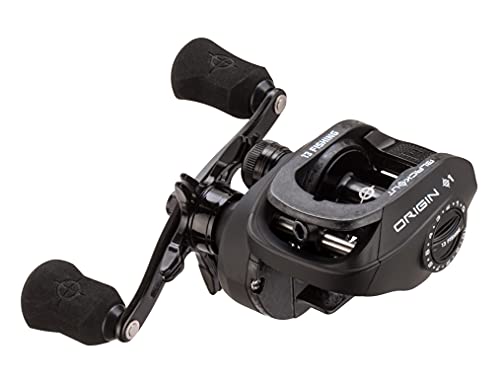
The Origin O1 Blackout is the closest alternative in the same product line, but its 7.3:1 ratio is slower than the Origin R1’s 8.1:1. This 100-size right-hand baitcaster includes a magnetic control system, instant-stop anti-reverse, five bearings and an Arrowhead line guide; its frame has Blackout components. The maker rates its multi-material drag system at 18 pounds. It suits someone seeking the Origin format with a lower ratio. Choose a different reel if left-hand retrieve or a larger frame is essential.
Bottom line: Pick this for a 100-size Origin with a slower ratio.
13 Fishing Concept A2 200

The Concept A2 stands apart with a 200-size frame, left-hand retrieve and 6.8:1 ratio. Its HD aluminum frame has Ocean Armor 2 treatment and anti-electrolysis screw pads, and the reel uses a hardened brass drive gear and seven bearings, including corrosion-resistant and stainless bearings. The maker rates the Bulldog drag system at 25 pounds. The saltwater-and-freshwater designation makes it a choice for anglers seeking that stated versatility. It is not a direct substitute for a compact 100-size, right-hand reel.
Bottom line: Choose this for left-hand retrieve and a 200-size frame.
13 Fishing Inception Sport Z 200

The Inception Sport Z uses a six-way centrifugal braking system rather than the magnetic control system on the Origin models. Its Beetle Wing side plates provide rapid brake access, and its 200-size configuration has a 7.3:1 ratio. The maker says its multi-material drag system provides up to 18 pounds of drag. Japanese Hamai cut gearing and an Arrowhead line guide round out the features. This reel suits anglers who want adjustable centrifugal braking; the configuration does not identify a retrieve hand, so confirm hand orientation before choosing.
Bottom line: Pick this if centrifugal brake adjustment is your priority.
How to choose a 13 Fishing baitcast reel
Choose the retrieve hand and ratio before comparing feature names. A gear ratio of 8.1:1 means the spool turns 8.1 times for each handle turn; it does not guarantee a fixed line pickup because spool diameter and how full the spool is also affect retrieve length. Faster ratios can take up slack quickly, while lower ratios turn the spool fewer times per crank. Match the hand designation to the hand you want on the reel handle, since switching hands mid-cast is not a substitute for choosing the right retrieve. The Origin R1 is the 100-size, right-hand option with the highest ratio; the 200-size reels differ in frame size and other features.
What baitcast reel gear ratio means
A baitcast reel’s ratio is the number of spool revolutions per handle turn, so it compares gearing rather than inches of line retrieved. Spool diameter, line fill and line thickness change actual pickup; a larger, fuller spool retrieves more line per turn than a smaller, less-full spool with the same ratio. Use ratio as a starting point, then consider whether you need quick slack pickup or a slower retrieve. The ratios run from 6.8:1 to 8.1:1. A 7.3:1 reel sits between those endpoints, but retrieve speed alone does not determine casting distance or suitability for a lure.
Magnetic and centrifugal braking on baitcasters
Braking helps control spool overrun during a cast, when a revolving spool can release line faster than the lure pulls it. Magnetic and centrifugal systems apply braking differently, so adjust the system built into the reel rather than assuming the controls are interchangeable. The Origin models use magnetic control; the Inception Sport Z has six-way centrifugal braking and rapid-access side plates. Start with stronger braking and reduce it gradually as casting control improves; wind, lure weight and casting motion all affect spool behavior. Keep a thumb ready to slow the spool as the lure lands. A brake adjustment cannot compensate for an unsuitable lure or careless spool control.
How to match reel size and drag
Use frame size and drag rating as separate checks: size describes the reel configuration, while drag is resistance applied when a fish pulls line. The choices include 100-size Origin models and 200-size alternatives, with maker-rated drag figures from 18 to 25 pounds. A higher drag number alone does not establish which reel suits your rod, line or target fish; the weakest part of the tackle system can set the practical limit. Pair the reel with a rod designed for baitcasting and line suited to the rod and target species. Before fishing, check drag tension with the line threaded through the guides and avoid tightening it beyond the line or tackle’s safe working capacity.
Frequently Asked Questions
Does an 8.1:1 reel retrieve more line per turn?
An 8.1:1 ratio turns the spool 8.1 times per handle turn, more spool rotations than a 7.3:1 reel. Actual line pickup also depends on spool diameter and how much line remains on it.
What does right-hand retrieve mean on a baitcaster?
Right-hand retrieve means the reel handle is on the right-hand side for reeling. Choose the hand you prefer to use for cranking rather than assuming the handle can be switched.
Can I use a baitcast reel in saltwater?
Use a reel identified for saltwater if you plan to fish in it; the Concept A2 is the only model marked for both saltwater and freshwater. Rinse salt-exposed gear with fresh water and dry it after use to limit corrosion.
How should I set baitcaster brakes for a cast?
Begin with stronger braking and ease it down in small steps until the spool runs without overrunning. Lure weight, wind and casting motion change the setting, so make adjustments with the actual lure and conditions.
What does a baitcaster drag rating tell me?
A drag rating gives the maker’s maximum stated resistance, not a recommended setting for every cast or fish. Set drag below the safe working limit of the line and the rest of the tackle.