
18-Inch Paint Rollers: 4 Covers Compared by Nap

For most buyers seeking 18-inch paint rollers, the HANJKINZ covers are a practical starting point: six covers with a 3/8-inch nap for smoother walls. Choose a different option if you need a 1/2-inch nap for a less-smooth surface or want a larger pack for a long project.
An 18-inch roller cover spans more wall per pass than a standard 9-inch cover, but it needs a compatible 18-inch frame and a tray wide enough to load it evenly.
We earn a commission if you buy through links on this page. As an Amazon Associate I earn from qualifying purchases. Products are compared on manufacturer specifications, not hands-on testing.
- Best overall: HANJKINZ 18-Inch Microfiber Covers – Six 18-inch covers with a 3/8-inch nap make a versatile set for smoother walls.
- Best for textured walls: Leumoi 18-Inch Microfiber Covers – The 1/2-inch nap is better suited to less-smooth surfaces than the 3/8-inch options.
- Best for larger projects: CoatPro Twools 18-Inch Covers – The 10-pack provides more replacement covers than the other 3/8-inch options.
| Product | Best for | Nap | Pack size | Shop |
|---|---|---|---|---|
| HANJKINZ 18-Inch Microfiber Covers | Smooth walls | 3/8 in | 6 covers | Check Price on Amazon |
| Leumoi 18-Inch Microfiber Covers | Less-smooth walls | 1/2 in | 12 covers | Check Price on Amazon |
| HUIROOWL 18-Inch Microfiber Covers | Broad surface range | 3/8 in | 8 covers | Check Price on Amazon |
| CoatPro Twools 18-Inch Covers | Large projects | 3/8 in | 10 covers | Check Price on Amazon |
18-Inch Paint Roller Covers Compared
Compare nap depth and pack size to match the cover to your surface and project length.
HANJKINZ 18-Inch Microfiber Covers

The HANJKINZ set pairs a 3/8-inch nap with six individually packaged microfiber covers, a useful balance for repainting smooth or lightly textured walls. The 18-inch width covers a broad strip with each pass, and the maker says the high-density fibers are designed for even coverage and reduced shedding. This option suits buyers who want several covers without choosing the largest pack. The 3/8-inch nap is less suited to deeply textured surfaces, where a thicker nap can reach into recesses more effectively.
Bottom line: Choose these for a multi-room project on smooth or lightly textured walls.
Leumoi 18-Inch Microfiber Covers
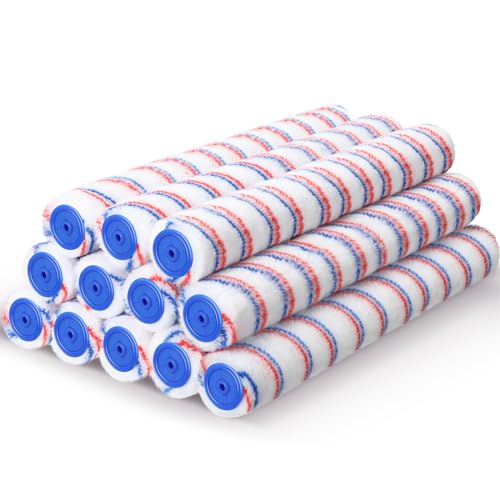
The Leumoi covers stand apart with a 1/2-inch nap and a 12-cover pack, giving buyers a thicker option and more replacements for an extended job. Microfiber construction is intended to absorb and release paint across large areas, and the covers have end caps. This set suits painters working across varied wall surfaces who prefer to change covers rather than clean one during the job. Its greater nap depth can leave more texture than a 3/8-inch cover on smooth walls, so choose it with surface finish in mind.
Bottom line: Pick this set when you need a thicker nap and plenty of replacement covers.
HUIROOWL 18-Inch Microfiber Covers

The HUIROOWL set provides eight 3/8-inch microfiber covers, positioning it between the six-cover and larger ten- or twelve-cover packs. The maker says the covers are shaped to limit fiber shedding and are intended for use with various paints; the features also name walls, ceilings, fences, and furniture. That range makes the pack relevant for buyers handling more than interior wall painting. The 3/8-inch nap remains a better fit for smooth to lightly textured surfaces than rough masonry or heavily textured walls.
Bottom line: Choose this pack for several surfaces when a 3/8-inch nap fits the finish.
CoatPro Twools 18-Inch Covers

The CoatPro Twools covers offer ten individually packaged 3/8-inch microfiber sleeves, more replacements than the other 3/8-inch sets here. The maker says the fibers are intended to release paint evenly and resist shedding, which may appeal during a large wall or ceiling project where clean cover changes matter. This set suits buyers wanting a middle-ground pack size without moving to the thicker 1/2-inch nap. Like the other 3/8-inch choices, it is not the best match for deeply textured or rough surfaces.
Bottom line: Pick this set for a sizable smooth-wall project needing multiple cover changes.
How to Choose an 18-Inch Paint Roller Cover
Choose nap depth by surface texture first, then compare pack size. A 3/8-inch nap is commonly used on smooth to lightly textured drywall, while 1/2 inch is a common step up for semi-smooth or lightly textured surfaces; rough masonry often calls for 3/4 inch or more. A thicker nap holds more paint but can leave a more pronounced stipple on a smooth wall. For long projects, extra covers can reduce interruptions for cleaning, but the right count depends on how many colors and coats you plan. These four options are microfiber covers, with three at 3/8 inch and one at 1/2 inch.
Check Frame and Tray Fit Before Painting
An 18-inch cover needs an 18-inch roller frame; a standard 9-inch frame will not support it. Match the tray or grid to the roller width so the full sleeve can be loaded without repeatedly dragging one edge through paint. Wide rollers carry more paint than narrow ones and can feel heavier when fully loaded, so use measured passes and avoid saturating the cover. For ceilings or overhead work, a roller pole can reduce reaching, but keep the frame stable and maintain a balanced stance. Confirm the frame and tray dimensions before starting, especially if you already own painting tools.
The nap should match the finish you want, not just the widest surface. Use this quick guide to pair common texture levels with a typical nap:
| Surface | Typical nap | What to expect |
|---|---|---|
| Smooth drywall | 3/8 in | Lower texture |
| Lightly textured drywall | 1/2 in | More paint capacity |
| Rough masonry | 3/4 in or longer | Reaches deeper texture |
Use Wide Rollers for Consistent Coverage
Wide rollers cover more area per stroke, but consistent loading and pressure matter for an even finish. Work in manageable sections and keep a wet edge by overlapping each pass slightly before the previous one dries. Avoid pressing hard to force paint out of a nearly dry sleeve; reload instead, since excess pressure can create uneven texture. Cut in corners and tight edges with a brush or narrower roller because an 18-inch cover is difficult to steer precisely near trim. Before coating the full wall, check the roller’s finish on a small inconspicuous area, particularly when the surface texture or paint consistency is unfamiliar.
Clean and Store Roller Covers Properly
Remove excess paint from a cover promptly after use, then clean it with water for water-based paint or the appropriate solvent for oil-based paint. Keep cleaning liquid and paint residue away from drains, and follow local disposal rules. Rinse until the runoff is clear, reshape the nap, and let the sleeve dry fully before storage to reduce mildew and stiff fibers. Individually packaged covers can be kept sealed until needed; opened, clean covers should be stored dry and protected from dust. Replace a cover when fibers shed noticeably, the nap is matted, or dried paint remains trapped in the sleeve.
Frequently Asked Questions
What nap should I use on smooth drywall?
A 3/8-inch nap is a common choice for smooth or lightly textured drywall because it leaves less stipple than a thicker nap. Test a small area first if a very smooth finish matters.
Can an 18-inch roller cover fit a 9-inch frame?
No, an 18-inch cover needs a frame built for an 18-inch sleeve. Use a tray or roller grid wide enough to load the full cover evenly.
Is a 1/2-inch nap better for textured walls?
A 1/2-inch nap can hold more paint and reach more surface texture than 3/8 inch. Rough masonry or heavily textured surfaces commonly call for 3/4 inch or longer.
How many coats can one roller cover handle?
There is no fixed coat count because paint type, surface area, and cleaning affect cover life. Change the cover when its nap mats down, sheds, or holds dried paint that resists cleaning.
How do I clean a microfiber roller cover?
For water-based paint, rinse promptly with water; oil-based paint needs the appropriate solvent. Keep paint residue out of drains, then dry the cover fully before storing it.