
24mm Sensor Cleaner: 5 Kits Compared by Contents

K&F Concept 24mm Kit suits most photographers choosing a 24mm sensor cleaner because it pairs six individually vacuum-sealed swabs with 20 ml of cleaner. Choose AAwipes DDR24 24mm Swabs instead if you want a larger swab supply, or UES Full-Frame 14-Piece Kit if you need more swabs and a kit solution; a 24mm swab is intended for full-frame sensors, not every camera format.
We earn a commission if you buy through links on this page. As an Amazon Associate I earn from qualifying purchases. Products are compared on manufacturer specifications, not hands-on testing.
- Best overall: K&F Concept 24mm Kit – It combines six 24mm swabs with 20 ml of cleaner.
- Best for spare swabs: AAwipes DDR24 24mm Swabs – The pack includes 20 swabs, more than any other option here.
- Best for more cleaning passes: UES Full-Frame 14-Piece Kit – It includes 14 swabs and 15 ml of cleaner.
| Product | Best for | Swab count | Cleaner amount | Shop |
|---|---|---|---|---|
| K&F Concept 24mm Kit | All-in-one kit | 6 | 20 ml | Check Price on Amazon |
| AAwipes DDR24 24mm Swabs | Swab supply | 20 | — | Check Price on Amazon |
| Photographic Solutions Sensor Swab Ultra | Corner access | 12 | — | Check Price on Amazon |
| UES Full-Frame 14-Piece Kit | Kit quantity | 14 | 15 ml | Check Price on Amazon |
| VSGO VS-S03-12 Kit | 12-swab kit | 12 | 10 ml | Check Price on Amazon |
24mm Sensor Cleaner Kits
Compare the full-frame swab counts and included solution before choosing a kit.
K&F Concept 24mm Kit
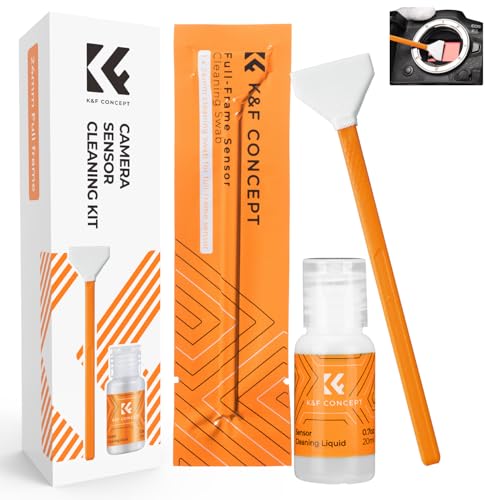
K&F Concept 24mm Kit pairs six 24mm swabs with 20 ml of cleaner, making it a compact kit for occasional full-frame sensor maintenance. The swabs are vacuum sealed, and the maker describes the fluid as ammonia-free and low-VOC. Its instructions call for one or two drops on a swab edge and a careful sweep across the sensor, then a reverse-side pass. Six swabs provide fewer fresh tools than the 12- and 20-count packs, so frequent cleaners may prefer a larger supply. Use only when the swab width matches the sensor format.
Bottom line: Choose it for a modest swab count and a comparatively large solution bottle.
AAwipes DDR24 24mm Swabs

AAwipes DDR24 24mm Swabs is the swab-only option with 20 vacuum-packed, 24mm microfiber swabs, the largest supply in this group. The maker describes the swabs as laser-cut in a cleanroom and intended for full-frame or Type 3 sensors. That quantity suits photographers who want fresh swabs on hand without buying a kit solution. No cleaner is included, so it is not an all-in-one choice; pair it only with a sensor-cleaning fluid made for camera sensors, rather than household glass cleaner. At 24mm wide, these swabs are intended for full-frame sensors.
Bottom line: Pick it when keeping a larger stock of swabs matters more than having solution in the pack.
Photographic Solutions Sensor Swab Ultra

Photographic Solutions Sensor Swab Ultra includes 12 Type-3, 24mm swabs with a textured honeycomb surface and shaped ends intended to reach sensor corners. The maker says the heads distribute pressure evenly and the swabs are cleanroom sealed. This is another swab-only choice, so it suits buyers who already have compatible sensor fluid. The companion fluids are Eclipse or Aeroclipse; the pack itself does not supply them. A shaped tip can help with edge access, but careful, even movement still matters because a sensor surface is delicate.
Bottom line: Choose it for shaped swab ends and a dozen individually clean-packed swabs.
UES Full-Frame 14-Piece Kit

UES Full-Frame 14-Piece Kit combines 14 individually vacuum-sealed 24mm swabs with 15 ml of alcohol-free cleaner. It offers more swabs than the six- and 12-count kits while including fluid, which makes it a practical option for repeated maintenance. The maker says its formula is compatible with CCD and CMOS sensors and IBIS systems. Those are maker claims, not a substitute for checking your camera’s cleaning guidance. The kit is specifically sized for full-frame sensors, so buyers with APS-C or smaller formats should use swabs intended for their camera instead.
Bottom line: Pick it for a higher swab count bundled with sensor cleaner.
VSGO VS-S03-12 Kit

VSGO VS-S03-12 Kit supplies 12 vacuum-sealed 24mm swabs and 10 ml of cleaner, pairing a mid-size swab supply with a smaller fluid bottle than the other complete kits. The maker describes the fluid as ultrapure-water-based and says it is intended to clean without streaks or blemishes. It also presents the swabs as suitable for other optical surfaces and screens. That broad use claim does not make this kit a general-purpose household cleaner; its clearest fit is full-frame camera sensor maintenance. Consider the 10 ml amount if you expect frequent cleaning.
Bottom line: Choose it for a 12-swab kit where a smaller cleaner bottle is sufficient.
How to Choose a 24mm Sensor Cleaner
Choose a 24mm swab only when your camera has a full-frame sensor; full-frame imaging sensors are about 36 by 24 mm, and the 24mm swab width is designed to span the short dimension. APS-C sensors are smaller, commonly around 23.5 by 15.6 mm, so a full-frame swab can be too wide. Compare what the pack actually combines: swab count, fluid amount, and whether solution is included. For occasional maintenance, a kit with a modest count may be enough; photographers who clean more often may value 12 or 20 fresh swabs. Before buying for a particular body, confirm its sensor format and manufacturer cleaning guidance.
Safe Sensor Cleaning Steps
Start with a hand blower because loose dust may come off without wet contact; never use canned air, which can propel liquid or force debris against the sensor assembly. For persistent spots, use a new swab and sensor-specific fluid, applying only the amount the kit directs. A wet swab should make one careful pass across the sensor; avoid scrubbing or reusing a swab, which can drag grit across the surface. Turn the camera off and follow its maintenance instructions for exposing the sensor. Sensor-cover glass and coatings are delicate, and the sensor assembly can move in cameras with stabilization, so do not press hard or touch the surface with fingers.
Swab Kits and Their Included Supplies
Swab-only packs suit buyers who already have a compatible sensor fluid, while complete kits combine swabs and a cleaning liquid. A larger swab count is useful when a first pass leaves residue and a clean swab is needed; it does not mean more fluid is appropriate per pass. The comparison below shows what is included, not how many cleaning sessions a pack will provide, since that depends on technique and the amount of fluid used.
| Pack type | What’s included | Best fit |
|---|---|---|
| Swabs only | 24mm swabs, no included cleaner | Already own compatible fluid |
| Complete kit | 24mm swabs and sensor cleaner | Need both supplies together |
Common Sensor Cleaning Mistakes
The most common avoidable mistake is using a swab that is wider than the camera’s sensor format; check the body’s format before opening a sealed pack. Another is applying too much liquid: use the amount directed for that kit rather than soaking the swab. A swab that has touched the sensor should not be reused, because trapped dust can scratch or streak the cover glass. Do not clean a sensor just because dust exists inside the camera; visible spots in images, especially at small apertures, are a more useful reason to inspect it. If a mark persists after a careful pass, stop rather than increasing pressure.
Frequently Asked Questions
How do I know if my camera needs a 24mm swab?
A 24mm swab is intended for full-frame sensors, which measure about 36 by 24 mm. Check your camera’s sensor format before using one; APS-C bodies generally need a narrower swab.
Should I use a blower before wet cleaning?
Yes, a hand blower is a sensible first step because it can remove loose dust without touching the sensor. Avoid canned air, which can spray liquid or drive debris into the assembly.
How many passes can I make with one sensor swab?
Use a fresh swab for each cleaning pass rather than reusing one that has touched the sensor. Reuse can drag debris across the cover glass and leave marks.
Can I use lens cleaner on a camera sensor?
Use fluid specifically intended for camera sensors, not an arbitrary lens or household cleaner. Camera sensor surfaces have delicate coatings, and fluid compatibility matters.
What should I do if spots remain after cleaning?
Stop if a careful pass with a fresh swab does not remove the spot; pressing harder can risk damage. Persistent marks may need inspection by a camera service professional.