
30 Inch Coco Liner: 5 Replacement Fits Compared

For a 30-inch planter, HHTHH 30-Inch Trough Coco Liner is a practical starting point because its trough shape measures 30 by 8 by 8 inches and comes as a two-pack. Choose Bosmere F919 30-Inch Coco Liner instead if a built-in soil-moist layer matters more; confirm your planter’s interior width and depth before choosing any liner.
We earn a commission if you buy through links on this page. As an Amazon Associate I earn from qualifying purchases. Products are compared on manufacturer specifications, not hands-on testing.
- Best overall: HHTHH 30-Inch Trough Coco Liner – The 30-by-8-by-8-inch trough dimensions make fit easier to assess.
- Best for three replacements: HAOVZRI 30-Inch Trough Coco Liner – The set includes three 30-inch trough liners.
- Best for groove design: gardmate 30-Inch Groove Design Liner – The pre-formed groove design is intended for 30-inch planters.
- Best for moisture retention: Bosmere F919 30-Inch Coco Liner – It includes a built-in soil-moist layer.
| Product | Best for | Pack count | Distinctive feature | Shop |
|---|---|---|---|---|
| HHTHH 30-Inch Trough Coco Liner | Measured trough planters | 2 liners | 8 in wide × 8 in deep | Check Price on Amazon |
| HAOVZRI 30-Inch Trough Coco Liner | Three-planter refresh | 3 liners | Trough shape | Check Price on Amazon |
| gardmate 30-Inch Groove Design Liner | Groove-style planters | 2 liners | Pre-formed grooves | Check Price on Amazon |
| Dovesail 30-Inch Trough Coco Liner | Coir trough replacement | 2 liners | Semi-moon shape | Check Price on Amazon |
| Bosmere F919 30-Inch Coco Liner | Moisture-layer preference | 1 liner | Built-in soil-moist layer | Check Price on Amazon |
30 inch coco liners compared
Compare pack size, stated dimensions and design details against the inside measurements and shape of your planter.
HHTHH 30-Inch Trough Coco Liner
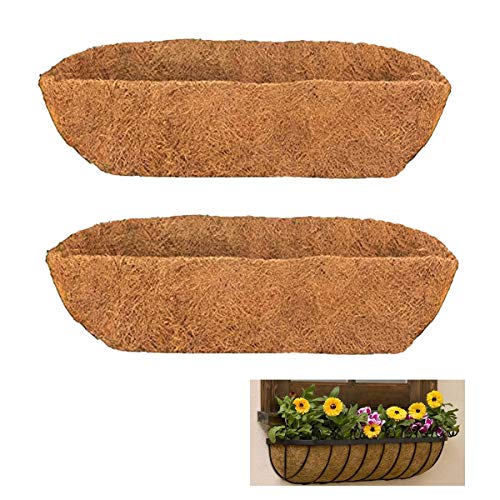
HHTHH 30-Inch Trough Coco Liner is the only option here with trough width and depth, which can help when your planter has a defined interior profile. Each pre-formed liner is 30 inches long and 8 inches wide and deep, and the material is 100% natural coconut fiber. The two-pack suits buyers replacing a pair of liners. Measure the inside of the planter rather than relying on its outside length: a nominal 30-inch basket can have a different usable width or depth, and an ill-fitting liner may leave gaps at the edges.
Bottom line: Pick this if the 8-by-8-inch trough profile matches your planter.
HAOVZRI 30-Inch Trough Coco Liner
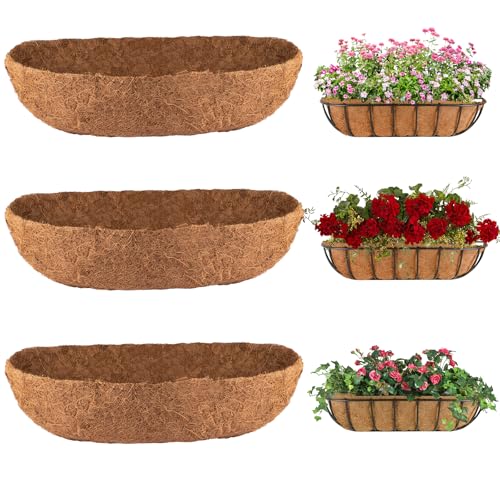
HAOVZRI 30-Inch Trough Coco Liner provides three 30-inch trough liners, making pack count its clearest distinction from the two-packs. The coir is described as 100% natural coconut fiber, and the preformed trough style is intended for window boxes, wall baskets and railing baskets. The maker says the fibers allow drainage and aeration; coir’s open structure also means it will not seal soil against water loss like a solid, nonporous pot wall.
Bottom line: Choose it when you need three trough liners and already know the planter profile.
gardmate 30-Inch Groove Design Liner

gardmate 30-Inch Groove Design Liner stands out for its pre-formed groove design, which the maker says fits standard 30-inch hanging baskets and window planters without cutting or folding. The two-pack is made of natural coconut fiber, and its height is 6 inches. That shorter profile may work better for a shallower planter than a deeper trough, but measure the basket’s inside depth before deciding; exterior planter dimensions do not tell you how much liner height the soil needs. The maker says its thicker fiber retains moisture while allowing drainage, but a coir liner remains porous and can dry faster than an impermeable container.
Bottom line: Pick it for a 30-inch planter whose grooves and shallower profile match.
Dovesail 30-Inch Trough Coco Liner

Dovesail 30-Inch Trough Coco Liner is a two-pack of 30-inch replacement liners with a flexible semi-moon form, a useful distinction for baskets with a curved trough profile. The maker describes the material as 100% natural coconut coir and says the liner balances moisture retention with drainage and aeration. Those qualities do not make coir watertight: water can still escape through the fibers, so use a planter designed to drain and protect surfaces below it. The specifications do not give a dependable interior width or depth, which matters for buyers matching a specific narrow or deep planter.
Bottom line: Choose it for a curved 30-inch trough when the profile fits your basket.
Bosmere F919 30-Inch Coco Liner

Bosmere F919 30-Inch Coco Liner is the only option with a built-in soil-moist layer, setting it apart from the plain coir liners. Its pre-formed 30-inch replacement shape is intended for window boxes and hanging baskets, and the liner weighs 1.6 pounds. The maker says the integrated layer holds water longer while the coco fiber allows air and water circulation. Buyers who want a straightforward natural coir liner without an added moisture layer may prefer another option. Check that the planter’s inside width and depth suit the pre-formed shape; matching length alone does not guarantee a snug fit.
Bottom line: Choose it if you want a 30-inch replacement with an integrated moisture layer.
How to measure a 30 inch coco liner
Measure the planter’s inside length, width and depth, because a 30-inch label usually identifies length rather than the full profile. Measure width and depth at more than one point if the basket tapers or curves; an opening that is 8 inches wide may narrow below the rim. For a trough with an 8-inch interior width and depth, compare those measurements directly with the liner dimensions before choosing. Leave room for the liner to sit without bunching, but avoid large gaps where soil could spill through. A snug fit depends on the planter’s shape as well as its nominal length.
Coir is porous, so water can drain through the fiber rather than remaining contained. Keep drainage paths clear and place the planter where runoff is acceptable; a liner is not a watertight container.
Coir liner shapes and moisture features
Choose a trough, semi-moon or grooved profile to match the planter’s interior rather than treating all 30-inch liners as interchangeable. A curved basket can leave gaps with a straight-sided liner, while a deep trough may need more liner height than a shallow window box. Pre-formed liners are designed to sit in a matching frame; cutting or folding can alter the fit and create weak spots.
Plain coir allows air and water movement through its fibers. A moisture-retaining layer can slow water loss, but it does not automatically seal the basket or prevent runoff. If reducing evaporation matters, use the layer as a feature to compare, not as a substitute for checking drainage.
Planting and watering in coco liners
Line the basket evenly before adding potting mix, then check that the liner covers the sides and bottom without sagging. For hanging baskets, a common practice is to make small openings through the coir for trailing plants, but each opening lets soil and water escape more readily. Avoid making cuts near the rim or support points, where the liner needs to hold its shape.
Coir dries faster than a solid container because moisture can escape across its porous surface; sun, wind and warm weather speed that loss. Check soil moisture with a finger and water when the upper inch feels dry for many common container plants. Do not leave roots standing in pooled runoff, since saturated soil limits oxygen around roots.
Common 30 inch coco liner fit mistakes
The main mistake is matching only the 30-inch length while overlooking width, depth and shape. Measure inside dimensions rather than the planter’s outside rim, and compare a liner’s profile against the narrowest part of a tapered basket. A liner that is too small can leave exposed gaps; one that is too large may fold inward and reduce planting space.
Another mistake is assuming natural coir retains water like an impermeable pot. Coir provides drainage and air exchange, so use suitable potting mix and keep runoff in mind. If the planter sits over wood, a walkway or a balcony, account for water draining through the basket instead of relying on the liner to contain it.
Frequently Asked Questions
How do I measure a planter for a coco liner?
Measure the inside length, width and depth, not just the outside rim. For tapered baskets, measure the width near both the top and bottom because a liner sized to the rim can bunch or leave gaps lower down.
Do coco liners hold water or drain it?
Coco fiber is porous, so it allows drainage and air exchange rather than sealing water in. A moisture-retaining layer can slow water loss, but it does not necessarily make a basket watertight.
Can a 30 inch liner fit any 30 inch planter?
No; 30 inches usually refers to length, while interior width, depth and shape also affect fit. Compare all three interior measurements and check whether the planter is straight-sided, tapered or curved.
Should I put plastic inside a coco liner?
Plastic can slow water loss, but it also reduces airflow and can trap excess water if it has no drainage openings. If using a liner, leave drainage paths open and avoid letting water pool around roots.
How often should I water plants in coco liners?
There is no fixed interval because sunlight, temperature, wind, plant type and liner moisture features change drying speed. Check the soil with a finger; water when the upper inch feels dry for many common container plants, while keeping the planter able to drain.