
Best Sandals for Bad Knees: 3 Supportive Picks

COFACE Orthopedic Flip Flops is the best pick for most people seeking sandals for bad knees because its arch-support footbed and heel cup cushioning combine with a toe-post design. Choose KuaiLu Orthotic Slides instead if you prefer an easy-on slide, or LLSOARSS Arch-Support Flip Flops if a rubber outsole is a priority; sandals cannot diagnose or treat knee pain.
We earn a commission if you buy through links on this page. As an Amazon Associate I earn from qualifying purchases. Products are compared on manufacturer specifications, not hands-on testing.
- Best overall: COFACE Orthopedic Flip Flops – Its arch-support footbed and cushioned heel cup pair with a flip-flop toe post.
- Best for slide-on wear: KuaiLu Orthotic Slides – The open-toe slide design has a memory-foam EVA footbed and heel cup cushioning.
- Best for a rubber outsole: LLSOARSS Arch-Support Flip Flops – It combines arch support and an EVA midsole with a rubber outsole.
| Product | Best for | Style | Footbed or midsole | Shop |
|---|---|---|---|---|
| COFACE Orthopedic Flip Flops | Arch-support flip flops | Thong flip-flop | Memory-foam EVA | Check Price on Amazon |
| KuaiLu Orthotic Slides | Easy-on slides | Open-toe slide | Memory-foam EVA | Check Price on Amazon |
| LLSOARSS Arch-Support Flip Flops | Rubber-outsole wear | Flip-flop | Medium-density EVA | Check Price on Amazon |
Sandals for Bad Knees
Compare the sandal styles, cushioning and sole materials to find a pair that matches your preferred fit.
COFACE Orthopedic Flip Flops

COFACE Orthopedic Flip Flops is the flip-flop option in this group, with a thong strap, arch support, and a cushioned heel cup. The maker says its bionic-design arch support is intended for everyday comfort; the footbed is memory-foam EVA. This style suits someone who wants an open, slip-on sandal rather than a covered shoe. A toe post is a meaningful fit limitation: buyers who dislike pressure or rubbing between the toes should choose a slide style instead. Check that the heel cup and arch sit comfortably underfoot before relying on the sandal for longer walks.
Bottom line: Choose this if you want arch support in a toe-post sandal.
KuaiLu Orthotic Slides

KuaiLu Orthotic Slides stands apart as the only slide here, so it avoids a toe post and slips on without a back strap. Its memory-foam EVA footbed includes a cushioned heel cup, and the maker says the arch support is designed for everyday wear. The open slide format can suit quick errands or home use when an easy-on style matters. Unlike a sandal with a retaining heel strap, however, a slide relies on the foot staying positioned over the footbed; it may not feel secure for brisk walking or uneven ground. The size is 6.
Bottom line: Pick this if easy slip-on entry matters more than a heel strap.
LLSOARSS Arch-Support Flip Flops
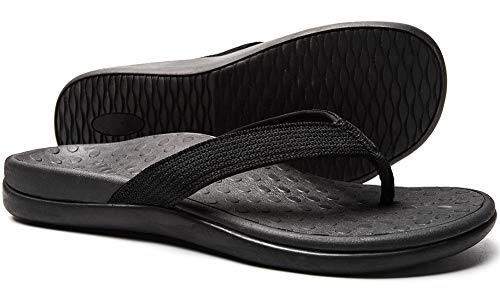
LLSOARSS Arch-Support Flip Flops is the only option here with a named rubber outsole, paired with a flexible, medium-density EVA midsole and a woven toe post. The maker says the cushioning is designed to reduce stress on the heel, feet and knees; that is a product claim, not a guarantee of knee-pain relief. This choice may suit someone who prefers a flip-flop and values a rubber sole. The toe-post construction remains a drawback for anyone whose toes rub against that strap. Its dimensions are 8 inches long and 4 inches wide, so compare those measurements with your foot and fit needs.
Bottom line: Choose this if you want a rubber outsole and do well with toe-post sandals.
How to Choose Sandals for Bad Knees
For longer walks, prioritize a stable, cushioned sole and a fit that keeps your foot from sliding around. Arch support and cushioning are features, not proof that a sandal will relieve knee pain. Favor a broad, steady base over a narrow or high heel, and consider a slide or flip-flop only if it stays comfortably in place on your foot. Try a new sandal for a short walk first; stop if pain increases, and ask a clinician about persistent or worsening knee pain. The three styles here emphasize cushioning and arch support, but their strap designs differ: one is a slide and two use toe posts. Choose by the feature that affects your comfort most, not by a claim of treatment.
Flip Flops Versus Slides for Knee Comfort
A slide avoids the between-toe strap, while a flip-flop uses a toe post to help keep the sandal positioned. That difference can decide fit: if toe posts rub, favor a slide; if a slide feels loose or makes you grip with your toes, consider a better-retained shoe. Neither construction is automatically right for every foot. A sandal can also shift more on slopes or uneven ground than a closed shoe, so use a secure walking shoe when you need more coverage or stability. The table compares the three products by construction and sole material; select only a style that remains comfortable as you walk.
| Style need | Product | Key construction |
|---|---|---|
| Want a slide without toe post | KuaiLu Orthotic Slides | Open-toe slide |
| Prefer flip-flop with heel cup | COFACE Orthopedic Flip Flops | Thong with memory-foam EVA |
| Prefer rubber outsole | LLSOARSS Arch-Support Flip Flops | Flip-flop with rubber outsole |
Fit Checks Before Longer Walks
A well-fitting sandal should keep the foot centered on its footbed without toes or heel hanging over the edge. Try it indoors first and walk several minutes; check for rubbing at the toe post or straps, heel movement, and pressure from the arch. Sandal sizes can differ across brands, so use the maker’s size chart and compare foot length rather than assuming the same size across pairs. For a slide, pay particular attention to whether the foot moves forward or lifts out as you walk. If the sandal shifts, pinches, or changes your gait, choose a different style instead of expecting cushioning to correct the fit.
When Knee Pain Needs More Than Sandals
Sandals are footwear, not treatment for a knee condition. Persistent pain, swelling, instability, or pain after an injury warrants medical advice rather than a switch between cushioned footbeds. A new shoe or sandal should not increase symptoms; shorten the walk and stop if discomfort builds. For walking on wet or uneven surfaces, choose footwear with a secure fit and suitable traction rather than relying on an open slide. When returning to longer walks, increase duration gradually and use a familiar, stable route so you can notice how the footwear feels without adding a difficult surface or steep incline.
Frequently Asked Questions
Can sandals help with knee pain?
A cushioned, supportive sandal may feel more comfortable, but it cannot be counted on to treat knee pain. Stop wearing a pair that increases discomfort, and seek clinical advice for persistent or worsening symptoms.
Are slides or flip flops better for sore knees?
Neither style is universally better; the right choice is the one that stays comfortable and secure on your foot. A slide avoids toe-post contact, while a flip-flop uses a toe post to retain the sandal.
How should supportive sandals fit?
Your foot should sit centered on the footbed with no overhang at the heel or toes. Walk indoors for several minutes and switch pairs if the sandal slips, pinches, or rubs.
Are open slides safe for long walks?
A slide can move on the foot because it has no heel strap, so it may not suit brisk walking or uneven ground. Choose a more secure shoe when the route calls for extra stability.
When should knee pain be checked by a clinician?
Get medical advice for persistent pain, swelling, instability, or symptoms after an injury. Footwear should not be used as a substitute for evaluating those concerns.