
4 Ton AC Units: Package and Split Models Compared

For a 4 ton AC unit, choose Goodman 4 Ton 14 SEER Heat Pump Package if you want a packaged heat pump, ACE AIR 4 Ton 13.4 SEER2 Package Unit for a horizontal packaged cooling-and-heating system, or ACiQ 4 Ton 14.3 SEER2 AC Condenser for a split-system condenser. A nominal 4-ton unit represents 48,000 BTU per hour of cooling capacity, but the right choice also depends on the home’s calculated heat load and existing ducts.
Choose a different capacity or system configuration if a load calculation or your duct layout calls for one; tonnage alone does not establish a proper fit.
We earn a commission if you buy through links on this page. As an Amazon Associate I earn from qualifying purchases. Products are compared on manufacturer specifications, not hands-on testing.
- Best overall: Goodman 4 Ton 14 SEER Heat Pump Package – The 14 SEER packaged heat pump combines cooling and heating in one outdoor unit.
- Best for horizontal package systems: ACE AIR 4 Ton 13.4 SEER2 Package Unit – This 48,000-BTU package unit is designed for horizontal installation and offers optional electric heat strips.
- Best for split-system replacements: ACiQ 4 Ton 14.3 SEER2 AC Condenser – The 14.3 SEER2, 48,000-BTU condenser is intended for a ducted split system.
| Product | Best for | Capacity | System type | Efficiency | Shop |
|---|---|---|---|---|---|
| Goodman 4 Ton 14 SEER Heat Pump Package | Packaged heat pump | 4 ton | Package heat pump | 14 SEER | Check Price on Amazon |
| ACE AIR 4 Ton 13.4 SEER2 Package Unit | Horizontal package unit | 4 ton (48,000 BTU) | Horizontal package unit | 13.4 SEER2 | Check Price on Amazon |
| ACiQ 4 Ton 14.3 SEER2 AC Condenser | Split AC replacement | 4 ton (48,000 BTU) | Split-system condenser | 14.3 SEER2 | Check Price on Amazon |
4 Ton AC Units Compared
Compare nominal capacity, system configuration, and efficiency rating before matching a unit to your home and ductwork.
Goodman 4 Ton 14 SEER Heat Pump Package

Goodman 4 Ton 14 SEER Heat Pump Package is the packaged heat-pump option among these choices, combining heating and cooling equipment in one cabinet rather than using a separate indoor air handler and outdoor condenser. The unit measures 66.25 inches long, 34 inches wide, and 38.75 inches high, so compare those dimensions with the equipment pad and service clearances. Goodman identifies its efficiency as 14 SEER. This configuration suits a home already set up for a package unit; buyers replacing a split system need to confirm that a packaged layout works with their ducts and electrical service.
Bottom line: Pick this if you need a packaged heat pump and have room for its cabinet dimensions.
ACE AIR 4 Ton 13.4 SEER2 Package Unit
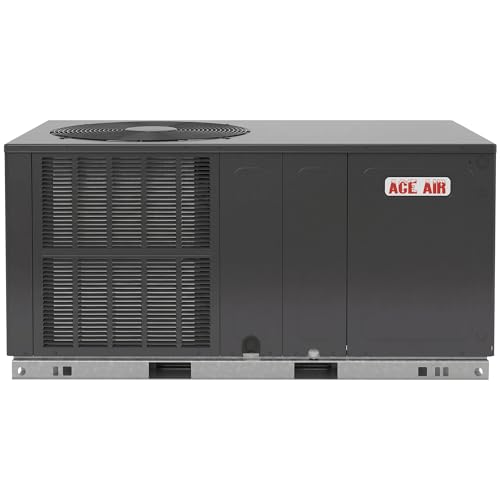
ACE AIR 4 Ton 13.4 SEER2 Package Unit is the horizontal packaged choice, with a 4-ton, 48,000-BTU capacity and a 13.4 SEER2 rating. Its cabinet measures 66 inches long, 35 inches wide, and 34 inches high, and the system uses a scroll compressor and ECM blower motor. Optional electric heat-strip kits are available in 5, 7.5, or 10 kW sizes depending on model. This system can suit a horizontal package unit installation, but the optional strips are not included as a standard feature; confirm the needed heating configuration and cabinet fit before ordering.
Bottom line: Choose this for a horizontal package unit setup that needs cooling with optional electric heat.
ACiQ 4 Ton 14.3 SEER2 AC Condenser

ACiQ 4 Ton 14.3 SEER2 AC Condenser differs from the packaged systems because it is an outdoor condenser intended for a ducted split AC system, not a complete one-cabinet package. It has a 4-ton, 48,000-BTU cooling capacity, a 14.3 SEER2 rating, and a 230-volt single-stage design. The galvanized-steel cabinet measures 29.1 inches high by 29.1 inches long by 32.8 inches wide. This configuration suits a compatible split-system replacement, but it is not interchangeable with a packaged unit; confirm compatibility with the indoor coil and refrigerant line set.
Bottom line: Pick this if your ducted system needs a compatible 4-ton outdoor AC condenser.
How to Choose a 4 Ton AC Unit
Start with a cooling-load calculation, not the old unit’s tonnage: Manual J accounts for insulation, windows, air leakage, climate, and orientation. Four tons is nominally 48,000 BTU per hour, but that figure does not establish the right capacity for a particular home. Oversizing can cause short cooling cycles and uneven humidity control, while undersizing can leave the system unable to meet peak demand. A contractor should also check the duct system and electrical service before selecting equipment. For a replacement, keep the same capacity only if a current load calculation and duct evaluation support it.
Use the system configuration as a filter
Packaged units place major components in one outdoor cabinet; split systems pair an outdoor condenser with indoor equipment. Select the configuration your home and ductwork are designed to accept before comparing efficiency ratings.
Packaged AC Units and Split Condensers
Packaged systems and split condensers are different equipment layouts, so compare them by installation type before comparing capacity. A packaged unit combines the main heating or cooling components in one cabinet, often installed outside on a pad or roof. A split AC condenser is only the outdoor portion; it must work with a compatible indoor coil, blower, and refrigerant circuit. The nominal 4-ton capacity does not make those system types interchangeable. If the existing setup is a package unit, a condenser-only replacement will not provide a complete system; if it is a split system, confirm that the indoor components match the replacement condenser.
| Configuration | What it contains | Best fit |
|---|---|---|
| Packaged heat pump | Heating and cooling components in one cabinet | Existing package unit setup |
| Horizontal package AC | Packaged cooling and heating support | Horizontal package installation |
| Split AC condenser | Outdoor AC component only | Compatible ducted split system |
What 4 Ton Capacity Means for Ducts
A 4-ton air conditioner is nominally rated for 48,000 BTU per hour of cooling, and a common airflow planning figure is about 400 cubic feet per minute per ton, or roughly 1,600 CFM for 4 tons. That is a starting point, not a duct-sizing prescription: static pressure, duct length, fittings, and the equipment’s blower requirements affect delivered airflow. Undersized or restrictive ducts can limit airflow and contribute to poor comfort or equipment strain. Have a contractor measure static pressure and check the duct design rather than assuming ducts sized for an older system will support a new unit.
Understanding SEER and SEER2 Ratings
SEER and SEER2 are seasonal cooling-efficiency ratings; a higher number indicates greater rated seasonal efficiency within its rating method. SEER2 uses updated test procedures, so compare SEER2 with SEER2 rather than treating the two numbers as identical. The 14 SEER figure and the 13.4 and 14.3 SEER2 figures in these options use different rating labels. A rating does not predict a household’s exact energy use, which also depends on climate, thermostat settings, system sizing, duct losses, and installation quality. When comparing replacements, use the same rating basis and ask for a matched system efficiency rather than judging an outdoor component in isolation.
Frequently Asked Questions
How much cooling does a 4 ton AC provide?
A 4-ton unit is nominally rated for 48,000 BTU per hour of cooling. Actual comfort depends on the home’s heat load, duct airflow, and installation.
How many cubic feet per minute does a 4 ton AC need?
A common planning estimate is about 400 CFM per ton, or roughly 1,600 CFM for 4 tons. The equipment’s blower and the duct system’s static pressure can change the required airflow.
Can a 4 ton condenser replace a package unit?
No, not by itself: a condenser is the outdoor component of a split system, while a packaged unit combines major components in one cabinet. Replacing one configuration with the other requires compatible indoor equipment, ducts, and installation provisions.
Are SEER and SEER2 ratings directly comparable?
They use different rating procedures, so compare SEER ratings with SEER ratings and SEER2 with SEER2. A higher rating within the same method indicates higher rated seasonal cooling efficiency.
What should be checked before choosing 4 ton AC equipment?
Check the home’s calculated cooling load and whether the system is packaged or split before choosing a unit. A 4-ton system is nominally 48,000 BTU per hour, and duct airflow and electrical compatibility also matter.