
50 Ohm Dummy Load: 5 Models Compared by Fit

For most RF bench and transmitter setups, BECEN 100W PL-259 Dummy Load is a practical starting point because its 100W rating and DC-to-1GHz range cover more power and frequency than the 50W options. Choose a different model if your equipment needs a BNC connector, a higher 200W rating, or a specific fit.
A 50 ohm dummy load terminates an RF output instead of an antenna, absorbing transmitted energy as heat.
We earn a commission if you buy through links on this page. As an Amazon Associate I earn from qualifying purchases. Products are compared on manufacturer specifications, not hands-on testing.
- Best overall: BECEN 100W PL-259 Dummy Load – Its 100W rating and DC-to-1GHz range bridge the lower-power models and the 200W option.
- Best for higher power: BECEN 200W PL-259 Dummy Load – It has a 200W average continuous rating and DC-to-1GHz frequency range.
- Best for BNC equipment: XRDS-RF 10W BNC Dummy Load – Its 10W capacity and BNC male connector suit compatible lower-power setups.
| Product | Best for | Frequency range | Connector | Shop |
|---|---|---|---|---|
| BECEN 100W PL-259 Dummy Load | General RF benches | DC–1GHz | PL-259 male | Check Price on Amazon |
| BECEN 200W PL-259 Dummy Load | Higher-power setups | DC–1GHz | PL-259 male | Check Price on Amazon |
| XRDS-RF 50W PL-259 Dummy Load | Compact 50W needs | DC–520MHz | PL-259 male | Check Price on Amazon |
| Sousery 50W PL-259 Dummy Load | Dimensional fit | DC–520MHz | PL-259 male | Check Price on Amazon |
| XRDS-RF 10W BNC Dummy Load | BNC equipment | — | BNC male | Check Price on Amazon |
50 Ohm Dummy Loads Compared
Match the load’s power rating and connector to your equipment, then confirm its frequency coverage suits the signal you need to terminate.
BECEN 100W PL-259 Dummy Load

BECEN 100W PL-259 Dummy Load stands between the lower-rated 50W units and the 200W option, with a 100W continuous rating and coverage from DC to 1GHz. It uses a 50 ohm impedance and a UHF PL-259 male connector. The maker says its VSWR is below 1.2 across the frequency range, a specification relevant when limiting reflected power matters. This model suits setups that need more than 50W without choosing the highest-rated load. Its connector and power rating are limiting conditions: confirm the equipment uses PL-259 and keep transmitted power within 100W.
Bottom line: Choose this for PL-259 equipment needing up to 100W continuous handling.
BECEN 200W PL-259 Dummy Load
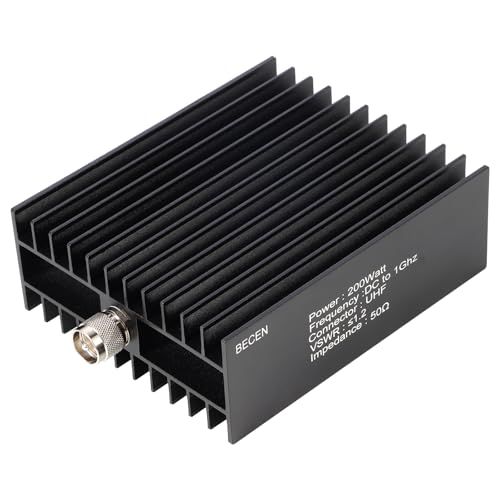
BECEN 200W PL-259 Dummy Load is the highest-rated option here, with a 200W average continuous rating and DC-to-1GHz coverage. Its 50 ohm impedance and UHF male PL-259 connector make it a match only for equipment using that connection. The maker gives a VSWR of 1.2 or lower. This model is appropriate when a 100W rating would be insufficient, but its rating does not make it compatible with a BNC output; connector fit still decides. Allow for heat during transmission, since a dummy load converts RF energy into heat rather than radiating it as an antenna does.
Bottom line: Pick this when your PL-259 setup needs a 200W continuous rating.
XRDS-RF 50W PL-259 Dummy Load

XRDS-RF 50W PL-259 Dummy Load is a 50W PL-259 load covering DC to 520MHz, making its frequency ceiling lower than the two BECEN options. It has a 50 ohm impedance, and the maker gives a VSWR of 1.2 or less. The outer shell is nickel-plated copper and the inner pin is silver-plated copper. Its operating temperature range is −55 to 125°C. This is a fit for equipment within its 50W rating and frequency range; choose a broader-range or higher-power model if either limit is exceeded.
Bottom line: Choose this for a PL-259 setup operating within 50W and 520MHz.
Sousery 50W PL-259 Dummy Load

Sousery 50W PL-259 Dummy Load gives a physical size of 2.56 × 2.56 × 4.33 inches, useful when clearance around an RF connector is tight. Its electrical limits are 50W and DC to 520MHz, with a 50 ohm impedance and PL-259 UHF male connector. The maker says the VSWR is 1.20 or less and describes the unit as designed for heat dissipation. Consider this model when the dimensions help it fit your work area; the 50W rating and 520MHz upper range rule it out for systems exceeding either limit.
Bottom line: Choose this when its dimensions suit your available space.
XRDS-RF 10W BNC Dummy Load
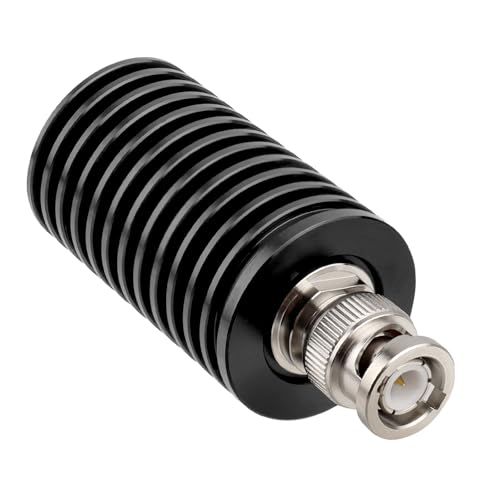
XRDS-RF 10W BNC Dummy Load is the only BNC male model in this group, separating it from the PL-259 options. Its power capacity is up to 10W and its impedance is 50 ohms, so it suits lower-power equipment that uses BNC rather than UHF connectors. The maker describes it as built for regular use with heat dissipation intended to help prevent overheating. Because the capacity is much lower than the other choices, avoid it whenever transmitter output can exceed 10W. Confirm the equipment’s frequency compatibility before choosing this model.
Bottom line: Pick this only for compatible BNC equipment operating at no more than 10W.
How to Choose a 50 Ohm Dummy Load
Choose a dummy load by matching impedance, connector, frequency, and power rating to the equipment. A 50 ohm load is intended for 50 ohm RF systems; a mismatch can increase reflected power. For power, leave headroom: with a transmitter that can deliver 80W continuously, use a load rated for at least 80W continuous, not a 50W unit. Ratings may distinguish average or continuous power from peak power, so compare like with like rather than assuming a peak figure is safe for sustained transmission. Frequency coverage matters too: a load rated to 520MHz is not a fit for a signal above 520MHz. The BNC model here requires a BNC connection, while the others use PL-259.
Power Ratings and Heat During Transmission
A dummy load turns RF power into heat, so power handling and cooling are practical limits, not just numbers on a spec sheet. A 100W rating does not mean the load can safely handle a 150W transmitter; select a rating at or above the maximum power the equipment can deliver in the intended operating mode. Continuous operation places sustained heat on the load, while intermittent transmissions allow cooling time between bursts. Keep the unit clear of insulation and other heat-sensitive materials, and avoid touching it immediately after transmitting. A fan or heatsink can improve cooling on some loads, but do not assume an accessory changes the unit’s rated power. Stop if the load becomes unusually hot or shows damage.
PL-259 and BNC Connector Fit
Connector type determines whether a dummy load physically mates to the radio or test equipment. PL-259 is also called UHF male and pairs with a compatible SO-239 jack; BNC male requires a BNC jack and typically uses a bayonet-style coupling. These connectors are not interchangeable without an adapter, and an adapter adds another connection point to check. Before applying transmitter power, verify that plugs seat fully and that the load’s impedance matches the system. If a cable or adapter is needed, confirm each component is rated for the frequency and power involved. Do not force a connector that does not align or lock correctly.
Frequency Range and VSWR Basics
Use a dummy load only within its frequency range; the 520MHz models and the DC-to-1GHz units do not cover identical bands. VSWR describes how closely the load matches the feed line: 1:1 is an ideal match, while a higher ratio indicates more reflected power. The maker claims VSWR at or below 1.2 for several models here, but that figure applies only within the relevant model’s operating conditions. A frequency-capability mismatch can make the load unsuitable even when the connector and wattage fit. Use the table to compare the coverage and connection type, and verify frequency compatibility for the BNC model before use.
| Need | Match to look for |
|---|---|
| Up to 50W, up to 520MHz | 50W PL-259 load |
| Up to 100W, up to 1GHz | 100W PL-259 load |
| Up to 200W, up to 1GHz | 200W PL-259 load |
| Up to 10W with BNC equipment | 10W BNC load; confirm frequency fit |
Frequently Asked Questions
Can I use a dummy load instead of an antenna?
Yes, for terminating an RF output during bench work, provided the load matches the system impedance and handles the transmitter’s power and frequency. A dummy load absorbs RF energy rather than serving as an antenna for normal transmission.
How much wattage should my dummy load handle?
Choose a rating at least as high as the maximum power the transmitter can deliver in the mode and duration you plan to use. For example, an 80W continuous output needs a load rated for 80W or more continuous, not merely a higher peak rating.
Why does a dummy load get hot?
A dummy load converts transmitted RF energy into heat, so warming during use is expected. Sustained transmission generates heat longer than short bursts; keep the unit ventilated and let it cool before handling.
What does a 1.2 VSWR rating mean?
A VSWR of 1.2 indicates a close impedance match, with less reflected power than a higher ratio. The maker’s figure applies within the load’s specified frequency and operating conditions.
Can a PL-259 load connect to a BNC radio?
Not directly: PL-259 and BNC are different connector types. An appropriate adapter may bridge them, but verify the adapter’s frequency and power suitability along with the load’s impedance before transmitting.