
Buffing Pads 7 Inch: Five Kits Compared by Fit

For a mixed-material 7-inch buffing pad kit, SPTA 7-Inch Polishing Pad Kit stands out because it includes nine pieces and a 5/8-11 backing plate. Choose a wool-only set such as phepetroll 7-Inch Natural Wool Pads or 7-Inch Natural Wool Buffing Pad Kit if you specifically want wool; confirm your polisher’s backing-plate diameter and attachment before ordering.
Buffing pads attach to a backing plate and carry compound, polish or wax across a surface; the pad material and firmness affect how aggressively it works.
We earn a commission if you buy through links on this page. As an Amazon Associate I earn from qualifying purchases. Products are compared on manufacturer specifications, not hands-on testing.
- Best overall: SPTA 7-Inch Polishing Pad Kit – Includes nine pieces, five foam hardnesses and a 5/8-11 backing plate.
- Best for waffle foam: ZFE 7-Inch Waffle Pad Set – Its seven-piece set uses waffle-design pads and open-cell foam.
- Best for wool cutting: phepetroll 7-Inch Natural Wool Pads – A six-piece set made from natural wool with hook-and-loop backing.
| Product | Best for | Material | Pieces | Attachment | Shop |
|---|---|---|---|---|---|
| SPTA 7-Inch Polishing Pad Kit | Mixed foam set | Foam | 9 | 5/8-11 plate | Check Price on Amazon |
| ZFE 7-Inch Waffle Pad Set | Waffle foam | Foam and wool | 7 | — | Check Price on Amazon |
| phepetroll 7-Inch Natural Wool Pads | Wool cutting | Natural wool | 6 | Hook and loop | Check Price on Amazon |
| 7-Inch Natural Wool Buffing Pad Kit | Fine wool finish | Natural wool | 3 | Hook and loop | Check Price on Amazon |
| CASOMAN 7-Inch Buffing Pad Kit | Threaded plate | Polyurethane foam and wool | 7 | 5/8-11 thread | Check Price on Amazon |
7-inch buffing pads compared
Compare the pad materials and connections first, then match the kit to your polisher and the surface work you plan to do.
SPTA 7-Inch Polishing Pad Kit

For buyers who want several foam options and a backing plate in the same kit, SPTA 7-Inch Polishing Pad Kit includes nine pieces, five foam hardnesses and a 5/8-11 backing plate. The pads are 7 inches, and the maker says the washable, reusable open-cell foam is intended for polishing, waxing and related paint work. That range suits someone who wants to choose among different foam firmnesses rather than commit to wool. The limitation is that the included plate’s thread must match the polisher; a 5/8-11 connection is not universal.
Bottom line: Choose this set if you want several foam hardnesses and your polisher accepts its 5/8-11 plate.
ZFE 7-Inch Waffle Pad Set

The waffle design is the distinguishing feature of ZFE 7-Inch Waffle Pad Set, a seven-piece set of 7-inch pads that includes foam and wool. The maker says the open-cell foam improves airflow and that the pads are washable and reusable. This mix can suit a buyer who wants waffle-style foam pads alongside a wool option for varied polishing tasks. The limitation is that the product facts do not identify an attachment type, so check that the set fits your backing plate before choosing it.
Bottom line: Choose this set if waffle-style foam is your priority and you can verify the backing-plate fit.
phepetroll 7-Inch Natural Wool Pads

phepetroll 7-Inch Natural Wool Pads is the largest wool-only set here, with six 7-inch natural-wool pads and hook-and-loop backing. The maker says the washable pads are intended for cutting and polishing and recommends dampening a pad lightly before first use, then running it at idle speed to loosen fibers. Wool generally cuts more aggressively than foam, so this option fits buyers seeking a wool pad for heavier correction rather than a gentle finishing pass. Its limitation is the material itself: wool’s stronger cut may be too aggressive for light polishing.
Bottom line: Choose these when you want a six-piece natural-wool set for more aggressive cutting.
7-Inch Natural Wool Buffing Pad Kit

7-Inch Natural Wool Buffing Pad Kit focuses on a smaller, three-piece natural-wool set for compounding and polishing paint, gelcoat and fiberglass. The maker describes the wool as fast-cutting with a fine finish and says it is designed for reduced fiber shedding. The surface range makes this a fit for buyers working across vehicle and boat finishes who prefer wool rather than foam. The set has fewer pads than phepetroll 7-Inch Natural Wool Pads, so it offers less quantity for rotating through pads during a long job.
Bottom line: Choose this if you want three natural-wool pads for paint, gelcoat or fiberglass work.
CASOMAN 7-Inch Buffing Pad Kit
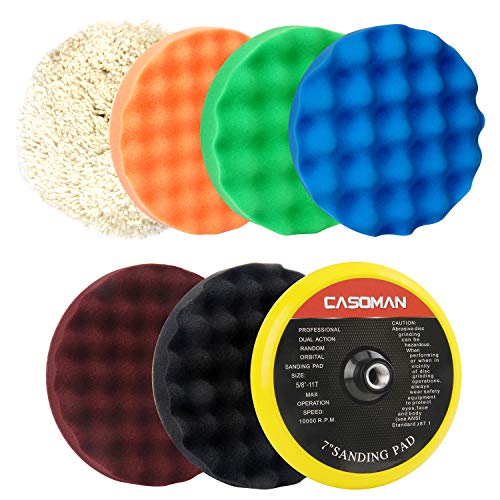
CASOMAN 7-Inch Buffing Pad Kit stands apart by specifying a 5/8-11 thread on its 7-inch hook-and-loop polishing pad and including foam and wool pads in a seven-piece set. The maker says the different sponge colors indicate different softness levels and gives a firmness order from red through blue. That can help buyers who want to select among foam options while also having wool available. The limitation is that color-based firmness descriptions are specific to this kit; do not assume another brand uses the same color order.
Bottom line: Choose this if the 5/8-11 connection matches your polisher and you want foam firmness options plus wool.
How to choose 7-inch buffing pads
Choose a pad material and cut that match the job, then confirm attachment compatibility. Wool generally cuts more aggressively than foam, while foam is available in different firmness levels; a finishing pass usually calls for less cut than removing heavier defects. Pad color is not a universal hardness code, so use only the color guidance supplied for that particular kit. For a broad range of work, a multi-hardness foam set offers more choices; for stronger cutting, a wool set is the more direct match. Keep the pad flat against the surface and use a compatible backing plate; working on an edge concentrates pressure and can damage paint or the pad. Start with the least aggressive pad that can do the task.
Match the pad connection to your polisher
Confirm the backing plate’s diameter and attachment before buying a 7-inch pad kit. A 5/8-11 thread is a common connection for rotary polishers, but it does not fit every machine, and a threaded plate is different from a hook-and-loop pad interface. Some kits identify the plate or backing method while others do not, so check your polisher and plate rather than relying on the pad’s nominal diameter alone. The pad should cover the plate without extending so far that the plate can contact the work surface. If your machine uses a different thread or a smaller plate, select a compatible plate-and-pad combination instead of forcing a mismatch.
Foam and wool pads compared
Foam and wool differ most in cut and finish, not simply in color or piece count. Wool generally removes material more aggressively, which can speed correction but calls for care on delicate finishes; foam comes in different firmnesses for differing levels of correction and finishing. A kit that includes multiple foam hardnesses gives options, but color meanings vary by maker. Use this comparison to narrow the type before considering a specific kit.
| Need | Pad type | Practical rule |
|---|---|---|
| Stronger correction | Wool | Use when a more aggressive cut is needed; test a small area first. |
| Variable foam firmness | Foam set | Choose the least aggressive pad that achieves the correction. |
| Light finishing | Softer foam | Reserve aggressive wool for tasks that need its stronger cut. |
Use and care for buffing pads
Keep pads clean and let them dry fully between uses. Compound and polish residue can build up in the working face, reducing consistent contact; stop and clean or change pads when residue accumulates. Do not mix compounds across pads if you need to avoid carrying coarser abrasive into a finishing step. A wool pad may shed loose fibers when new, and phepetroll 7-Inch Natural Wool Pads’s maker recommends lightly dampening it and running at idle to loosen them before work. With any powered polisher, secure the pad before starting, wear eye protection against thrown residue, and keep hands, cords and loose clothing clear of the rotating pad.
Frequently Asked Questions
Are 7-inch pads compatible with every polisher?
No; compatibility depends on the backing plate diameter and the polisher’s attachment. A 5/8-11 threaded plate will not fit every machine, so match both connection and pad size before use.
Is wool more aggressive than foam for polishing?
Generally, wool cuts more aggressively than foam. Use wool for heavier correction and begin with a less aggressive foam pad for light finishing, testing a small area first.
Do buffing pad colors indicate the same firmness?
No universal color code applies across brands. Use the hardness order supplied for that specific kit rather than transferring a color meaning from another set.
How should I clean reusable buffing pads?
Clean residue out of reusable pads after a polishing session and let them dry fully before storage. Keep pads separated by compound or polishing stage to avoid carrying a coarse abrasive into finishing work.
Can a 7-inch pad be used on a smaller backing plate?
A pad should cover its backing plate while staying centered; a pad that is too small can expose the plate to the surface. Confirm the pad and plate dimensions before running the polisher.