
Best J Pole Antenna Mounting Options Compared by Fit

Universal 33.25-Inch Steel J-Pole suits most antenna installations because its 33.25-inch reversible mast offers more reach than the 18-inch and 17.25-inch options while staying shorter than the 66-inch pole. A J-pole mount holds an antenna away from a wall, eave or roof; choose a different option if you need a longer reach or prefer an aluminum mount.
Before ordering, confirm the mount’s allowable antenna and wind load for your installation.
We earn a commission if you buy through links on this page. As an Amazon Associate I earn from qualifying purchases. Products are compared on manufacturer specifications, not hands-on testing.
- Best overall: Universal 33.25-Inch Steel J-Pole – Its 33.25-inch reversible, 1.25-inch steel mast provides a useful middle ground in reach.
- Best for extended reach: PIBIDI 66-Inch Extended-Reach J-Pole – The 66-inch mast is designed to raise equipment above rooflines or extend beyond obstacles.
- Best for rust resistance: Proxicast J-Max 18-Inch Aluminum J-Pole – The aluminum bracket and arm come with 304 stainless steel mounting hardware.
| Product | Best for | Mast length | Mast diameter | Material | Shop |
|---|---|---|---|---|---|
| Universal 33.25-Inch Steel J-Pole | General outdoor mounting | 33.25 in | 1.25 in | Steel | Check Price on Amazon |
| Proxicast J-Max 18-Inch Aluminum J-Pole | Corrosion-conscious installs | 18 in | — | Aluminum | Check Price on Amazon |
| Heavy-Duty 17.25-Inch Steel J-Pole | Compact heavy-duty mount | 17.25 in | 1.69 in outer | Steel | Check Price on Amazon |
| PIBIDI 66-Inch Extended-Reach J-Pole | Roofline clearance | 66 in | 1.25 in | Steel | Check Price on Amazon |
| UB-AM 2-Pack J-Pole Mount | Two mount points | 19.68 in | 1.65 in outer | Steel | Check Price on Amazon |
J Pole Antenna Mounting Options
Compare mast reach, diameter and construction against your mounting surface and antenna position.
Universal 33.25-Inch Steel J-Pole

Universal 33.25-Inch Steel J-Pole offers a middle-length mast, between the shorter 17.25- and 18-inch poles and the 66-inch extended-reach option. Its reversible 33.25-inch pole has a 1.25-inch outer diameter, with a 1.5 mm steel mast and 2 mm bracket. The adjustable-angle pivot lock is intended for wall, eave or roof mounting, and the pole supports a range of antenna types. The product maker says its powder-coated finish helps resist corrosion outdoors. The main limitation is reach: choose a longer pole if the antenna must extend well beyond a roofline or nearby obstacle.
Bottom line: Choose this for a versatile middle-length steel mount.
Proxicast J-Max 18-Inch Aluminum J-Pole
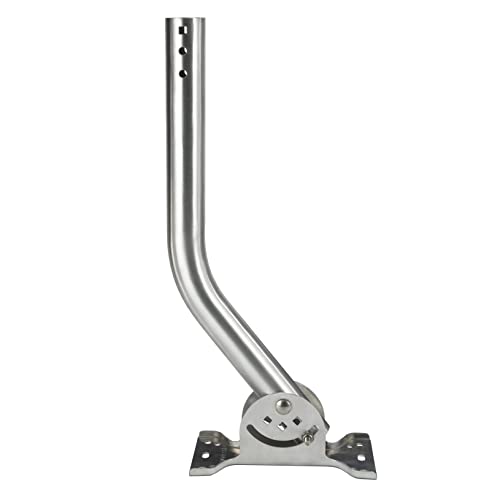
Proxicast J-Max 18-Inch Aluminum J-Pole stands apart with an aluminum bracket and arm rather than a steel mast-and-bracket construction. It measures 18 inches and uses a pivot/slide adjustment with locking positions at 0, +45 and -45 degrees. The pole is reversible, and the kit includes 304 stainless steel mounting hardware. That combination suits installations where rust on the support matters and a shorter wall standoff is enough. Its 18-inch reach is shorter than the 33.25- and 66-inch alternatives, so it is a less suitable choice when clearing a roof edge or a nearby obstruction requires a longer arm.
Bottom line: Choose this when aluminum construction and shorter reach fit the site.
Heavy-Duty 17.25-Inch Steel J-Pole

Heavy-Duty 17.25-Inch Steel J-Pole has the largest specified outer diameter among the steel poles here: 1.69 inches, with a 1.5-inch inner diameter and 17.25-inch arm. The reversible pipe fits its adjustable bracket, and the kit includes two U-bolt kits for mounting to a 1–2-inch pole. This makes it useful where a compact arm and pole-mounting option matter more than extra wall clearance. The maker says a separate Starlink adapter is needed for a Starlink dish. Its short arm provides less reach than the 33.25- and 66-inch alternatives.
Bottom line: Choose this for a short arm and included pole mount hardware.
PIBIDI 66-Inch Extended-Reach J-Pole

PIBIDI 66-Inch Extended-Reach J-Pole is the long-reach choice, with a 66-inch, 1.25-inch steel mast intended to lift equipment above a roofline or past nearby obstacles. Its reversible configuration can provide vertical height or horizontal clearance, and it has a 2 mm bracket with a 180-degree pivot lock. An optional 16.5-inch extension pole is available separately, according to the specifications. The added reach can be useful when shorter arms cannot clear an obstruction, but a longer pole also creates more leverage on its mounting surface. Confirm the structure and allowable load for the complete installation before choosing this length.
Bottom line: Choose this when a shorter pole cannot clear the roofline or obstacles.
UB-AM 2-Pack J-Pole Mount

UB-AM 2-Pack J-Pole Mount is the only two-mount kit in this group: it includes two J-arms, two brackets, four hoops and bolts. Each arm is 19.68 inches long, with a 1.65-inch outer and 1.49-inch inner diameter; its tilt range is 150 degrees. The kit is suited to buyers who need two mounting points or two arms, rather than one longer pole. The product maker says the steel has a rust-resistant finish. Its length falls far short of the 66-inch option, so it will not provide comparable reach for clearing high rooflines.
Bottom line: Choose this when you need two arms and a 150-degree tilt range.
How to Choose a J Pole Antenna Mount
Choose by the clearance you need, then check the mount’s material, adjustment and attachment method. These options span 17.25 to 66 inches, so measure from the intended mounting surface to the obstacle the antenna must clear; choose the 66-inch style only when shorter arms cannot provide that path. Mast diameter also varies: the options range from 1.25 inches to 1.69 inches outer diameter, and a clamp or antenna collar must match the pole it grips. Pivot adjustment helps aim or position an antenna, but it does not replace a secure structural attachment. For any elevated antenna, check allowable wind and antenna loads for the mount and the surface before installation.
J Pole Length and Clearance
Measure the actual wall, eave or roof clearance before selecting pole length. The 17.25- and 18-inch arms are compact choices; a 33.25-inch arm adds reach, while the 66-inch option is made for extending above rooflines or beyond obstacles. A J-pole can be reversed to change how its arm and upright sit, but reversal does not change the pole’s length. For an antenna near an eave, account for the antenna’s own width and the direction it faces, not just the pole arm. A useful decision rule is to choose a 66-inch arm when the measured gap cannot be cleared by a shorter option, while also verifying the added leverage is acceptable for the mounting structure.
Steel or Aluminum J Pole Construction
Steel and aluminum each suit outdoor mounting, but finish and hardware affect how an assembly handles exposure. The products here include powder-coated steel options, an aluminum bracket and arm with stainless steel hardware, and a steel kit whose maker says it has a rust-resistant finish. Aluminum avoids rust in the metal itself, while steel depends more on its protective finish and care at scratches or cut edges. Stainless mounting hardware can reduce corrosion concerns at fasteners, but mixed metals and wet conditions may still require attention to the maker’s installation guidance. Inspect outdoor mounts periodically for loose fasteners, coating damage and corrosion; a pole carrying an antenna also needs sound attachment to the building or support pole.
Mounting Surface and Antenna Safety
Attach the bracket to a surface capable of carrying the antenna and the wind force on its exposed area; siding alone is not a structural anchor. A longer pole increases leverage, so the 66-inch option calls for particular attention to the support and fastening method. Use hardware suited to the actual surface—wood framing, masonry and a separate support pole require different anchors—and seal roof penetrations with an appropriate roofing method. Outdoor antenna masts and coaxial entry points also involve electrical grounding and bonding requirements; consult the applicable National Electrical Code provisions and a qualified installer when unsure. Keep the antenna clear of overhead power lines during installation, and never raise a pole where it could contact a line.
Frequently Asked Questions
How long should a J pole antenna mount be?
Choose an arm long enough to clear the roof edge or other obstacle, measuring from the bracket surface to the antenna’s needed position. The options here run from 17.25 to 66 inches, and longer reach increases leverage on the mount.
Can a J pole mount attach to a roof or eave?
The mounts are intended for wall, eave or roof installations, but the fastener must engage a structure capable of carrying the load. Roof penetrations need proper weather sealing, and the mount’s wind and antenna load limits should be confirmed before installation.
What mast diameter should my antenna clamp fit?
Match the clamp to the pole’s outer diameter, not its inner diameter. These options specify outer diameters from 1.25 to 1.69 inches; check the antenna clamp’s accepted range before selecting a mount.
Does a longer J pole catch more wind?
A longer pole increases leverage on its bracket, and the antenna’s exposed area also affects wind force. A 66-inch pole deserves closer attention to structural attachment and allowable load than a compact 17.25- or 18-inch arm.
Do outdoor antenna masts need grounding?
Outdoor antenna installations involve grounding and bonding requirements under applicable electrical code provisions. Plan the mast and coaxial cable entry as part of the electrical installation, and use a qualified installer if you are unsure how those requirements apply.