
Gourmia Espresso Makers: 5 Models Compared

Gourmia Slim Espresso Machine is the Gourmia pick for espresso drinks with steamed milk, since it combines an LCD screen, adjustable temperature and a steam wand. Choose Gourmia Electric Moka Pot, 6-Shot for a compact electric moka pot rather than a pump machine, or consider the alternatives if a different pump rating or preset controls suit you better.
We earn a commission if you buy through links on this page. As an Amazon Associate I earn from qualifying purchases. Products are compared on manufacturer specifications, not hands-on testing.
- Best overall: Gourmia Slim Espresso Machine – The Slim model pairs adjustable controls and a steam wand with a 43-ounce tank.
- Best for moka coffee: Gourmia Electric Moka Pot, 6-Shot – Its electric base brews up to six shots, and a reduction sieve supports three-shot batches.
- Best for digital controls: Chefman CraftBrew Digital Espresso Machine – The Chefman combines a touch control panel and timer with a 15-bar pump.
| Product | Best for | Brew style | Water capacity | Shop |
|---|---|---|---|---|
| Gourmia Slim Espresso Machine | Milk drinks | Pump espresso | 43 oz | Check Price on Amazon |
| Gourmia Electric Moka Pot, 6-Shot | Moka coffee | Electric moka | 10 oz | Check Price on Amazon |
| Chefman CraftBrew Digital Espresso Machine | Touch controls | Pump espresso | 50.7 oz | Check Price on Amazon |
| De’Longhi Classic Signature | Preset recipes | Pump espresso | — | Check Price on Amazon |
| De’Longhi Classic Matte Black | Auto-stop shots | Pump espresso | — | Check Price on Amazon |
Gourmia Espresso Makers and Alternatives
Compare the brewing approach, pump rating and water capacity before choosing a machine for your coffee routine.
Gourmia Slim Espresso Machine

Unlike the moka pot option, this Gourmia is a pump espresso machine with a steam wand and LCD controls. Gourmia says its 20-bar pump, 1,350-watt system and adjustable temperature support single, double or custom shots; the machine also has a 43-ounce tank, cup warmer, hot-water dispenser and descaling mode. At 12 by 6 by 12 inches, it is especially suited to a narrow counter where a milk-drink setup matters. Its tall, 12-inch profile still needs overhead clearance, so measure beneath cabinets before setting it up.
Bottom line: Choose it for LCD-guided shot options and milk frothing in a slim footprint.
Gourmia Electric Moka Pot, 6-Shot

This Gourmia uses moka-style brewing rather than a pump, making it the distinct choice for buyers who want an electric pot without a stovetop. Gourmia says its 550-watt base brews up to six shots, while the included reduction sieve allows a three-shot batch. The aluminum pot has a 10-ounce maximum water fill and a beechwood handle; the base detaches for serving. It is not the right match for someone seeking a steam wand or pump-machine espresso workflow, and the 10-ounce fill limit makes batch size the key constraint.
Bottom line: Pick it for stovetop-free moka coffee in three- or six-shot batches.
Chefman CraftBrew Digital Espresso Machine
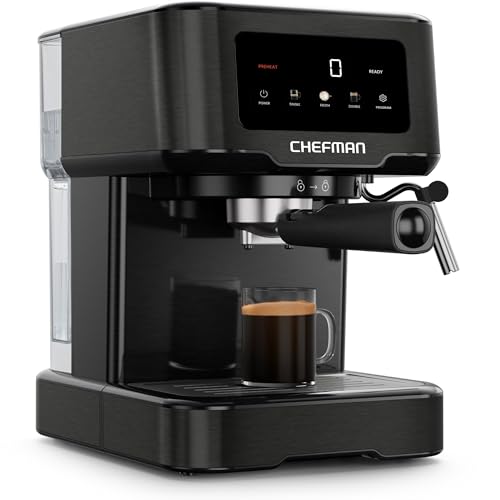
The Chefman stands apart from Gourmia’s Slim model with a touch control panel and built-in timer. Chefman says its 15-bar pump and steam wand handle espresso and milk drinks; two shot baskets cover single and double servings. The removable reservoir holds 1.5 liters, or about 50.7 ounces, and the stainless-black machine measures about 10.8 by 8.9 by 11.9 inches. That larger width may matter on a narrow counter, and the feature set does not establish adjustable temperature, so buyers who prioritize that control should compare carefully.
Bottom line: Choose it if touch controls and a timer matter more than a narrower footprint.
De’Longhi Classic Signature

Among the alternatives, this De’Longhi adds a pressure gauge and adjustable milk frother alongside preset single and double doses. De’Longhi says its 15-bar Italian pump and Thermoblock temperature control support rapid heat-up, with a dual-mode frother for dairy or plant-based milk. Its dimensions are 15.94 inches high, 11.22 inches long and 13.98 inches wide, so it needs more counter and cabinet space than the compact Gourmia. The gauge offers a visible pressure readout, but buyers seeking an especially narrow machine should look elsewhere.
Bottom line: Pick it for preset shots, a pressure gauge and adjustable frothing.
De’Longhi Classic Matte Black

This De’Longhi differs from the Signature model with a 9-bar extraction rating and an auto-stop function. De’Longhi says Thermoblock temperature control heats quickly and its presets cover single or double espresso; the milk frother works with dairy or plant-based alternatives. At 8.9 inches high, 11.4 inches long and 12 inches wide, it is shorter than the Signature model, which can help where overhead clearance is limited. The features do not include a pressure gauge, so buyers who want a visible pressure reading should favor the Signature instead.
Bottom line: Choose it for auto-stop shots and a lower profile than the Signature.
How to Choose a Home Espresso Machine
Choose by brew method first: pump machines force hot water through a compact bed of finely ground coffee, while moka pots brew by passing heated water through grounds at lower pressure. A pump rating is not the same as pressure at the coffee bed; 9 bar is a common espresso extraction reference, and a pump’s advertised maximum does not prove it holds that pressure during brewing. For a typical double shot, start around 18 grams of coffee and adjust grind and dose to taste. If milk drinks are a priority, choose a machine with a steam wand; with little counter space, measure both width and cabinet clearance before deciding.
| Need | Choose |
|---|---|
| Steam milk and adjust shots | Gourmia Slim Espresso Machine |
| Electric moka-style brewing | Gourmia Electric Moka Pot, 6-Shot |
| Touch controls and timer | Chefman CraftBrew Digital Espresso Machine |
| Gauge and adjustable frother | De’Longhi Classic Signature |
| Auto-stop and 9-bar rating | De’Longhi Classic Matte Black |
Pump Espresso and Moka Pot Brewing
Pump machines and moka pots make different coffee, even when both are marketed for espresso-style drinks. A pump machine uses an electric pump and a portafilter basket; a moka pot heats water in a lower chamber and pushes it through grounds into an upper chamber. Moka coffee is typically more concentrated than drip coffee but is not made at standard espresso pressure. Grind accordingly: espresso machines need a fine, consistent grind, while moka pots generally work better with a grind a little coarser than espresso to reduce over-extraction and clogging. Choose a pump machine for a steam wand and espresso-style extraction; choose moka brewing for its simpler pot-based process.
Shot Size, Basket Choice and Fit
Single and double settings describe dose or programmed output, not a universal cup volume; basket size and machine programming determine the result. A common starting point for a double is about 18 grams of ground coffee yielding roughly 36 grams of espresso, with grind adjustment used to tune flow. Use the basket supplied for the chosen dose rather than filling a single basket like a double. Counter fit is equally concrete: measure width, depth and the space above the machine, then allow room to remove the water tank and move a steam wand. A unit near 16 inches tall may not fit below low cabinets even if its footprint seems manageable.
Cleaning and Safe Milk Frothing
Rinse the portafilter basket after each brew and wipe the steam wand immediately after frothing; dried milk is harder to remove and can obstruct the wand tip. Descale when mineral buildup or slower flow indicates it is needed, with hard-water homes generally requiring more frequent attention than soft-water homes. Steam and metal wand tips can burn skin, so keep hands away from the outlet while purging or steaming and let hot parts cool before cleaning. Moka pots also become hot during brewing; use the handle rather than the metal body, and do not exceed the pot’s marked fill limit. Keep electrical bases and cords clear of water.
Frequently Asked Questions
Is a moka pot the same as espresso?
No, moka pots brew under lower pressure than pump espresso machines and make a different style of concentrated coffee. Choose a pump machine when espresso-style extraction or steam-wand milk frothing is essential.
What does a 15-bar espresso pump mean?
A 15-bar figure is the pump’s rated pressure, not a guarantee of 15 bar reaching the coffee puck during extraction. Around 9 bar is a common reference for espresso extraction, so compare machine features rather than treating a higher pump number as automatically better.
How much coffee goes in a double-shot basket?
About 18 grams is a common starting dose for a double-shot basket, though basket size and roast affect the suitable amount. A roughly 1:2 brew ratio, such as 18 grams in to 36 grams out, is a useful starting point for dialing in.
How often should I descale an espresso machine?
Descale when mineral scale or slower water flow appears, and more frequently if your water is hard. Hardness changes the interval substantially, so use water suitable for espresso equipment and keep the machine’s descaling mode or procedure in mind.
Can espresso machine steam burn you?
Yes, steam and the metal tip can cause burns. Keep fingers clear of the wand outlet and wait for hot components to cool before wiping or cleaning.