
Best Bee Venom Serum: 5 Formulas Compared

For most people, Bee Venom Niacinamide Peptide Serum is the best bee venom serum pick because its bee venom formula pairs two peptides with niacinamide and is designed to layer under moisturizer or sunscreen. Choose a different formula if you specifically want Manuka honey, royal jelly, or a particular bottle size.
Bee venom serums are leave-on facial products; the ingredient blend, texture, and allergy precautions matter more than the name alone.
We earn a commission if you buy through links on this page. As an Amazon Associate I earn from qualifying purchases. Products are compared on manufacturer specifications, not hands-on testing.
- Best overall: Bee Venom Niacinamide Peptide Serum – Combines bee venom with two peptides and niacinamide in a formula designed to layer without pilling.
- Best for Manuka blend: KUSHI Bee Venom Serum – Pairs 0.5% bee venom with Manuka honey, royal jelly, propolis, and jojoba oil.
- Best for larger bottle: Wild Ferns New Zealand Bee Venom Serum – The 1.69 fl oz formula includes Manuka honey and royal jelly.
| Product | Best for | Size | Formula highlights | Texture or use | Shop |
|---|---|---|---|---|---|
| Bee Venom Niacinamide Peptide Serum | Layering skincare | 1.01 fl oz | Dual peptides, niacinamide, propolis | Fast-absorbing; layers under moisturizer | Check Price on Amazon |
| KUSHI Bee Venom Serum | Honey-rich formula | 0.5 fl oz | 0.5% bee venom, Manuka honey, royal jelly | Lightweight | Check Price on Amazon |
| Bee Venom Manuka Honey Peptide Serum | Face and neck | 1 fl oz | Manuka honey, centella, peptides | 2–3 drops each evening | Check Price on Amazon |
| Advanced Bee Venom Serum | Silky texture | 1 fl oz | Bee venom, honey, royal jelly | Silky texture | Check Price on Amazon |
| Wild Ferns New Zealand Bee Venom Serum | Larger bottle | 1.69 fl oz | Manuka honey, royal jelly | — | Check Price on Amazon |
Best Bee Venom Serums
Compare the featured ingredients, bottle sizes, and use notes before choosing a formula.
Bee Venom Niacinamide Peptide Serum

For a peptide-focused formula that is designed to layer smoothly, Bee Venom Niacinamide Peptide Serum combines bee venom with acetyl hexapeptide-8, arginine/lysine polypeptide, and niacinamide. Propolis, sodium hyaluronate, and panthenol are also part of the formula. The maker positions the serum for daily use and says it absorbs quickly without a greasy film or pilling under moisturizer, sunscreen, or makeup. That makes it a practical fit for routines with several layers. The limitation is that its featured blend differs from formulas centered on Manuka honey and royal jelly, so choose another option if those are priorities.
Bottom line: Choose it if you want peptides and niacinamide in a serum intended to layer with other skincare.
KUSHI Bee Venom Serum

Among these options, KUSHI Bee Venom Serum is the one with a bee venom concentration: 0.5%. Its lightweight formula also includes Manuka honey, royal jelly, propolis, and jojoba oil, making it the clearest match for shoppers who want that combination rather than a peptide-led blend. The maker says it is intended for daily use and claims it supports the look of firmer, smoother skin. Its 0.5 fl oz bottle is smaller than the other sizes, which matters if bottle volume is a deciding factor. As with any bee venom product, avoid it if you have a bee-sting allergy.
Bottom line: Pick it if a 0.5% bee venom formula with Manuka honey and royal jelly suits your ingredient preferences.
Bee Venom Manuka Honey Peptide Serum
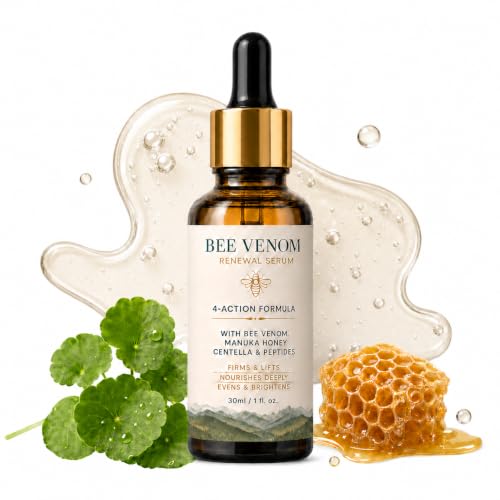
For an evening face-and-neck routine, Bee Venom Manuka Honey Peptide Serum gives a specific application amount: 2–3 drops on cleansed skin, followed by moisturizer. The formula highlights bee venom, Manuka honey, centella, peptides, and hyaluronic acid, distinguishing it from the options that focus on propolis, jojoba oil, or niacinamide. The maker says the lightweight serum absorbs quickly without greasy residue. Its use directions make it a straightforward fit for someone who wants one serum step across the face and neck. The limitation is its evening-only application guidance, so a buyer seeking an explicitly daily or makeup-layering formula may prefer another choice.
Bottom line: Choose it for a 2–3 drop evening routine covering both face and neck.
Advanced Bee Venom Serum

For shoppers who prioritize feel, Advanced Bee Venom Serum is the only formula here described as silky textured. Its ingredient highlights include bee venom, honey, and royal jelly, and the maker says the serum is hydrating and intended to improve the look of fine lines and skin firmness. That combination makes it a simpler alternative to formulas with named peptides, niacinamide, or several additional botanical ingredients. The trade-off is that the specifications do not give an application schedule, so choose it for its texture and ingredient mix rather than a specified routine. Bee venom allergy remains a reason to avoid it.
Bottom line: Pick it if a silky texture and a honey-and-royal-jelly blend are your priorities.
Wild Ferns New Zealand Bee Venom Serum

At 1.69 fl oz, Wild Ferns New Zealand Bee Venom Serum has the largest bottle size among these five formulas. It combines bee venom with Manuka honey and royal jelly, and the maker says the venom is humanely harvested using VENZ. The New Zealand-made serum is a good fit if bottle volume, honey, and bee sourcing are your main considerations. Unlike several other options, its ingredient highlights do not include peptides, niacinamide, or hyaluronic acid, so those ingredients may point you elsewhere. The maker specifically warns against use by anyone allergic to bee stings and advises patch-testing before application.
Bottom line: Choose it if you want the largest bottle here and prioritize Manuka honey and stated bee-sourcing practices.
How to choose a bee venom serum
Choose a bee venom serum by its accompanying ingredients and how it fits into your routine, not by the bee venom label alone. These five formulas range from a named 0.5% concentration to blends featuring peptides, niacinamide, honey, or royal jelly; only one gives a venom percentage. A serum is a leave-on product, so introduce one new formula at a time rather than starting several new actives together. For a simple routine, apply serum after cleansing and before moisturizer; in the morning, finish with broad-spectrum sunscreen rated SPF 30 or higher. If your main goal is a certain texture or ingredient, use the formula’s features as the deciding criteria instead of assuming all bee venom serums work alike.
Bee venom and allergy precautions
Avoid bee venom skincare if you have a known allergy to bee stings, and seek medical advice before considering it if you have had a severe allergic reaction. Topical exposure is not a reliable way to rule out allergy, and a small patch test cannot establish that a product is safe for someone with a sting allergy. For people without a known allergy, dermatologists commonly recommend testing a new skincare product on a small area twice daily for 7–10 days before wider use; stop if irritation or a rash develops. Do not apply a new serum to broken or irritated skin. These precautions matter for every formula here because each one is presented as a bee venom serum, regardless of its other ingredients.
How to layer serum in a routine
Apply a facial serum after cleansing and before moisturizer so the thinner leave-on step goes on first. Use the amount directed for the specific formula; Bee Venom Manuka Honey Peptide Serum gives a 2–3 drop evening direction for face and neck, while Bee Venom Niacinamide Peptide Serum is presented as a layering formula. In daytime routines, finish with broad-spectrum SPF 30 or higher and reapply sunscreen about every two hours outdoors, or after swimming or sweating. Avoid adding multiple unfamiliar products at once: a single new product makes it easier to identify the cause if irritation appears. The label of a serum does not replace a sunscreen step, and bee venom should not be treated as a substitute for proven sun protection.
Bee venom serum ingredients compared
Ingredient combinations are the clearest way to distinguish these five serums. Use this guide to match a formula to what you want alongside bee venom; ingredient presence alone does not establish that a serum will produce a particular result. A buyer seeking a concentration can select the sole formula here with a percentage, while someone focused on honey or peptides can compare those named ingredients. If you have an allergy to any ingredient, avoid that formula and consult a clinician when unsure. Skin reactions can occur with cosmetic products even when a formula is marketed for routine use.
| Priority | Formula match |
|---|---|
| Stated bee venom concentration | 0.5% blend with Manuka honey and royal jelly |
| Peptides and niacinamide | Dual-peptide formula with propolis |
| Manuka honey, centella, and hyaluronic acid | Face-and-neck evening serum |
| Largest bottle size | 1.69 fl oz Manuka honey and royal jelly serum |
| Silky texture | Honey and royal jelly formula |
Frequently Asked Questions
Can bee venom serum cause an allergic reaction?
Yes, bee venom products may pose a risk for people allergic to bee stings, so avoid them if you have that allergy. A patch test cannot establish safety for someone with a sting allergy.
How long should I patch test a new serum?
A common dermatology approach is to apply a small amount to one test area twice daily for 7–10 days. Stop using the product if irritation or a rash appears, and do not use patch testing to assess a known bee-sting allergy.
Should serum go on before or after moisturizer?
Serum generally goes on after cleansing and before moisturizer. In a morning routine, apply broad-spectrum SPF 30 or higher as the final skincare step.
Can I use a bee venom serum every day?
Routine frequency depends on the individual formula; KUSHI Bee Venom Serum is presented for daily use, while Bee Venom Manuka Honey Peptide Serum gives an evening application direction. Introduce one new serum at a time and stop if irritation develops.
Can I use bee venom serum around my eyes?
Do not assume a face serum is intended for the eye area unless its directions explicitly say so. The eye area is sensitive, and products should be kept out of the eyes.