
Best Insecticide for Roses: 3 Sprays Compared

Neudorff Garden Insecticide Spray, 32 oz is the best fit for most rose growers who want a ready-to-use contact spray with coverage for aphids, mites, caterpillars, and other pests. Choose Bonide Rose Rx Multi-Purpose Concentrate, 16 oz instead if fungal disease prevention is also a priority, or Dr. Earth Rose and Flower Insect Killer, 24 oz if a ready-to-use rose and flower insect killer suits your needs.
Contact sprays affect pests they reach, so thorough coverage matters; systemic products work differently and are not included here.
We earn a commission if you buy through links on this page. As an Amazon Associate I earn from qualifying purchases. Products are compared on manufacturer specifications, not hands-on testing.
- Best overall: Neudorff Garden Insecticide Spray, 32 oz – Ready to use and lists contact control for aphids, mites, caterpillars, and many other pests.
- Best for disease coverage: Bonide Rose Rx Multi-Purpose Concentrate, 16 oz – Combines insect, mite, and fungal disease control for roses and other plants.
- Best for simple application: Dr. Earth Rose and Flower Insect Killer, 24 oz – Ready-to-use rose and flower insect killer with a 24-ounce size.
| Product | Best for | Form | Size | Named pest coverage | Shop |
|---|---|---|---|---|---|
| Neudorff Garden Insecticide Spray, 32 oz | Contact pest control | Ready-to-use spray | 32 oz | Aphids, mites, caterpillars | Check Price on Amazon |
| Bonide Rose Rx Multi-Purpose Concentrate, 16 oz | Pests and disease | Concentrate | 16 oz | Aphids, mites, whiteflies | Check Price on Amazon |
| Dr. Earth Rose and Flower Insect Killer, 24 oz | Ready-to-use roses | Ready-to-use spray | 24 oz | Aphids, beetles, whiteflies | Check Price on Amazon |
Rose Insecticides Compared
Match the spray format and its pest targets to the problem you see on your roses.
Neudorff Garden Insecticide Spray, 32 oz

For a ready-to-use contact option, this spray lists a broad range of pests on roses and other ornamentals. The formula contains pyrethrins and canola oil, and the maker says it can be used up to and including harvest on listed crops. Its targets include aphids, mites, caterpillars, beetles, and other insects. Contact products depend on spray reaching the pest, so check leaf undersides and new growth where insects often gather. Because the coverage is broad, avoid spraying visiting bees and other pollinators; use only as directed on the label.
Bottom line: Pick this if you want a ready-to-use contact spray for several listed rose pests.
Bonide Rose Rx Multi-Purpose Concentrate, 16 oz

Unlike an insect-only spray, this concentrate combines insecticide, miticide, and fungicide uses. The maker lists aphids, spider mites, whiteflies, caterpillars, and scales among its insect targets, and says the product helps prevent or control several fungal diseases, including black spot and powdery mildew. It is intended for roses and several other garden plants. The combined purpose may suit gardeners managing both insect and disease concerns, but it is a concentrate rather than a ready-to-use spray; follow the label for mixing and application.
Bottom line: Choose this when you want one concentrate for listed pests and fungal diseases.
Dr. Earth Rose and Flower Insect Killer, 24 oz
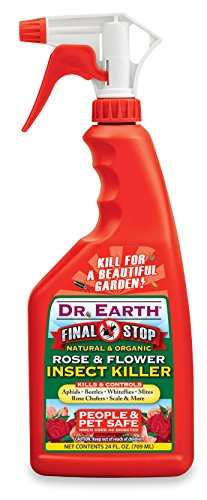
This ready-to-use spray is specifically presented for roses and flowers, with targets including aphids, beetles, whiteflies, mites, rose chafers, scale, and caterpillars. The specifications identify rosemary oil, but do not provide a complete active-ingredient breakdown, so compare the package label if ingredient choice matters to you. The maker recommends applying early in the morning or late in the afternoon to avoid leaf burn. That timing can also help avoid the hottest part of the day; do not spray open blooms while pollinators are visiting.
Bottom line: Pick this for a ready-to-use rose-and-flower spray with morning or evening application guidance.
How to Choose a Rose Insecticide
Choose by pest and application method: a contact spray must reach the insect, while a systemic product is taken up by the plant. First identify the pest before spraying; aphids cluster on tender growth, while spider mites often leave fine stippling or webbing on leaves. A spray listing a target pest is a better match than a general-purpose product whose label does not include it. If you are treating both insects and fungal disease, a combined product may cover both concerns, but it is not a substitute for matching the treatment to the problem. Read the label for approved plants, pests, dose, and repeat interval, and do not exceed those directions.
When to Spray Roses
Spray roses in the cool morning or late afternoon, and avoid treating plants in full heat or direct sun. Hot conditions and wet foliage can increase the chance of leaf injury; a small test application helps reveal sensitivity before treating the whole plant. Contact products only work where spray reaches, so cover both sides of leaves and fresh shoots without runoff. Keep people and pets away as the label directs, and let any application dry before allowing contact. Avoid spraying flowers while bees or other pollinators are visiting, especially with broad-spectrum insecticides that can harm beneficial insects.
Protect Pollinators and Beneficial Insects
Do not spray open rose blooms while bees are foraging; wait until flowers are no longer being visited and follow the product label. Many broad-spectrum insecticides can harm pollinators and other beneficial insects, including predators that help limit aphids. For a small aphid patch, first try a strong stream of water or remove badly affected tips, then reassess before applying pesticide. Treat only the affected plants rather than spraying the entire garden when the pest is localized. Keep spray off nearby flowering plants and avoid drift toward water or neighboring gardens; the label controls where and how each pesticide may be used.
Common Rose-Spray Mistakes
Spraying without identifying the pest is a common mistake; leaf damage can also come from disease, weather, or cultural stress. Another mistake is applying a contact treatment only to leaf tops when insects are beneath leaves or around new shoots. Do not combine products or shorten the label’s retreatment interval to speed control. Avoid applications in windy conditions, which can carry droplets to flowers or plants not intended for treatment. A simple decision rule helps: if you cannot find the pest or confirm it is among the product’s targets, hold off and inspect again before treating.
Frequently Asked Questions
How often should I spray roses for aphids?
Use the product label’s retreatment interval rather than spraying on a fixed schedule. For a small aphid population, rinse the insects off first and recheck new growth in a few days before deciding whether another labeled application is needed.
Can I spray roses while they are blooming?
Avoid spraying open flowers while bees and other pollinators are visiting. Apply only as the label permits, and keep spray off nearby flowering plants to reduce exposure.
Should I spray the tops or undersides of rose leaves?
Cover both sides of the leaves because many pests shelter underneath. Contact sprays must physically reach insects, so also check tender new growth and leaf joints.
Can rose insecticide burn leaves in hot weather?
Yes, some sprays can injure foliage under hot or sunny conditions. Apply during the cooler morning or late afternoon, and test a small area first if the plant’s sensitivity is uncertain.
What should I do before spraying roses?
Identify the pest and confirm it is listed for the product and the rose use. Check for beneficial insects, avoid windy conditions, and follow the label for application, protective precautions, and re-entry.