
Pomegranate Juice No Sugar Added: 3 Options Compared

For pomegranate juice with no sugar added, Pomona Organic Pure Pomegranate Juice suits buyers who want single-ingredient organic juice in ready-to-drink 8.4-ounce bottles. Choose Organic Pomegranate Juice, 33.8 Oz or Granatti Pure Pomegranate Juice With Pulp instead for larger 33.8-ounce glass bottles; Granatti Pure Pomegranate Juice With Pulp also has pulp.
We earn a commission if you buy through links on this page. As an Amazon Associate I earn from qualifying purchases. Products are compared on manufacturer specifications, not hands-on testing.
- Best overall: Pomona Organic Pure Pomegranate Juice – Single-ingredient organic juice comes in a 12-pack of ready-to-drink 8.4-ounce bottles.
- Best for a two-bottle pack: Organic Pomegranate Juice, 33.8 Oz – Two 33.8-ounce glass bottles offer a larger format with no added sugar.
- Best for pulp: Granatti Pure Pomegranate Juice With Pulp – Cold-pressed juice with natural pulp comes in four 33.8-ounce glass bottles.
| Product | Best for | Bottle size | Pack count | Processing or texture | Shop |
|---|---|---|---|---|---|
| Pomona Organic Pure Pomegranate Juice | Single-serve bottles | 8.4 fl oz | 12 | Cold-pressed; not from concentrate | Check Price on Amazon |
| Organic Pomegranate Juice, 33.8 Oz | Two large bottles | 33.8 fl oz | 2 | — | Check Price on Amazon |
| Granatti Pure Pomegranate Juice With Pulp | Pulp and larger packs | 33.8 fl oz | 4 | Cold-pressed; with pulp | Check Price on Amazon |
Pomegranate Juice With No Sugar Added
Compare the ingredient simplicity, bottle size and texture to choose a format that fits how you plan to drink it.
Pomona Organic Pure Pomegranate Juice
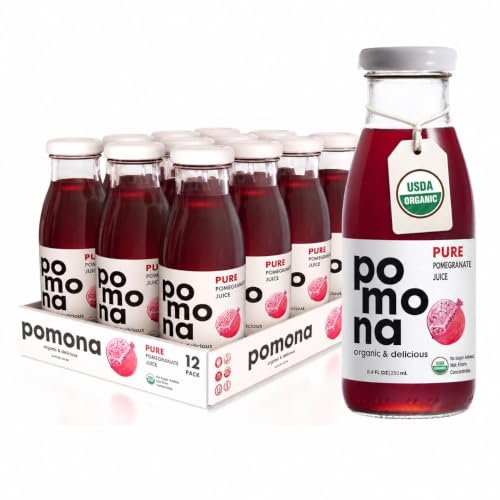
For small ready-to-drink portions, this organic juice comes in twelve 8.4-ounce glass bottles. The maker says it is cold-pressed, not from concentrate, and never diluted; the ingredient is 100% organic pomegranate. That single-ingredient recipe suits buyers who want to sip it straight or mix one bottle into sparkling water or a smoothie. The tradeoff is the smaller container format: choose a larger bottle if you prefer to pour multiple servings from one container. The maker also says the juice has no added sugar or preservatives.
Bottom line: Choose this if you want organic, single-ingredient juice in individual bottles.
Organic Pomegranate Juice, 33.8 Oz

The two-bottle pack distinguishes this juice with 33.8-ounce glass containers, a useful format for buyers who want more juice per bottle than a single-serve pack provides. Its name identifies the juice as 100% organic pomegranate juice, while the maker says it has no added sugar, preservatives, artificial colors or added flavors. Glass bottles suit buyers who prefer that packaging and want juice for sipping, mocktails or cooking. The specifications do not identify its processing method, so buyers specifically seeking cold-pressed or not-from-concentrate juice should verify that before choosing it.
Bottom line: Pick this for two large glass bottles and a simple ingredient profile.
Granatti Pure Pomegranate Juice With Pulp

Natural pulp is the defining difference here: the juice is lightly filtered rather than fully strained, giving it a textured pour. The maker says it is cold-pressed from whole pomegranates and not from concentrate, with no added sugar, syrups or artificial sweeteners. Four 33.8-ounce glass bottles make this the largest pack among these options, so it suits households that want pulp and use larger containers. The texture may not suit anyone who prefers smooth juice; choose a strained option if suspended fruit pulp is unwelcome.
Bottom line: Choose this if you want pulp, cold-pressed juice and four large bottles.
How to Choose Pomegranate Juice With No Sugar Added
Start with the ingredient list: a single ingredient, pomegranate juice, is the clearest match for juice without added sugar. “No sugar added” does not mean sugar-free; pomegranate juice naturally contains sugars from the fruit. Check the nutrition label for total sugars and serving size rather than assuming the phrase means there is no sugar. For a single serving, an 8-ounce glass is a common portion; smaller 8.4-ounce bottles are close to that amount. Choose larger bottles for pouring several portions, and individual bottles if ready-to-drink portions matter more. Also distinguish juice from nectar or a juice drink, which can include other ingredients.
Juice From Concentrate and Not From Concentrate
Juice from concentrate is made by removing water from juice and later adding water back; not-from-concentrate juice is not made through that concentration-and-reconstitution step. Either format can be 100% juice, so the phrase “100%” alone does not tell you which process was used. Cold pressing describes a method of extracting juice, while pulp describes whether some fruit solids remain; neither term by itself establishes the sugar content. If processing is a priority, look for an explicit cold-pressed or not-from-concentrate claim. For a smoother pour, choose strained juice; for a thicker texture, select a product that specifically says it contains pulp.
Choosing Bottle Size and Pack Format
Choose bottle size around how quickly you expect to use an opened container and how many servings you pour. A 33.8-ounce bottle holds just over four 8-ounce portions, while an 8.4-ounce bottle is roughly one such portion. A multi-bottle pack changes how much unopened juice you keep on hand, not the serving size in each bottle. Glass packaging can be heavier and more breakable than other formats, so account for storage and handling, especially around children. Refrigerate juice after opening and use the container’s storage guidance; don’t leave opened juice at room temperature for extended periods.
Reading Sugar and Serving Information
“No sugar added” describes added ingredients, not the fruit’s naturally occurring sugars. Total sugars on the Nutrition Facts label include sugars naturally present in 100% fruit juice, and the serving size determines the amount shown per serving. Compare labels using the same volume, such as 8 fluid ounces, instead of comparing unlike serving sizes. A bottle may contain more than one serving even when it looks like an individual drink. If monitoring sugar intake, measure the portion you drink and count the label’s total sugars for that amount; dilution with plain or sparkling water reduces sugar per glass but does not remove sugar from the juice itself.
Frequently Asked Questions
Does pomegranate juice with no sugar added contain sugar?
Yes, 100% pomegranate juice contains naturally occurring fruit sugars even when no sugar is added. Check total sugars per serving on the Nutrition Facts label, and compare products using the same serving volume.
Is pomegranate juice from concentrate still 100% juice?
Yes, juice can be 100% juice and still be made from concentrate. Concentrate is produced by removing water and later reconstituting the juice; check for a separate not-from-concentrate claim if that distinction matters.
How much juice is in an 8.4-ounce bottle?
An 8.4-fluid-ounce bottle is slightly more than one 8-ounce portion. Check the container’s serving count, since nutritional values may be given per serving rather than per full bottle.
Should pomegranate juice with pulp be shaken?
Pulp can settle during storage, so gently shake a closed bottle if the label directs it and you want the texture evenly distributed. Open glass bottles carefully and keep them refrigerated after opening.
Can you dilute pomegranate juice with sparkling water?
Yes, mixing juice with sparkling water is a way to make a lighter drink. Dilution changes the juice concentration in the glass, but it does not remove the sugars in the amount of juice you pour.