
Balaclava With Nose Vent: 4 Designs Compared

For a balaclava with a nose vent, IRELIA Mesh Vent Balaclava is the closest match because it has a breathable mesh vent at the nose and mouth. Choose AOPREL Nose-Shield Mesh Balaclava if you want a contoured nose shield paired with a perforated mouth panel; choose an opening-style mask if you prefer breathing through a separate nose opening.
We earn a commission if you buy through links on this page. As an Amazon Associate I earn from qualifying purchases. Products are compared on manufacturer specifications, not hands-on testing.
- Best overall: IRELIA Mesh Vent Balaclava – A mesh vent across the nose and mouth provides the clearest match to the requested vented design.
- Best for glasses and goggles: AOPREL Nose-Shield Mesh Balaclava – A nose shield and perforated mouth zone are designed to direct warm breath downward.
- Best for ponytails: AOPREL Nose-Opening Wool-Blend Balaclava – A rear opening accommodates a low ponytail or braid, with a 21.7–23.6-inch head fit.
- Best for a soft nose cover: AOPREL Modal-Wool Nose-Cover Balaclava – A modal-and-wool blend includes a soft nose cover intended to direct airflow down.
| Product | Best for | Vent or nose design | Fit | Material | Shop |
|---|---|---|---|---|---|
| IRELIA Mesh Vent Balaclava | Versatile face coverage | Nose-and-mouth mesh vent | One size | — | Check Price on Amazon |
| AOPREL Nose-Shield Mesh Balaclava | Goggle wearers | Nose shield, perforated mouth | One size | Four-way stretch | Check Price on Amazon |
| AOPREL Nose-Opening Wool-Blend Balaclava | Ponytail compatibility | Separate nose opening | 21.7–23.6 in head circumference | Wool blend | Check Price on Amazon |
| AOPREL Modal-Wool Nose-Cover Balaclava | Soft nose coverage | Adjustable nose cover | One size | 54% modal rayon, 31% acrylic, 10% spandex | Check Price on Amazon |
Balaclavas With Nose Vents
Compare how each design handles breathing, nose coverage and fit before choosing a mask for cold-weather use.
IRELIA Mesh Vent Balaclava
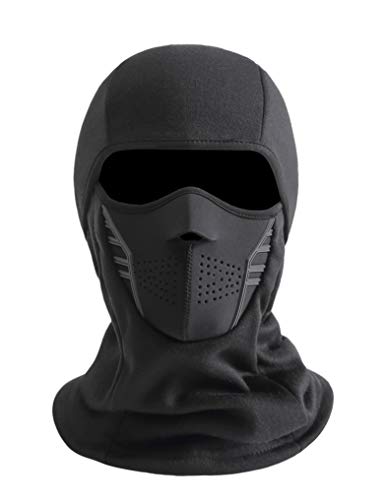
For a straightforward mesh-vent design, this balaclava has an opening zone at the nose and mouth and a hinged construction. The maker says its shaped support makes breathing easier and that goggles may stay clearer when the mask is positioned correctly, though it does not promise fog-free wear in prolonged extreme cold. The mask can be worn as a face cover, bandana, half balaclava or neck gaiter, and can go under a helmet. Its one-size fit gives no stated head measurement, so fit-sensitive buyers should try it with their helmet and goggles before relying on it for a close seal.
Bottom line: Choose this if a mesh vent and several ways to wear the mask matter most.
AOPREL Nose-Shield Mesh Balaclava

The combination of a contoured nose shield and a perforated mouth panel distinguishes this mask from designs that use only an open nose hole. The maker says the lower opening leaves the nose tip free and the shield directs warm breath downward to help reduce fog on glasses or goggles; the mesh zone is intended to release damp air during activity. Its four-way stretch is described as a close fit around the head, jaw and neck. This design is a good match for ski or cycling eyewear, but one size may not suit every face shape, so check coverage around the nose and eye area before heading out.
Bottom line: Choose this if eyewear fog and a covered nose bridge are your main concerns.
AOPREL Nose-Opening Wool-Blend Balaclava
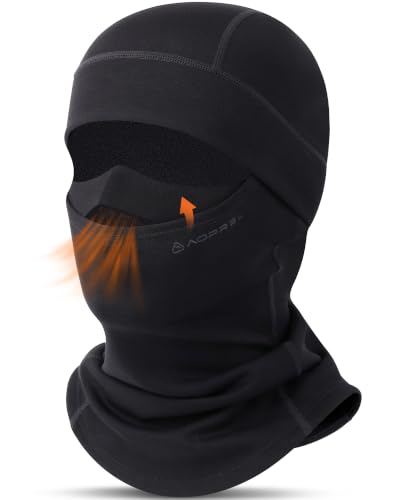
Unlike a mesh vent across the lower face, this model uses a separate nose opening so the wearer can breathe through the nose while keeping the mouth covered. The opening is intended to direct exhaled air away from eyewear, and the front can be pulled down for talking or cooling off. A silicone grip inside the front is designed to hold the fabric under a ski or snowboard helmet, while a rear hole accommodates a low ponytail or braid. The measured fit range is 21.7–23.6 inches around the head. It is a partial match for shoppers specifically wanting a vent panel rather than a nose opening.
Bottom line: Choose this if you need a defined head-size range and a ponytail opening.
AOPREL Modal-Wool Nose-Cover Balaclava

This model differs from open-vent masks by adding a soft nose cover rather than a perforated nose-and-mouth panel. Its fabric composition is 54% rayon from modal, 31% acrylic, 10% spandex and 5% wool, with the nose cover made from the same blend. The maker says the adjustable cover directs airflow downward to help reduce fogging and describes the mask as windproof. It may suit someone who prioritizes soft, continuous nose coverage, but shoppers seeking a clearly open breathing vent should choose a mesh-panel or nose-opening design instead.
Bottom line: Choose this if you want a soft nose cover rather than an open vent.
How a nose vent affects goggle fog
Warm, damp exhaled air fogs cold lenses when it escapes upward toward glasses or goggles. A vented balaclava gives that air a path through mesh or a nose opening, while a nose shield may aim it downward; fit around the nose and cheeks still determines where breath travels. Fog control is not a guarantee, especially when the mask shifts or the face covering is damp. Before a long session, wear the mask with the goggles you plan to use and check that exhaled air does not rise into the lens area. If you see fog while standing still, adjust the mask before moving into terrain or traffic where clear vision matters.
Mesh vents, nose openings and nose covers
Mesh vents, separate nose openings and fabric nose covers solve different comfort problems. Mesh allows air through a panel across the lower face; a nose opening exposes the nose while the mouth can remain covered; a nose cover adds material over the bridge and may direct breath down. Choose by the coverage you need rather than by the word “vent” alone. A person wanting mouth coverage with nose breathing may prefer an opening, while someone wanting a covered bridge may favor a shield. The table gives a quick decision rule based on the feature that matters most.
| Need | Design to consider |
|---|---|
| Airflow through the nose and mouth area | Mesh vent |
| Nose breathing with mouth covered | Separate nose opening |
| Soft coverage over the nose bridge | Nose cover or shield |
Check fit with a helmet and eyewear
A balaclava that fits alone can bunch under a helmet or leave gaps around goggles. Try the mask with the actual helmet and eyewear, then turn your head and check that the fabric stays clear of the lens and does not obstruct vision. For a size-marked mask, compare your head circumference with its range; for one-size masks, a try-on is especially useful if your head or face is outside typical adult sizing. Under a helmet, avoid thick folds at the crown and temples, since pressure can shift the mask during movement. A low ponytail opening, when present, also changes how the rear fabric sits.
Cold-weather breathing and visibility safety
Keep airflow and clear vision as priorities when wearing a face covering in cold conditions. Snow, moisture and breath can collect around a mask; damp fabric can feel colder and airflow may change as the material shifts. Stop in a safe place if a covering moves over the eyes or breathing feels restricted, and reset it before continuing. For motorcycling or other road use, use a face covering only if the helmet and eyewear remain secure and your field of view stays unobstructed. After activity, allow a damp mask to dry fully before storing it so it is ready for the next outing.
Frequently Asked Questions
Can a balaclava vent stop goggles from fogging?
A vent can reduce upward exhaled air, but it cannot guarantee fog-free lenses. Check the seal and airflow direction while wearing your goggles, since fit and damp fabric can change where breath escapes.
Is a nose opening the same as a mesh vent?
No. A nose opening leaves a discrete area open for breathing, while a mesh vent passes air through a perforated panel. Choose an opening if you want the mouth covered while breathing through the nose.
How should a balaclava fit under a ski helmet?
The mask should lie flat without thick folds at the crown or temples. Put on the helmet and goggles with the mask, then turn your head and confirm the fabric stays out of your sightline.
Can I wear a vented balaclava for motorcycle riding?
A vented mask can be worn under a helmet if it does not shift, restrict breathing or interfere with eyewear. Check fit with the helmet secured and stop safely if coverage moves into your field of view.
How do I keep a winter balaclava comfortable?
Let a damp balaclava dry fully after use, since retained moisture can feel cold against the face. Avoid bunching the fabric under helmet pressure points, where folds can make the fit uncomfortable.