
LS Knock Sensor Relocation Kits Compared by Fit

For an LS Gen III knock sensor relocation kit, Gen III LS Kit, 36-Inch Harness is the clearest fit because it names Gen III engines and includes a 36-inch extension harness. A relocation kit moves sensors from the valley area toward the lower engine block; the named product is not a specific brand or model, so choose by engine generation and measured wire route.
We earn a commission if you buy through links on this page. As an Amazon Associate I earn from qualifying purchases. Products are compared on manufacturer specifications, not hands-on testing.
- Best overall: Gen III LS Kit, 36-Inch Harness – Names Gen III LS engines and specifies a 36-inch extension harness with CNC-machined 6061 billet aluminum brackets.
- Best for longer routing: Gen III LS Kit, 47-Inch Harness – Its 47-inch extension is 11 inches longer than the 36-inch harness options.
| Product | Best for | Engine fit | Harness length | Bracket material | Shop |
|---|---|---|---|---|---|
| Gen III LS Kit, 36-Inch Harness | Clear Gen III fit | Gen III LS V8 | 36 in | 6061 billet aluminum | Check Price on Amazon |
| Gen III LS Kit, 47-Inch Harness | Longer wire route | Gen III LS V8 | 47 in | Aluminum alloy | Check Price on Amazon |
| CNRAQR Gen 3 LS Kit, 36-Inch Harness | Workshop installation | Gen 3; LQ4 fit unclear | 36 in | — | Check Price on Amazon |
| Gen 3 LS Kit, 36-Inch Harness | Confirmed M10 fit | Gen 3; LQ4 fit unclear | 36 in | Aluminum | Check Price on Amazon |
| GM Gen 3 LS Relocation Kit | Generation-checked engines | Gen 3 claim; LY5/LY6 conflict | — | — | Check Price on Amazon |
LS knock sensor relocation kits
Compare engine-generation fit and harness reach before choosing a bracket arrangement.
Gen III LS Kit, 36-Inch Harness

Gen III LS Kit, 36-Inch Harness gives the clearest fit statement among these kits: it names 1997–2007 GM Gen III LS V8 engines and lists LS1, LM7, LR4, LQ4, LS6, L59, LQ9, LM4 and L33. It includes two CNC-machined 6061 billet aluminum brackets and a 36-inch extension harness for relocating the sensors from the valley area toward the lower engine block. The maker notes that some 4WD applications need both sensors on the passenger-side bracket. That routing exception matters if your truck is four-wheel drive.
Bottom line: Choose this if your engine is Gen III and its sensor route works with a 36-inch extension.
Gen III LS Kit, 47-Inch Harness

Gen III LS Kit, 47-Inch Harness stands apart with a 47-inch extension harness, 11 inches longer than the 36-inch options. Its fit covers 1997–2007 GM Gen III LS V8 engines, including LS1, LM7, LR4, LQ4, LS6, L59, LQ9, LM4 and L33; the kit includes driver-side and passenger-side aluminum brackets. Measure the intended wire path, including bends and connector reach, before choosing between harness lengths. The material is identified as aluminum alloy rather than a particular billet grade, so buyers seeking a specified alloy should account for that distinction.
Bottom line: Choose this when the measured sensor wiring route needs more reach than 36 inches.
CNRAQR Gen 3 LS Kit, 36-Inch Harness
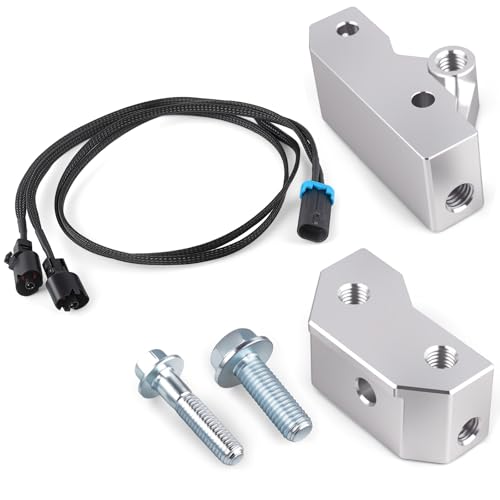
CNRAQR Gen 3 LS Kit, 36-Inch Harness is a Gen 3-specific kit with M10 threads and a 36-inch relocation harness, but its fit statements conflict: the engine-code list includes LQ4 while another note says it is not applicable to LQ4 6.0. Confirm the engine code and sensor thread before selecting it, especially for an LQ4. Its instructions also caution that tight access can require removing nearby components and recommend professional installation or a suitable workshop. The kit is limited to Gen 3 sensors; it is explicitly incompatible with Gen 2 and Gen 4 sensors.
Bottom line: Consider it only after confirming the engine code and sensor fit, and plan for tight access.
Gen 3 LS Kit, 36-Inch Harness

Gen 3 LS Kit, 36-Inch Harness specifies two aluminum brackets, a 36-inch harness and an M10 thread for third-generation sensors. Its fit list includes LQ4, but the same fit statement excludes LQ4 6.0, so that engine-code conflict needs resolving before purchase. The kit is explicitly unsuitable for second- and fourth-generation sensors. Its maintenance-focused design is intended to avoid removing the entire intake for sensor replacement, but installation still depends on access, correct sensor generation and the actual wire route. Verify those points rather than relying on the broad RPO list alone.
Bottom line: Choose it only when the exact engine and M10 Gen 3 sensor fit are confirmed.
GM Gen 3 LS Relocation Kit

GM Gen 3 LS Relocation Kit claims fit for Gen 3 LS V8 engines and explicitly excludes Gen 4 LS engines, but its fit list also names LY5 and LY6, which are Gen 4 engine codes. That conflict makes this a less certain choice until the seller confirms your exact engine code. The kit is presented as a way to relocate sensors from the top valley area to the cylinder heads without removing the intake manifold. No harness length or bracket material is given in the specifications, so base the decision on verified fitment rather than an assumed reach or construction.
Bottom line: Use only after confirming your engine code and included harness reach.
How to choose an LS knock sensor relocation kit
Choose by engine generation first, then compare the harness route and bracket position. These kits target Gen III LS engines; a Gen 4 sensor or engine is not interchangeable just because it shares the LS name. Gen III fit lists commonly identify engines by RPO codes such as LS1, LS6, LM7, LR4 and LQ4, so match the code on your engine rather than relying on the vehicle badge. Measure from the proposed bracket position to each sensor connector along the route, allowing slack at bends and away from hot or moving components. A 47-inch extension gives 11 inches more reach than a 36-inch one; if your measured route exceeds 36 inches, assess the longer option instead of stretching a connector.
Gen III engine and sensor fit
Gen III is an engine-generation requirement, not merely a vehicle-year range. The kits describe fit for Gen III LS applications, while Gen 4 LS engines such as LS3 and L92 are excluded by some product claims. RPO codes help resolve the difference: identify the engine code, then verify that the sensor itself matches the kit’s generation and thread. M10 is a metric thread size, and a bracket or harness cannot correct a mismatch in sensor generation or thread. Some supplied fit claims conflict about particular engine codes, including LQ4 and LY5/LY6, so confirm the exact application before ordering if your code appears in both an inclusion and an exclusion.
Relocation harness length and routing
Harness length determines whether the connectors can reach without tension, but the straight-line distance is not the routing distance. A wire commonly needs extra length for bends, connector orientation and secure routing clear of exhaust heat, sharp edges and moving parts. The available lengths here are 36 inches and 47 inches; measure the complete path on the engine and select a harness that reaches with slack rather than pulling tight. Some 4WD installations may require both sensors on the passenger-side bracket, so plan both connector paths before mounting either bracket. Do not let harness routing interfere with belts, pulleys or the exhaust.
Working safely around knock sensors
Work on a cool, switched-off engine because the exhaust and nearby engine parts can remain hot after driving. Relocation requires access around the engine block, and one kit warns that obstructing components may need to come off; a 4WD setup can have a different bracket arrangement. Keep the connectors and wiring clear of heat and moving parts, and avoid pulling wires taut. If the work requires removing components you are not equipped to reinstall, professional installation is the safer choice. Engine knock sensing is part of the engine-control system, so preserve the sensor connection and confirm the engine-specific routing before running the engine.
| Need | Selection rule |
|---|---|
| Engine fit | Choose only after confirming a Gen III engine and matching sensor |
| Route up to 36 inches | Consider a 36-inch harness with adequate slack |
| Route over 36 inches | Compare the 47-inch option and recheck clearance |
| 4WD layout | Check whether both sensors need the passenger-side bracket |
Frequently Asked Questions
Can a Gen III relocation kit fit a Gen 4 LS engine?
No, these kits are described for Gen III sensors and engines, and some explicitly exclude Gen 4. Check the engine generation and sensor before choosing; shared LS branding is not enough to establish fit.
How much harness length do I need for relocation?
Measure the full routed path from the sensor to its connector, including bends and slack. The options include 36-inch and 47-inch extensions, so choose the longer reach if the measured path is over 36 inches.
What does an M10 knock sensor thread mean?
M10 identifies a metric thread size, not the sensor generation. Confirm both the thread and Gen III compatibility before pairing a sensor with a bracket.
Can I relocate sensors on a four-wheel-drive LS?
Some 4WD installations may need both sensors on the passenger-side bracket. Confirm that layout before routing the harness, and keep the wiring clear of exhaust heat and moving parts.
Do these relocation kits work with Gen 2 sensors?
The CNRAQR kit explicitly says it is incompatible with Gen 2 sensors, and the other options are described for Gen III applications. Match the sensor generation rather than assuming a bracket will adapt between generations.