
Best Safety Yoyo Fall Protection: 5 SRLs Compared

Palmer Safety Twin SRL 6 ft suits most workers who need a compact twin-leg safety yoyo, with a 6-foot maximum length and rebar hooks. Choose another setup if your work requires longer reach or a different anchor arrangement.
A safety yoyo is a self-retracting lifeline (SRL) that pays out as you move and locks during a fall; the right choice depends on anchor position, clearance, and connector fit.
We earn a commission if you buy through links on this page. As an Amazon Associate I earn from qualifying purchases. Products are compared on manufacturer specifications, not hands-on testing.
- Best overall: Palmer Safety Twin SRL 6 ft – Its 6-foot twin-leg design and rebar hooks suit workers who need to stay connected while repositioning.
- Best for longer reach: 11 ft SRL with Large Hook – The 11-foot SRL offers more reach than the 6-foot options.
- Best for extended reach: TRSMIMA 30 ft Steel-Cable SRL – Its 30-foot galvanized steel-cable is the longest option here.
| Product | Best for | Maximum length | Leg setup | Lifeline material | Shop |
|---|---|---|---|---|---|
| Palmer Safety Twin SRL 6 ft | Twin-leg repositioning | 6 ft | Twin | Technora webbing | Check Price on Amazon |
| 11 ft SRL with Large Hook | Longer reach | 11 ft | Single | Webbing | Check Price on Amazon |
| TRSMIMA 6 ft Class 1 SRL | Compact single-leg use | 6 ft | Single | Webbing | Check Price on Amazon |
| Shemior Twin-Leg SRL 6 ft | Twin-leg swivel setup | 6 ft | Twin | Web | Check Price on Amazon |
| TRSMIMA 30 ft Steel-Cable SRL | Extended cable reach | 30 ft | Single | Galvanized steel cable | Check Price on Amazon |
Safety yoyo fall protection options
Compare the lifeline length, leg arrangement, and material against your anchor location and work area.
Palmer Safety Twin SRL 6 ft
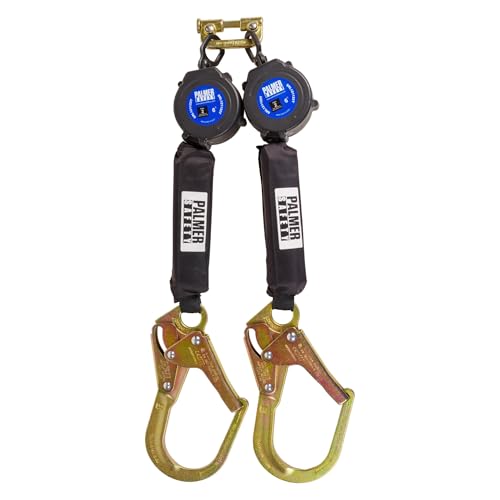
The 6-foot twin-leg setup with rebar hooks distinguishes this SRL for workers who need to reposition while maintaining connection. It weighs 1.84 pounds and uses 13/16-inch Technora webbing with a 4,500-pound minimum breaking strength. The maker recommends an overhead anchor when available; its guidance says to use a leading-edge SRL when the anchor is more than 2 feet below the dorsal D-ring. The short maximum length can limit reach on larger work areas, so choose a longer SRL if the task requires more travel.
Bottom line: Choose it for short-range repositioning with twin legs and rebar hooks.
11 ft SRL with Large Hook
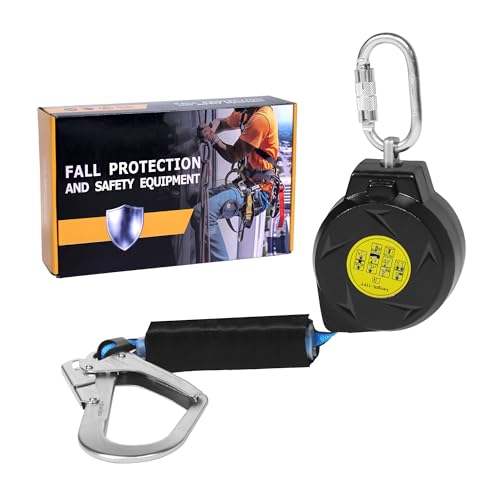
The 11-foot reach is longer than the 6-foot web models, making this single-leg SRL a fit for work requiring additional movement from the anchor. It has a reinforced-polymer housing and a 360-degree swivel top connector. The maker gives an average arresting force of 1,350 pounds and says the housing resists corrosion and high temperatures. Confirm anchor placement and clearance for the full work setup before choosing this longer line; reach alone does not establish that the SRL is suitable for a particular edge or fall scenario.
Bottom line: Choose it when an 11-foot web lifeline and large hook fit the work.
TRSMIMA 6 ft Class 1 SRL

The single-leg 6-foot configuration sets this option apart from the twin-leg models for workers who need one retractable connection. It has a swivel-eye anchorage and an external shock absorber; the product name identifies it as Class 1. The maker says the absorber opens under a 2–6 kN force range and warns that a visible red load indicator means the unit must be removed from service. A single leg does not provide a second connection for moving between anchor points, so select a twin-leg model if that transition is required.
Bottom line: Choose it for a compact single-leg setup with an external shock absorber.
Shemior Twin-Leg SRL 6 ft

The 360-degree horizontal housing rotation and 180-degree vertical O-ring movement distinguish this 6-foot twin-leg web SRL. Its retracting lifeline is intended to maintain tension as the user moves, and the rotating connections are designed to reduce twisting. This can suit work that involves frequent changes of direction near the anchor.
Bottom line: Choose it for short-range work where swiveling connections matter.
TRSMIMA 30 ft Steel-Cable SRL

The 30-foot galvanized steel-cable gives this single-leg SRL substantially more reach than the web options. A twist-and-lock steel carabiner and rotating top are described in the specifications, which suit users needing a longer cable connection. The maker says the unit includes two internal shock absorbers and advises removing it from service if its red load indicator is visible. A longer lifeline can require more fall clearance and careful anchor positioning; verify both for the actual work area before selecting this model.
Bottom line: Choose it when a 30-foot steel-cable is required and clearance is adequate.
How to choose a safety yoyo
Choose an SRL by anchor position, required travel, connector compatibility, and the fall-clearance available below the work surface. A self-retracting lifeline locks when it detects rapid payout, but the device must be approved for the specific configuration, including leading-edge exposure where applicable. OSHA’s general-industry personal fall arrest rules limit maximum arresting force on a body harness to 1,800 pounds and deceleration distance to 3.5 feet; these are system limits, not a guarantee that any particular SRL fits a job. If an anchor is below the dorsal D-ring or an edge is involved, confirm the device’s permitted setup before use rather than assuming a longer line is acceptable.
Use this quick rule: select the shortest lifeline that permits the needed movement while keeping the manufacturer-approved anchor geometry and clearance.
| Work need | Selection cue |
|---|---|
| Frequent repositioning | Twin-leg arrangement |
| Short travel near anchor | 6-foot model |
| More travel | Longer model, with clearance verified |
| Possible edge exposure | SRL approved for leading-edge use |
Anchor position and fall clearance
Overhead anchorage generally reduces free fall and clearance needs compared with a low anchor, but the permitted anchor range is specific to the SRL and job. The Palmer guidance for Palmer Safety Twin SRL 6 ft recommends overhead anchorage and says to use a leading-edge SRL if the anchor is more than 2 feet below the dorsal D-ring. That instruction applies to that model; do not transfer it to another device. A longer line does not mean more safe clearance: clearance calculations include free fall, deceleration distance, harness stretch, worker height, and a safety margin. Confirm the complete calculation and anchor geometry before work starts, especially near an edge or obstruction.
Single-leg and twin-leg SRLs
A single-leg SRL provides one retracting connection, while a twin-leg setup supports keeping one leg connected during a move between compatible anchor points. Twin legs are useful only when the task requires that transition and the connection method is approved; never connect both legs to the same anchor unless the manufacturer allows it. Select connectors that match the harness and anchorage and close and lock as intended. A swivel can reduce twisting, but it does not correct a poor anchor location or make incompatible connectors safe. Check the work plan for transitions, tie-off points, and whether the specified lifeline is approved for the anticipated fall direction.
Inspection and removal from service
Inspect an SRL before each use for damaged webbing or cable, deformation, corrosion, loose components, and proper connector closure. Retract and extend the lifeline under control; a unit that fails to retract smoothly or lock as designed should not be used. A fall arrest event requires removal from service until the manufacturer’s process allows return, and a visible load indicator is a removal warning on models that include one. Keep the device clean and dry as its manufacturer requires, and do not improvise repairs. OSHA requires a competent person to inspect personal fall protection systems at intervals not exceeding one year, with more frequent inspection when conditions warrant.
Frequently Asked Questions
How much clearance does an SRL need below me?
Required clearance depends on the SRL, anchor height, worker height, and nearby obstructions. OSHA’s general-industry rule limits harness deceleration distance to 3.5 feet, but that figure is only one part of clearance; use the device-specific calculation and include a safety margin.
Can I use a regular SRL near a sharp edge?
Only use an SRL approved for the anticipated leading-edge exposure. A sharp edge can damage a lifeline during a fall, so confirm the device’s edge rating and permitted anchor location before work.
When should an SRL be removed from service?
Remove it after it arrests a fall or if inspection shows damage, a malfunction, or a deployed load indicator. OSHA requires inspection by a competent person at least annually, and harsher conditions can call for more frequent checks.
What does a twin-leg SRL help with?
A twin-leg setup can keep one leg connected while the other is moved to a new anchor point, when the task and manufacturer instructions permit that method. Never leave both legs connected to the same anchor unless the device maker allows it.
Does a longer lifeline give me more safe working distance?
A longer lifeline gives more potential travel, not automatically more safe working distance. As line length and anchor geometry change, verify free-fall distance and total clearance so the worker cannot strike a lower level or obstruction.