
Shoes for Ice: 3 Traction Cleats Compared

For shoes on icy walks, 19-Spike Stainless Steel Cleats is the cleat option with the highest spike count: 19 stainless steel spikes per foot. Choose Sfee 10-Stud Cleats, Medium if you want a size range that includes a US shoe fit, or ICETRAX V3 Tungsten, L/XL if you prefer tungsten-carbide spikes.
Ice cleats are traction covers worn over shoes or boots, not replacement footwear. Remove them before walking on indoor floors or other hard surfaces where exposed spikes can slip or cause damage.
We earn a commission if you buy through links on this page. As an Amazon Associate I earn from qualifying purchases. Products are compared on manufacturer specifications, not hands-on testing.
- Best overall: 19-Spike Stainless Steel Cleats – Its 19 stainless steel spikes per foot give it the highest spike count.
- Best for stated sizing: Sfee 10-Stud Cleats, Medium – Its medium size is specified for women’s US 7–10 and men’s US 5–8 shoes.
- Best for tungsten spikes: ICETRAX V3 Tungsten, L/XL – Its nine spikes are tungsten carbide, with a toe cap designed to help secure the fit.
| Product | Best for | Spike count and material | Cleat material | Stated cold performance | Shop |
|---|---|---|---|---|---|
| 19-Spike Stainless Steel Cleats | Maximum spike count | 19 stainless steel per foot | TPE | −45°C | Check Price on Amazon |
| Sfee 10-Stud Cleats, Medium | Medium shoe fit | 10 stainless steel studs | Flexible silicone material | −40°C | Check Price on Amazon |
| ICETRAX V3 Tungsten, L/XL | Tungsten carbide spikes | 9 tungsten carbide | — | — | Check Price on Amazon |
Shoes for Ice: Traction Cleats
These cleats stretch over footwear, and the right choice depends on spike design, size fit, and where you walk.
19-Spike Stainless Steel Cleats

With 19 stainless steel spikes per foot, this pair has the highest spike count among these options. The cleats use a chain system and a 5 mm-thicker TPE material, with an adjustable strap for putting them on and taking them off. They are intended for boots and shoes on icy roads, angled ground, and trails. The maker says the material performs down to −45°C. The size is large, so this option may not suit a buyer who needs a smaller fit; check that large matches your footwear before ordering.
Bottom line: Choose this pair if you want the highest spike count and large fits your footwear.
Sfee 10-Stud Cleats, Medium
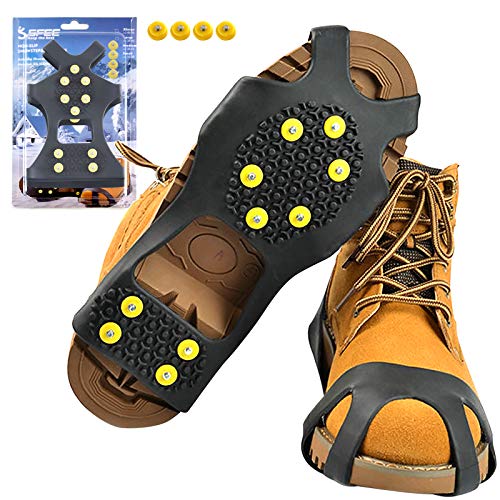
The medium-size fit is the clearest differentiator here: it is specified for women’s US 7–10 and men’s US 5–8 shoes. Ten stainless steel studs provide traction, while the cleats combine flexible silicone with a recyclable, non-ageing material. The maker says they perform down to −40°C and are designed for walking on snow and ice. This is a useful match when the medium range fits; buyers outside those shoe sizes should choose a different size rather than assuming the flexible material will stretch to fit.
Bottom line: Choose this pair when your shoe size falls within the medium range.
ICETRAX V3 Tungsten, L/XL
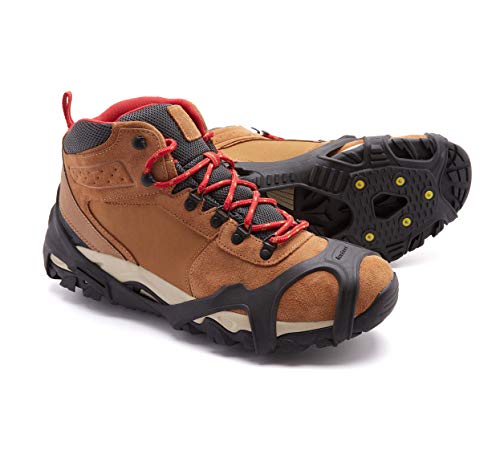
Tungsten-carbide spikes set this pair apart from the two stainless-steel options. It has nine strategically placed spikes and a snow-tread traction system, plus a toe cap designed to help keep the cleat in place. The L/XL size is specified for men’s US 9.5–13 and women’s US 11 and up. The maker says it is designed for harsh winter conditions. Its fit is narrower than a general one-size claim, so check your shoe size against that range before choosing it.
Bottom line: Choose this pair if you want tungsten-carbide spikes and its L/XL fit matches your shoes.
How to choose ice cleats for shoes
Choose cleats by shoe fit, spike design, and the surfaces on your route, not by spike count alone. Steel spikes are common on walking cleats; tungsten carbide is another hard spike material, as seen on ICETRAX V3 Tungsten, L/XL. More spikes can mean more contact points, but placement, tread, and how securely the cleat stays on also matter. For a route with mixed snow and ice, a tread pattern may be useful alongside the spikes; for mostly clear ice, prioritize a secure fit and traction elements that contact the ground. Cleats fit over footwear, so check the shoe or boot shape as well as its size. Do not wear exposed spikes indoors or across smooth hard floors: the points can slip and scratch surfaces.
Ice cleat sizing and footwear fit
Match the cleat’s shoe-size range before relying on stretch, because a loose cover can shift while walking and a tight one can be hard to pull over boots. Sfee 10-Stud Cleats, Medium gives a medium range of women’s US 7–10 and men’s US 5–8, while ICETRAX V3 Tungsten, L/XL gives men’s US 9.5–13 and women’s US 11 and up for L/XL. For 19-Spike Stainless Steel Cleats, confirm the large size fits your footwear before ordering. Boot height, toe shape, and thick soles can affect how an over-shoe cover sits even when the shoe size seems right. Put cleats on while seated, tug the toe and heel into place, and check that no strap or chain hangs loose before stepping onto ice.
Where ice cleats work and where they do not
Ice cleats are intended for outdoor snow and ice, not as all-purpose shoe soles. Their spikes can bite into frozen ground, but they can be unstable on smooth indoor floors, bare rock, polished concrete, or other hard surfaces where points cannot grip. A route that alternates between icy paths and indoor spaces calls for taking the cleats off at the transition rather than wearing them through the building. Snow tread can help on packed winter ground, while exposed spikes are mainly useful when the surface is frozen. Shorten your stride and keep your weight centered on slick ground; cleats improve traction but cannot make every icy surface safe.
| Route condition | What to prioritize | What to avoid |
|---|---|---|
| Mostly icy outdoor path | Secure fit and ground-contact spikes | A cover that shifts at the heel |
| Snow mixed with ice | Spikes plus tread contact | Assuming spike count alone decides grip |
| Indoor or smooth hard floor | Remove cleats before entering | Walking on exposed points |
Using and caring for traction cleats
Inspect cleats before each outing for a torn elastomer, loose chain, missing spike, or a stretched toe or heel section. A damaged cover can move or fail to hold its position, so replace it rather than relying on an uneven set of traction points. After use, brush away packed snow and grit and let the material dry before storage; trapped moisture and debris can make it harder to inspect the hardware. Keep the spikes pointed away from hands and floors while handling the pair. Ice cleats are not a substitute for cautious movement: avoid steep, untreated slopes when possible, and use a walking aid if the route or your balance calls for one.
Frequently Asked Questions
Can ice cleats go over regular shoes?
Yes, over-shoe cleats are designed to fit shoes as well as boots, but fit depends on the model’s size range and shoe shape. Check that the toe and heel stay securely covered before walking on ice.
Should I wear ice cleats indoors?
No; remove cleats before walking on indoor floors or smooth hard surfaces. Exposed points may slip where they cannot bite and can scratch flooring.
Are more spikes always better on ice?
No; spike placement, tread, and a secure fit also affect traction. Compare the intended surface and fit rather than choosing by spike count alone.
How should ice cleats fit on boots?
The cover should sit snugly at both toe and heel without shifting or leaving loose straps or chains. Check the model’s shoe-size range, since bulky soles and boot shapes can change how an over-shoe cleat sits.
How do I store ice cleats after walking?
Brush off snow and grit, then let the cleats dry before storage. Inspect the elastomer, chain, and spikes first, and do not use a pair with a torn cover or missing hardware.