
GlassGuard Mold Remover: 4 Mold-Cleaning Options Compared

GlassGuard Miracle Mold Stain Remover Gel is the closest GlassGuard mold stain remover match because its 10-ounce gel is intended for grout, ceramic, glass, silicone and caulk. Choose a spray or multi-surface kit instead if you need a ready-to-apply formula for broader indoor or outdoor surfaces.
These products address visible mold or mildew staining, but cleaning stains does not fix the moisture that allows mold to return.
We earn a commission if you buy through links on this page. As an Amazon Associate I earn from qualifying purchases. Products are compared on manufacturer specifications, not hands-on testing.
- Best overall: GlassGuard Miracle Mold Stain Remover Gel – A 10-ounce gel format is intended for grout, ceramic, glass, silicone and caulk.
- Best for indoor and outdoor use: 30 SECONDS Pro Mold & Mildew Remover – The 32-ounce spray is described for indoor and outdoor surfaces including siding, fences, decks, concrete and brick.
- Best for multiple surfaces: RMR Complete Mold & Mildew Stain Eraser System – The kit pairs two 32-ounce formulas for bathroom and kitchen cleaning and a range of outdoor materials.
| Product | Best for | Format | Volume | Intended surfaces | Shop |
|---|---|---|---|---|---|
| GlassGuard Miracle Mold Stain Remover Gel | Grout and caulk | Gel | 10 oz | Grout, ceramic, glass, silicone, caulk | Check Price on Amazon |
| 30 SECONDS Pro Mold & Mildew Remover | Broad-area spray | Spray | 32 oz | Siding, fences, decks, concrete, brick | Check Price on Amazon |
| Mold Armor Mold Kill & Control Spray | Hard nonporous surfaces | Spray | 32 oz | Laminate, linoleum, sealed grout | Check Price on Amazon |
| RMR Complete Mold & Mildew Stain Eraser System | Indoor-outdoor kit | Two ready-to-use sprays | 64 oz total | Tubs, grout, drywall, siding, brick, concrete | Check Price on Amazon |
GlassGuard mold remover and alternatives
Compare the formulas by application format, package volume and the surfaces each is intended to clean.
GlassGuard Miracle Mold Stain Remover Gel

Unlike the spray options, this GlassGuard product is a gel marketed for mold stains on grout, ceramic, glass, silicone and caulk. The package contains 10 ounces, and its format may suit buyers who want to apply cleaner directly to a stained area rather than cover a broad surface with a spray. The key limitation is its smaller package compared with the 32-ounce sprays and two-bottle kit, so it may be a less practical fit for large areas.
Bottom line: Choose the gel for targeted stains on grout, glass, silicone or caulk.
30 SECONDS Pro Mold & Mildew Remover
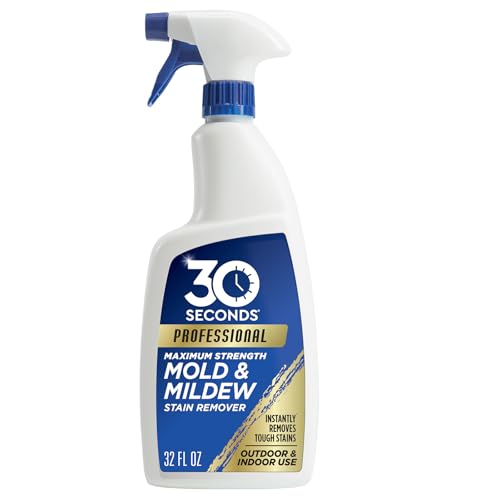
For buyers focused on broader indoor and outdoor use, this 30 SECONDS formula is a 32-ounce spray intended for surfaces such as siding, fences, decks, concrete floors and brick. The maker says its Pro formula lifts mold and mildew stains on contact without scrubbing or pressure washing. Its larger spray format and outdoor surface examples distinguish it from the targeted GlassGuard gel. The product is described for staining, so it should not be treated as a substitute for correcting leaks or other moisture sources that allow mold to grow.
Bottom line: Pick the spray when the cleaning area includes outdoor surfaces such as decks or siding.
Mold Armor Mold Kill & Control Spray

This 32-ounce Mold Armor spray has a more specifically defined surface fit: laminate, linoleum, sealed grout, stainless steel and plastic. The maker says visible results can appear in minutes without scrubbing, and its directions call for testing an inconspicuous area, applying to stains, waiting 10 minutes, then rinsing or wiping with a damp cloth. That test-first step matters for anyone concerned about changing a finish. Unlike the gel, this formula is aimed at hard, non-porous surfaces; it is not the best match for a buyer seeking a gel for caulk or silicone.
Bottom line: Choose it for listed hard, non-porous surfaces when a test-first spray routine suits you.
RMR Complete Mold & Mildew Stain Eraser System

The RMR system is the only two-formula kit here, with two 32-ounce ready-to-use sprays for a combined 64 ounces. Its Tub & Tile formula is intended for bathrooms and kitchens, while RMR-86 is aimed at outdoor materials including decks, siding, brick, wood and outdoor furniture. The maker says stains can be addressed in as little as 15 seconds without sanding or scrubbing. This paired format is suited to buyers with different indoor and outdoor cleaning needs; it is more product than necessary if the job is a single small grout stain.
Bottom line: Pick the kit when you need separate formulas for bathroom and outdoor cleaning.
How to choose a mold stain remover
Choose by surface and application area first: a gel is suited to targeting grout lines or caulk, while sprays cover broader hard surfaces. Compare the intended surface lists rather than assuming a bathroom cleaner works on every finish; sealed grout, unsealed grout and silicone are different materials. For a single stain on a narrow seam, a gel can limit application to the target. For siding, decks or concrete, a spray format is more practical to distribute across a larger area. A cleaning product addresses visible staining, not the source of moisture. Fix leaks, improve ventilation or reduce condensation so the stain is less likely to recur.
Where mold remover can be used
Surface compatibility is the main fit rule: match the product’s intended materials to the exact area, and test an inconspicuous spot when the directions call for it. Mold Armor specifies hard, non-porous surfaces such as laminate, linoleum, sealed grout, stainless steel and plastic. The GlassGuard gel names grout, ceramic, glass, silicone and caulk, while the RMR kit covers bathroom and kitchen surfaces plus outdoor materials such as siding, brick and concrete. These examples do not mean every product suits every surface. Porous materials such as drywall may need more than surface cleaning if mold has penetrated them; address the moisture and assess the material rather than repeatedly treating a stain.
How to clean mold stains safely
Never mix cleaning products, especially bleach-based cleaners with ammonia or acids; mixing can release dangerous gases. Keep people and pets away while applying cleaners, provide ventilation, and follow the product’s label for protective equipment and contact time. The Mold Armor directions specify a 10-minute wait followed by rinsing or wiping with a damp cloth; do not transfer that timing to the other formulas. For mold growth covering more than about 10 square feet, the EPA advises consulting its mold remediation guidance or a professional. Extensive contamination, hidden growth or recurring dampness calls for solving the water problem, not just removing visible discoloration.
Common mold-cleaning mistakes
Repeatedly treating a stain without fixing moisture is the most common mistake: mold needs moisture, and cleaning alone does not prevent return. Another mistake is applying a product to a material outside its intended surface range; verify finish compatibility and perform a small-area test where directed. Do not assume a stain remover disinfects every surface or removes mold hidden behind walls. For household mold, EPA guidance generally favors cleaning small areas on hard surfaces with detergent and water, then drying completely; porous materials that remain moldy may need disposal. If the affected area exceeds roughly 10 square feet, or if moisture damage persists, seek more extensive guidance rather than expanding a spot-cleaning approach.
Frequently Asked Questions
Will a mold stain remover stop mold from coming back?
No, removing a visible stain does not correct the moisture that supports mold growth. Repair leaks, improve ventilation or control condensation to reduce recurrence.
Can I use mold remover on unsealed grout?
Surface fit depends on the formula; Mold Armor specifically names sealed grout, not unsealed grout. Check compatibility with the grout and test a hidden spot before treating a visible area.
How long should mold cleaner stay on a surface?
The Mold Armor directions specify a 10-minute wait before rinsing or wiping. Contact times differ by formula, so do not apply one product’s timing to another.
When should I call a mold remediation professional?
For mold covering more than about 10 square feet, EPA guidance recommends consulting its mold remediation advice or a professional. Hidden growth, recurring leaks or extensive water damage are also reasons to look beyond surface cleaning.
Can I mix two mold cleaning products?
No, never mix cleaning products; bleach combined with ammonia or acids can release dangerous gases. Use one cleaner at a time and follow its label for ventilation and protective equipment.