
Socks for Athlete’s Foot: 3 Moisture-Control Picks

For most people looking for socks for athlete’s foot, Toes&Feet Anti-Odor Cotton Crew Socks is the most targeted choice because its cotton crew design combines moisture-wicking yarn with odor-resist construction. Choose Niorasen Bamboo Rayon Ankle Socks for a bamboo-rayon ankle style or Dickies Dri-Tech Crew Socks for a crew sock with ventilation channels; socks can help manage moisture, but they are not a substitute for antifungal treatment.
We earn a commission if you buy through links on this page. As an Amazon Associate I earn from qualifying purchases. Products are compared on manufacturer specifications, not hands-on testing.
- Best overall: Toes&Feet Anti-Odor Cotton Crew Socks – Cotton crew coverage pairs moisture-wicking yarn with odor-resist construction.
- Best for ankle coverage: Niorasen Bamboo Rayon Ankle Socks – A low-cut design uses 90% bamboo-derived viscose with spandex for stretch.
- Best for ventilation: Dickies Dri-Tech Crew Socks – Ventilation channels and moisture-control fibers are built into a crew style.
| Product | Best for | Height | Material | Moisture features | Shop |
|---|---|---|---|---|---|
| Toes&Feet Anti-Odor Cotton Crew Socks | Targeted crew coverage | Crew | Combed cotton blend | Wicking polypropylene; titanium-blended yarn | Check Price on Amazon |
| Niorasen Bamboo Rayon Ankle Socks | Low-cut wear | Ankle / low cut | 90% bamboo-derived viscose, 7% spandex | Sweat-absorbent fabric | Check Price on Amazon |
| Dickies Dri-Tech Crew Socks | Ventilated crew wear | Crew | Moisture-control fibers | Ventilation channels; arch compression | Check Price on Amazon |
Socks for Athlete’s Foot
Compare these socks by cut, fabric and the specific moisture-management features that matter for daily wear.
Toes&Feet Anti-Odor Cotton Crew Socks

For a sock specifically marketed around athlete’s-foot odor, Toes&Feet Anti-Odor Cotton Crew Socks is the most targeted option here. Each pack includes five pairs of lightweight crew socks made with combed cotton and polypropylene, plus elastic arch support and a compression leg. The maker says titanium-blended yarn helps resist odor; the heel and toe are reinforced, and the socks have no cushion. This style suits someone who wants crew coverage and a thin, unpadded feel. The medium size fits men’s shoe sizes 6 to 12; check shoe-size fit if you need another range.
Bottom line: Choose this if crew coverage and odor-focused yarn matter more than cushioning.
Niorasen Bamboo Rayon Ankle Socks

Niorasen Bamboo Rayon Ankle Socks is the low-cut choice, unlike the two crew styles, and its size is 12–14. The six-pair set uses 90% bamboo-derived viscose, 7% spandex and 3% elastane. The maker says the fabric absorbs sweat and that three-ply thread with reinforced heels and toes adds durability. These ankle socks suit people who prefer less coverage above the shoe. Their limitation is the narrow stated size range, so confirm your shoe-size fit before choosing them.
Bottom line: Pick this for low-cut coverage and a bamboo-derived viscose blend in size 12–14.
Dickies Dri-Tech Crew Socks
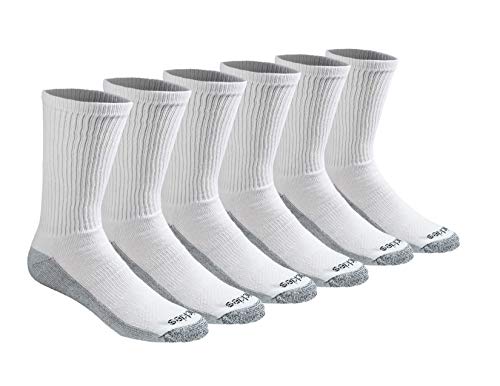
Dickies Dri-Tech Crew Socks stands out for ventilation channels, a feature not called out for the other socks. The white six-pair pack in large has moisture-control fibers, arch compression support, and reinforced heels and toes. Fabric content can vary by color, so the white version is the clearest match if material consistency matters to you. This crew style suits buyers who want airflow features and a supportive arch fit. It does not give a specific fiber percentage, so it is less suitable if you are choosing based on an exact material blend.
Bottom line: Choose this for crew coverage with ventilation channels and arch support.
How to choose socks for athlete’s foot
Choose socks that manage sweat and fit without bunching, then change them when damp. Moisture trapped against skin can make feet uncomfortable, while breathable fabric and a dry change of socks can support a drier routine. Cotton absorbs moisture, but it can stay damp; synthetic wicking fibers are designed to move moisture away from skin, and blends combine different characteristics. A useful decision rule is to bring a second pair if your feet regularly become damp during the day. Pick ankle or crew height based on footwear coverage, then check that the sock does not pinch toes or slide into folds.
Socks do not treat athlete’s foot. Antifungal medication is commonly used for the infection, and persistent or worsening symptoms merit advice from a healthcare professional.
Fabric and sock height differences
Fabric blend and coverage are the main distinctions among these socks. Cotton-rich styles absorb sweat; moisture-wicking synthetic fibers are intended to move it, while bamboo-derived viscose is a regenerated cellulose fiber. The product-specific blends and features vary, so compare the actual fabric rather than assuming that a natural fiber stays drier in every shoe. Crew socks cover more of the lower leg than ankle socks, which can matter with boots or shoes that rub above the ankle. A thin sock may also leave more room in a snug shoe than a cushioned one.
The table compares the styles by cut and moisture features; choose the material and height that fit your footwear and daily routine.
| Style | Cut | Moisture feature |
|---|---|---|
| Bamboo-derived viscose blend | Ankle | Sweat-absorbent fabric |
| Cotton and polypropylene blend | Crew | Wicking polypropylene |
| Dri-Tech fibers | Crew | Ventilation channels |
Keeping feet dry between sock changes
Change out of damp socks promptly and dry carefully between the toes after bathing. Athlete’s foot can spread in moist shared spaces such as locker rooms and pool areas, so wear shower sandals there and avoid sharing towels or footwear. Let shoes dry fully between wears when possible; rotating pairs gives each pair more time to air out. Wash socks after each wear and keep clean pairs separate from damp or worn ones. These steps reduce avoidable moisture and exposure, but they are hygiene measures rather than treatment for an active infection.
When socks are not enough
Socks help manage contact with sweat, but antifungal medication—not a special sock—is used to treat athlete’s foot. Over-the-counter antifungal creams, sprays or powders are common options; follow the product label and seek clinical advice if symptoms worsen or do not improve after treatment. People with diabetes or a weakened immune system should get medical guidance rather than relying on home care alone. Avoid applying foot products between toes unless their directions allow it, since excess moisture in toe spaces can undermine the goal of keeping skin dry.
Frequently Asked Questions
How often should I change socks if my feet sweat?
Change into a dry pair whenever socks become damp; for heavy sweating, carrying a spare pair can help. Put on clean socks each day and let shoes dry between wears when possible.
Are cotton socks good for athlete’s foot?
Cotton absorbs sweat, but damp cotton can remain against the skin. If your socks get wet during the day, changing into a dry pair matters more than choosing cotton alone.
Can special socks cure athlete’s foot?
No; socks do not cure athlete’s foot. Antifungal medicines are used to treat it, and persistent or worsening symptoms should be discussed with a healthcare professional.
Should I wear socks to bed with athlete’s foot?
A clean, dry pair may be comfortable, but avoid wearing damp or tight socks overnight. Dry the skin between your toes first and follow any medication directions for when to apply it.
Can athlete’s foot spread through shared socks?
Yes, sharing socks or footwear can spread fungi. Use your own clean socks and wear shower sandals in shared locker-room or pool areas.