
Solar Power Chicken Coop Heater: 3 Options Compared

For a solar power chicken coop heater, 30W Portable Solar Heater is the clearest match for buyers who want a 30W heater; the deciding factor is whether its power setup can meet your coop’s needs after sunset. Choose Solar Panel Heater Fan Kit if you want a fan-style unit with a coverage area, or Solar Coop Heater with Battery Compartment if battery storage and USB outputs matter more.
Solar heaters use sunlight to power heat-producing components, so they are not automatically a reliable overnight heat source. Before choosing, check how each unit stores energy and whether its heating capacity suits your coop.
We earn a commission if you buy through links on this page. As an Amazon Associate I earn from qualifying purchases. Products are compared on manufacturer specifications, not hands-on testing.
- Best overall: 30W Portable Solar Heater – Its name specifies a 30W heater, making its power rating the clearest basis for comparison.
- Best for fan-style heating: Solar Panel Heater Fan Kit – The kit is described as heating spaces up to 1 square meter and includes a battery box.
- Best for USB output: Solar Coop Heater with Battery Compartment – Its battery compartment includes USB outputs for 5V devices.
| Product | Best for | Heating format | Power or output feature | Shop |
|---|---|---|---|---|
| 30W Portable Solar Heater | Stated wattage | Solar heater | USB and DC ports | Check Price on Amazon |
| Solar Coop Heater with Battery Compartment | USB device charging | Solar heater | Battery compartment with USB outputs | Check Price on Amazon |
| Solar Panel Heater Fan Kit | Fan-style heating | Heating fan | Battery box; 3 × 18650 batteries not included | Check Price on Amazon |
Solar Power Chicken Coop Heaters
Compare the heater formats and power features, then match them to your coop size and solar exposure.
30W Portable Solar Heater
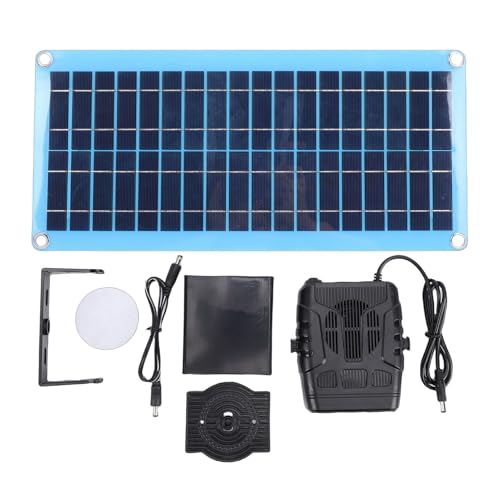
30W Portable Solar Heater is the only option here with a wattage in its name: 30W. Its features include USB and DC ports, a 100 cm cable, and use in chicken coops, pet houses, and greenhouses. The compact dimensions are about 15.7 × 7.1 × 2.4 inches. That makes it a candidate when you want a straightforward heater rather than a fan kit. The specifications do not establish how long it runs, its heating area, or how much warmth it delivers, so those are important checks if your coop needs dependable heat after dark.
Bottom line: Choose this if a 30W rating matters more than a defined coverage area.
Solar Coop Heater with Battery Compartment

Solar Coop Heater with Battery Compartment stands out for its battery compartment with USB outputs for 5V devices, alongside a solar panel, heater, and connecting cable. The compact unit measures about 8.7 × 7.1 × 0.5 inches and weighs 1.4 pounds. Its features mention both USB and DC ports and use in coops, greenhouses, and pet houses. This is a fit for buyers who value the charging feature as well as heating.
Bottom line: Choose this if USB device charging is a priority alongside solar heating.
Solar Panel Heater Fan Kit

Solar Panel Heater Fan Kit differs by using a heating fan and giving a coverage figure: its features say it heats spaces within 1 square meter, about 10.8 square feet. The kit includes a solar panel and battery box, but requires three 18650 batteries that are not included. It is suited to a small, defined area where the fan format makes sense. Confirm the intended area and nighttime power plan before relying on it for a coop.
Bottom line: Choose this for a small area if you can supply the required batteries.
How to choose a solar chicken coop heater
Choose by heating area, power draw, and whether the unit can run when sunlight is gone. Solar panels produce power only with available light; clouds, shade, panel angle, and short winter days reduce the energy harvested. A battery can store energy, but a battery compartment alone does not establish runtime: compare its capacity in watt-hours with the heater’s wattage and expected hours of operation. For example, a 30W load running for 4 hours needs 120 watt-hours before conversion losses. If a seller does not provide both runtime and capacity, do not assume overnight heating. Keep the coop dry and ventilated, since damp air and poor airflow are common cold-weather problems.
Match heater coverage to coop size
Match the heated area to the space you intend to warm, not the entire coop by guesswork. Solar Panel Heater Fan Kit gives a limit of 1 square meter, roughly 10.8 square feet; use that only as a starting point, because outdoor temperature, drafts, insulation, and airflow affect results. A small heated zone near a roost can require less energy than heating all air in a larger coop, but chickens must be able to move away from heat. Measure the floor area and check where the heater can be mounted safely. If your coop has more than about 11 square feet to heat, do not assume Solar Panel Heater Fan Kit covers it; seek a unit with a larger stated area or plan another approach.
Solar heater types and battery needs
Solar coop heaters differ in whether they use a simple heating element or move warmed air with a fan. A fan may distribute heat across a small area, while its motor also draws power; compare the complete kit’s power use rather than judging by panel size alone. Battery-powered systems can continue operating without direct sun only for as long as stored energy allows. A 30W heater uses 30 watt-hours per hour at its rated draw, so even a few hours require meaningful storage. For kits that require separate batteries, check battery type, count, and whether the battery compartment is included before planning installation.
| Need | What to compare | Decision |
|---|---|---|
| Known power rating | Heater watts and runtime | Estimate energy use in watt-hours |
| Small defined zone | Stated coverage area | Stay within the rated area |
| Night operation | Battery capacity and load | Confirm runtime after sunset |
Coop heater safety and placement
Use caution with any heat source in a coop: bedding, feathers, and dust can ignite, and birds may contact or knock over equipment. Secure heaters and cables so they cannot fall into litter or be pecked, and keep combustible material away from hot surfaces. Avoid using an exposed heat lamp as a substitute; its hot bulb and fragile mounting create a fire hazard. Chickens generally handle cold better when the coop is dry and draft-free at roost level while retaining ventilation above the birds to remove moisture and ammonia. Do not seal a coop to hold heat. Check the heater’s mounting and surface-temperature limits before installation, and make sure birds have room to move away from the heated zone.
Frequently Asked Questions
Can a solar chicken coop heater run overnight?
Only if stored energy can power the heater for the required hours. Estimate battery energy in watt-hours against heater draw; a 30W heater running 5 hours needs 150 watt-hours before losses.
How much area can a solar coop heater warm?
Use the manufacturer’s coverage as a limit, not a guarantee under every condition. Solar Panel Heater Fan Kit gives 1 square meter, about 10.8 square feet; drafts and cold temperatures can reduce effective warmth.
Do chickens need a heater in winter?
Healthy, acclimated adult chickens usually tolerate cold when they are dry and protected from drafts at roost height. Prioritize ventilation above the birds and dry bedding; young, sick, or poorly feathered birds may need additional care.
Are heat lamps safe inside a chicken coop?
Heat lamps carry a fire risk because hot bulbs can ignite bedding and the fixture can fall. Secure any heat source well away from litter and combustibles, and avoid exposed lamps as routine coop heating.
What size solar panel does a coop heater need?
Panel sizing depends on heater wattage, daily run time, sunlight, and battery losses. A 30W load for 4 hours uses 120 watt-hours, and winter shade or cloud cover means the panel must harvest more than that to recharge storage.