
Best Eyelid Wipes for Dry Eyes: 5 Picks Compared

PURELID Tea Tree Eyelid Wipes, 100 Count suits most people seeking eyelid wipes for dry eyes because its 100-count pack pairs tea tree with hyaluronic acid, chamomile, and aloe. Choose another option if fragrance-free or alcohol-free ingredients are a priority, or if you specifically want a preservative-free wipe.
Eyelid wipes are pre-moistened cloths for gently cleaning eyelid skin and lashes; they clean the lid area but are not a substitute for dry-eye treatment.
We earn a commission if you buy through links on this page. As an Amazon Associate I earn from qualifying purchases. Products are compared on manufacturer specifications, not hands-on testing.
- Best overall: PURELID Tea Tree Eyelid Wipes, 100 Count – The 100-count pack includes tea tree, hyaluronic acid, chamomile, and aloe.
- Best for sensitive skin: NOVEHA Sensitive Eyelid & Lash Wipes, 60 Count – The formula is made without alcohol, fragrance, parabens, or sulfates.
- Best for preservative-free care: OPTASE TTO Eyelid Cleansing Wipes, 30 Count – These sterile, single-use wipes are preservative-free, pH-balanced, and alcohol-free.
| Product | Best for | Count | Notable ingredients | Formula notes | Shop |
|---|---|---|---|---|---|
| PURELID Tea Tree Eyelid Wipes, 100 Count | Frequent daily cleansing | 100 wipes | Tea tree, hyaluronic acid, chamomile, aloe | Individually wrapped; biodegradable | Check Price on Amazon |
| NOVEHA Tea Tree Eyelid & Lash Wipes, 60 Count | Makeup removal | 60 wipes | Tea tree, hyaluronic acid, green tea | Individually wrapped | Check Price on Amazon |
| NOVEHA Sensitive Eyelid & Lash Wipes, 60 Count | Sensitive-skin cleansing | 60 wipes | — | No alcohol, fragrance, parabens, or sulfates | Check Price on Amazon |
| Tea Tree Eyelid Wipes, 30 Count | Small-pack cleansing | 30 wipes | Tea tree, chamomile, green tea, aloe | Alcohol-free; individually wrapped | Check Price on Amazon |
| OPTASE TTO Eyelid Cleansing Wipes, 30 Count | Alcohol-free cleansing | 30 wipes | Tea tree oil | Preservative-free; alcohol-free; pH-balanced | Check Price on Amazon |
Eyelid Wipes for Dry Eyes
Compare the ingredient blends, pack counts, and formula distinctions that matter for gentle lid cleansing.
PURELID Tea Tree Eyelid Wipes, 100 Count

The 100-count pack sets these wipes apart for buyers who want a larger supply, with tea tree, hyaluronic acid, chamomile, green tea, and aloe in a plant-based formula. The maker says they remove oil, dirt, and debris while moisturizing the eyelid area. Individually wrapped wipes suit a routine at home or on the go, and the wipes are described as biodegradable. The limitation is the tea tree blend: buyers specifically seeking a formula without tea tree should choose a different option rather than assume this ingredient is optional.
Bottom line: Choose these if a larger pack and a tea tree plus hydrating-ingredient blend suit your routine.
NOVEHA Tea Tree Eyelid & Lash Wipes, 60 Count

Makeup removal is a specific use called out for these 60 individually wrapped wipes, distinguishing them from options focused mainly on lid hygiene. The ingredient blend includes tea tree oil, green tea, chamomile, aloe vera, and hyaluronic acid; the maker says the pre-moistened wipes help remove makeup, excess oil, dirt, and everyday impurities without harsh rubbing. They suit someone who wants one wipe for lashes and eyelids as part of a cleansing routine. The tradeoff is that buyers needing an explicitly alcohol- and fragrance-free formula should consider another pick.
Bottom line: Pick these when lash and eyelid cleansing also needs to remove everyday makeup.
NOVEHA Sensitive Eyelid & Lash Wipes, 60 Count

The clearest formula distinction here is the exclusion of alcohol, fragrance, parabens, and sulfates, making these the option to consider when those ingredients are a concern. Each of the 60 wipes is individually wrapped and can be used on eyelids, lashes, and facial skin; the maker also says they can remove makeup. The cleansing directions call for washing hands, closing the eyes, and wiping gently side to side, with no rinsing required. The feature tradeoff is that the named ingredient blend is not given, so buyers choosing by a specific botanical or hydrating ingredient may prefer another option.
Bottom line: Choose these if avoiding alcohol, fragrance, parabens, or sulfates is your priority.
Tea Tree Eyelid Wipes, 30 Count
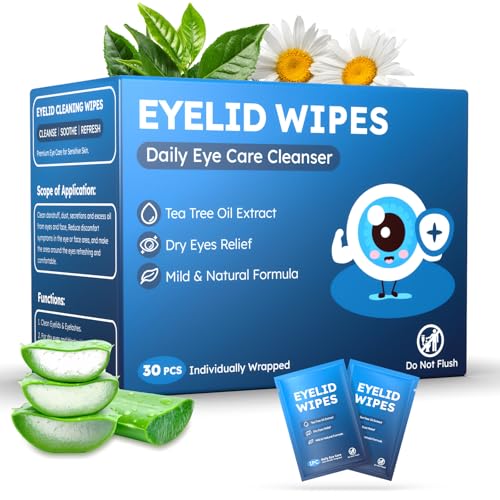
This 30-count pack is the smallest among the exact-fit choices, useful for buyers who want a limited supply of pre-moistened wipes rather than a larger count. Its plant-based blend includes tea tree oil, chamomile, green tea, and aloe; the maker says the wipes cleanse oil and debris without rinsing. The product is described as alcohol-free and suitable for all skin types. Its claims around relieving dry eyes and other eye conditions should not be treated as medical benefits; choose it for lid-area cleansing, not as a remedy for eye symptoms.
Bottom line: Pick this if a 30-wipe supply and a tea tree botanical blend fit your needs.
OPTASE TTO Eyelid Cleansing Wipes, 30 Count

OPTASE is the distinct choice for buyers prioritizing preservative-free wipes: this pack contains 30 sterile, single-use wipes with tea tree oil. The formula is pH-balanced and free from artificial fragrance and alcohol, and the maker says the wipes are suitable for contact lens wearers. Directions specify cleansing from the inner to outer lid margin, then discarding the wipe without rinsing. The limitation is the tea tree oil, which may not suit someone avoiding that ingredient; those buyers should select a different formula rather than assume all eyelid wipes share the same ingredients.
Bottom line: Choose these if you want sterile single-use wipes and a preservative-free, alcohol-free formula.
How to Choose Eyelid Wipes for Dry Eyes
Choose eyelid wipes by formula first, then pack count and intended use. Tea tree oil appears in four of these five picks, while one option emphasizes exclusions such as fragrance, alcohol, parabens, and sulfates. Wipes can remove lid-margin oil, debris, or makeup, but they do not replace lubricating eye drops or evaluation for persistent dry-eye symptoms. A practical rule: if a formula ingredient has bothered your skin before, select an option whose formula avoids it rather than testing it near the eye. Individually wrapped wipes help keep each wipe separate until use. Never share an eye wipe, and discard each single-use wipe after cleaning both lids.
How to Clean Eyelids Without Rubbing
Clean eyelids with a light touch: wash your hands, close your eye, and wipe across the lid and lashes gently. One product here gives a side-to-side wiping motion, while another specifies moving from the inner to outer lid margin; both approaches avoid vigorous scrubbing. Use a fresh wipe for each eye when there is discharge or an active infection concern, and do not let the wipe touch the eye surface. Remove contact lenses first unless a product explicitly directs otherwise; a claim of suitability for contact lens wearers does not mean to wipe over a lens. Stop if burning, swelling, or worsening redness occurs, and seek clinical advice for ongoing symptoms.
Tea Tree and Fragrance-Free Eyelid Wipes Compared
Tea tree blends and exclusion-focused formulas solve different ingredient preferences. Tea tree wipes combine that botanical with other ingredients in several products here; the sensitive-skin option instead highlights the absence of alcohol, fragrance, parabens, and sulfates. No wipe ingredient combination is automatically best for every person, and a botanical ingredient can still irritate sensitive skin. The table is a quick way to match a cleansing priority with the product feature that separates these choices.
| Need | Feature to prioritize |
|---|---|
| Tea tree blend | Tea tree oil or tea tree with botanicals |
| Avoid selected additives | Explicitly alcohol-, fragrance-, paraben-, and sulfate-free formula |
| Preservative-free single use | Sterile, individually wrapped wipe |
| Makeup removal | Wipe specifically described for eyelid and lash makeup cleansing |
When Dry Eyes Need More Than Lid Wipes
Eyelid wipes clean skin and lashes, while dry-eye care may also require addressing tear-film problems; a wipe should not be expected to treat dryness inside the eye. Persistent grittiness, light sensitivity, blurred vision, or pain warrants advice from an eye-care professional, especially if symptoms affect one eye or worsen. Warm compresses are commonly used for meibomian gland care: use comfortably warm, not hot, material and avoid pressure on the eyeball. Do not scrub the lid margin or share cloths, since friction can irritate delicate skin and shared items can spread infection. Sudden vision changes or severe eye pain need prompt medical attention rather than more cleansing.
Frequently Asked Questions
Can eyelid wipes make dry eyes go away?
No, eyelid wipes clean the skin and lashes but do not replace dry-eye treatment. If dryness or grittiness persists despite lid hygiene, ask an eye-care professional about causes and care.
How often should I use eyelid cleansing wipes?
Use them at the frequency directed for the particular product or recommended by your clinician. Daily cleansing is a common routine, but irritation is a reason to stop and reassess the formula.
Should I wipe my eyelids with contacts in?
Remove contact lenses before cleaning unless the product specifically says otherwise. A wipe described as suitable for contact lens wearers is not an instruction to wipe over a lens.
Can I use one eyelid wipe on both eyes?
Follow the product’s single-use directions and avoid sharing a wipe between people. If one eye has discharge or infection concern, use a separate fresh wipe for the other eye to limit cross-contamination.
Are tea tree eyelid wipes safe for sensitive skin?
Sensitivity varies, and tea tree oil can irritate some people even when a wipe is marketed as gentle. If you have reacted to tea tree or fragrance before, choose a formula that clearly avoids the trigger and stop if irritation develops.