
Monroe Matic Plus Shocks: Fit and Features Compared

For a Monro-Matic Plus shock with a vehicle-fit range, choose Monro-Matic Plus 32235 if your vehicle is listed; it covers multiple Ford and Mazda models. Choose a different option if you need a rear Corvette shock or a strut, since those parts serve different applications.
We earn a commission if you buy through links on this page. As an Amazon Associate I earn from qualifying purchases. Products are compared on manufacturer specifications, not hands-on testing.
- Best overall: Monro-Matic Plus 32235 – Provides a fit range for Ford Ranger, Bronco II, Explorer, and Mazda models.
- Best for Corvette rear fit: Monro-Matic Plus 33322 Corvette Rear – Identified specifically as a rear suspension shock absorber for Chevrolet Corvette.
- Best for strut replacement: Monro-Matic Plus 801803 Strut – A Monro-Matic Plus strut rather than a shock absorber.
| Product | Best for | Fitment stated | Part type | Shop |
|---|---|---|---|---|
| Monro-Matic Plus 32235 | Ford and Mazda fit | 1990–1997 Ranger; selected other models | Shock absorber | Check Price on Amazon |
| Monro-Matic Plus 33322 Corvette Rear | Corvette rear replacement | Chevrolet Corvette | Shock absorber | Check Price on Amazon |
| Monro-Matic Plus 801803 Strut | Strut replacement | Replaces listed part numbers | Suspension strut | Check Price on Amazon |
Monro-Matic Plus shocks and related suspension parts
Compare the part type and stated vehicle fit before choosing a Monro-Matic Plus replacement.
Monro-Matic Plus 32235
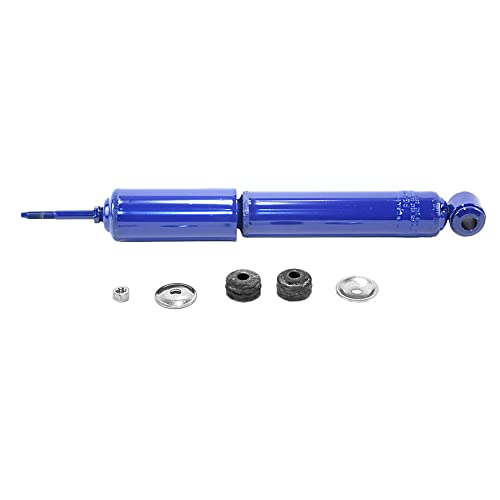
This shock absorber is the only option here with a broad vehicle-fit range that includes Ford Ranger, Bronco II, Explorer, and Mazda Navajo and B-series models. Monroe says its Velocity Proportional Valving technology is designed to provide a consistent ride. The Ranger span runs from 1990 through 1997, while other model ranges differ, so match the year, model, engine, and trim before selecting it. The limitation is that this is a specific-fit shock, not a universal replacement; buyers outside the models should consider another part.
Bottom line: Choose it when your exact vehicle configuration falls within its fit range.
Monro-Matic Plus 33322 Corvette Rear

This option is identified as a rear shock absorber for a Chevrolet Corvette, unlike the Ford- and Mazda-focused fit range of Monro-Matic Plus 32235. Monroe says the shock uses Velocity Proportional Valving, nitrogen gas charging, all-weather fluid, and a larger bore for damping control. Those are maker performance claims, not a substitute for confirming that the part matches a particular Corvette configuration. The product name does not give model years, so buyers should verify the vehicle application before choosing it; its rear position also makes it unsuitable when a different axle position is needed.
Bottom line: Choose it for a Corvette rear shock replacement after confirming the specific vehicle fit.
Monro-Matic Plus 801803 Strut
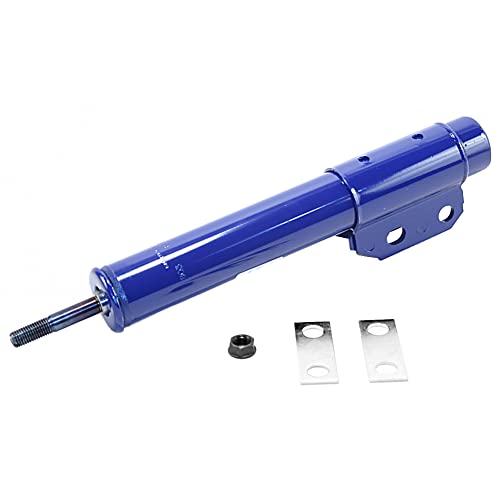
This is a suspension strut, not a shock absorber, so it is a related option only when the repair calls for a strut. Monroe says its VPV valving and all-weather fluid are intended to support smooth rod reaction, and that its gas charge helps maintain tire-to-road contact. The product name lists replacement numbers 235009, 734013, 801524, 801535, G55551, and G56504. Its limitation is the different component type: a strut can be part of the vehicle’s structural suspension, so it is not an interchangeable choice for a shock-only application.
Bottom line: Choose it only when the vehicle requires this strut or a replacement number.
How to choose a Monro-Matic Plus replacement
Choose by exact vehicle application and component type before comparing design claims. Shocks control suspension movement, while a strut may also serve as a structural suspension member; the two are not interchangeable just because both damp motion. Use year, make, model, engine, trim, axle position, and any fitment notes to narrow the part. A part number match is useful when replacing an existing unit, but confirm the full application rather than relying on a partial number alone. This matters especially when fit ranges overlap across model years or engines.
Shock absorbers versus suspension struts
A shock absorber primarily controls spring oscillation, while a strut is integrated into the suspension and often carries structural loads. That difference determines which category of replacement you need: a shock part number cannot stand in for a strut assembly, or vice versa. Many passenger vehicles use shocks at one end and struts at the other, so identify front or rear placement as well as the component type. Replacing a strut can affect alignment because it connects with steering and suspension geometry. A shock replacement usually does not involve the same structural role, but worn mounts and related hardware still deserve inspection. Match the replacement to the vehicle’s original suspension layout.
When to replace shocks in pairs
Replace shocks in axle pairs when one has failed or is being replaced for wear, so damping remains more even from side to side. A single new shock beside a worn one can produce uneven response over bumps and during braking. Inspect tires for cupping or scalloped wear, check for fluid leakage, and notice repeated bouncing after a bump; each can point to a suspension issue but does not diagnose the shock by itself. Also inspect bushings, mounts, and fasteners during the repair because damaged adjoining parts can compromise the installation. A strut replacement is a separate repair decision, and a pair may be appropriate there as well depending on condition and vehicle guidance.
Fitment mistakes to avoid
The most common mistake is selecting by brand or model name without checking year and configuration. Vehicle generations can change suspension dimensions and mounting points, and trim or drivetrain differences can also affect fit. Confirm whether the needed component is front or rear, and whether the repair calls for a shock or strut. Do not interpret package dimensions as installed shock length: suspension travel and compressed and extended lengths are application-specific measurements. If the current part has a readable number, use it alongside vehicle fit data rather than as the sole criterion. Finally, follow safe lifting practice: support the vehicle with properly rated stands on solid ground and never rely on a jack alone while working underneath.
Frequently Asked Questions
Should shocks be replaced in pairs?
Yes, replacing shocks on the same axle in pairs helps preserve balanced damping from side to side. If only one side is replaced, the older shock may respond differently over bumps.
What vehicle details matter when matching a shock?
Use the vehicle year, make, model, engine, trim, and the axle position being serviced. Model-year ranges can vary by configuration, so confirm the complete application.
What are signs that a shock may be worn?
Repeated bouncing after a bump, visible fluid leakage, and cupped tire wear can be clues to a suspension problem. Have the suspension inspected because those symptoms alone do not confirm the shock is the cause.
Do shock package dimensions show its installed length?
No, package dimensions are not the same as a shock’s compressed or extended length. Suspension travel and mounting measurements are specific to the vehicle application.