
Green Gobbler Weed Killer: 3 Options Compared

Green Gobbler Total Control, 1 Gallon is the Green Gobbler weed killer choice here, with a 1-gallon trigger sprayer and a salt-and-vinegar formula. Choose ECO Garden PRO Organic Vinegar Weed Killer or Pulverize Weed and Grass Killer instead if you want a different ready-to-use weed spray; neither is Green Gobbler.
These products are non-selective weed killers, meaning they can harm desirable plants they contact. Keep spray off flowers, vegetables and lawn grass you want to retain, and use each only as its label directs.
We earn a commission if you buy through links on this page. As an Amazon Associate I earn from qualifying purchases. Products are compared on manufacturer specifications, not hands-on testing.
- Best overall: Green Gobbler Total Control, 1 Gallon – The Green Gobbler weed-and-grass killer comes in a 1-gallon trigger-sprayer format.
- Best for vinegar formula: ECO Garden PRO Organic Vinegar Weed Killer – This ready-to-use gallon formula identifies vinegar and organic rock salt as ingredients.
- Best for non-selective use: Pulverize Weed and Grass Killer – The formula is identified as a non-selective herbicide for weeds and grass.
| Product | Best for | Size | Format | Formula notes | Shop |
|---|---|---|---|---|---|
| Green Gobbler Total Control, 1 Gallon | Trigger-sprayer use | 1 gallon | Trigger sprayer | Salt and vinegar | Check Price on Amazon |
| ECO Garden PRO Organic Vinegar Weed Killer | Vinegar-based alternative | 1 gallon | Ready to use | Vinegar and rock salt | Check Price on Amazon |
| Pulverize Weed and Grass Killer | General weed spraying | 128 fluid ounces | Spray | Non-selective; no glyphosate | Check Price on Amazon |
Green Gobbler Weed Killer Options
Compare the Green Gobbler formula with two ready-to-use alternatives for weed and grass control.
Green Gobbler Total Control, 1 Gallon

Green Gobbler Total Control, 1 Gallon is the only Green Gobbler weed-and-grass spray among these options, and its 1-gallon container has a trigger sprayer. The maker says the salt-and-vinegar formula kills more than 250 weeds and grasses, including dandelion, clover and crabgrass, and is OMRI-listed for organic use. Its uses include driveways, pavers and mulch beds. Because the formula is non-selective, overspray can damage plants you want to keep; take care around flowers and lawn edges. The pet-safety language is the maker’s claim, not a reason to let people or animals enter treated areas contrary to the label.
Bottom line: Choose this if you want Green Gobbler’s ready-to-use, trigger-sprayer weed killer.
ECO Garden PRO Organic Vinegar Weed Killer
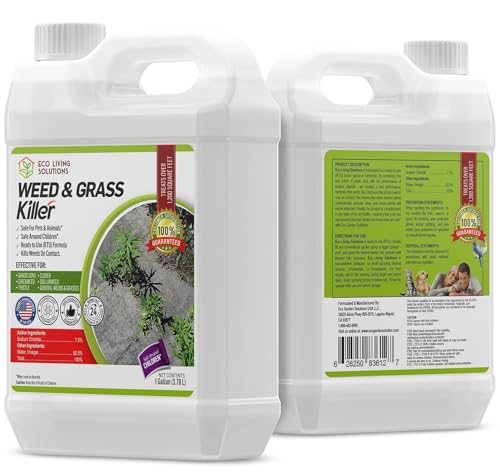
ECO Garden PRO Organic Vinegar Weed Killer is the vinegar-based alternative, supplied as a ready-to-use 1-gallon formula rather than Green Gobbler’s named product. Its formula includes natural white vinegar, organic rock salt and biodegradable plant activators; the maker says it is glyphosate-free and reports results within 24 hours. The maker also describes uses on driveways, sidewalks and mulch beds. The fast-results claim is the maker’s, and results can depend on the weed and conditions. As a weed-and-grass killer, it is not a selective lawn treatment, so avoid applying it where wanted grass or other plants may be hit.
Bottom line: Pick this if you prefer a ready-to-use vinegar-based alternative.
Pulverize Weed and Grass Killer

Pulverize Weed and Grass Killer is another non-selective spray, with a 128-fluid-ounce container and a formula described as glyphosate-free. The maker says it begins working shortly after application and is intended for grassy weeds, broadleaf weeds and moss in places such as driveway cracks and garden paths. The features emphasize coating foliage rather than a trigger-sprayer format or an ingredient list, so buyers choosing by specific ingredients may favor Green Gobbler Total Control, 1 Gallon or ECO Garden PRO Organic Vinegar Weed Killer. Non-selective means the spray can also injure desirable plants it reaches; use a shield or careful, directed application around garden edges.
Bottom line: Choose this for a glyphosate-free, non-selective weed-and-grass spray.
How to Choose a Weed Killer
Choose by target and application area first: non-selective sprays can harm any green plant they contact, not just weeds. That makes directed treatment more appropriate for pavement cracks than broadcast spraying through a lawn or flower bed. A contact spray may brown exposed foliage while established perennial weeds can regrow from roots or other underground parts; repeat treatment may be needed, depending on the plant and product label. Check whether the formula is ready to use and whether its packaging suits your application. Do not assume that a natural ingredient or glyphosate-free claim makes a product harmless to desirable plants or safe to use without label precautions.
Using Weed Spray Around Plants
Keep spray on the target weed: drift and runoff can expose nearby ornamentals, vegetables or grass to a non-selective herbicide. A narrow nozzle or physical shield can help direct treatment in cracks and along edging; pause if wind could carry droplets onto plants you want to keep. Salt-containing formulas deserve extra care near planting beds because salt left in soil can harm plant growth. Avoid spraying before rain if the label warns against it, since runoff can move product away from the target. Keep children and pets away from treated areas according to the product label, rather than relying on broad safety claims.
Vinegar and Other Weed Spray Types
Vinegar-based formulas and other non-selective sprays share an important limitation: they do not distinguish weeds from desirable vegetation they contact. Acetic acid acts primarily on exposed plant tissue, so larger or perennial weeds may return if underground roots survive. Salt can add a soil-residue concern, especially where repeated applications happen near garden plants. A glyphosate-free claim describes one ingredient distinction, not selectivity or an assurance that nearby plants are protected. Choose a directed spray for isolated weeds, and consider a different control method when weeds are mixed through a lawn or dense planting.
| Need | What to prioritize |
|---|---|
| Weeds in hardscape cracks | Directed, non-selective spray |
| Weeds among wanted plants | Spot control that prevents contact, or manual removal |
| Specific ingredient preference | Check the formula’s ingredients |
Frequently Asked Questions
Will vinegar weed killer stop weeds from growing back?
Not always. Vinegar-based contact sprays can damage exposed foliage while established perennial weeds may regrow from surviving roots, so follow the label for repeat applications.
Can non-selective weed killer be used on a lawn?
Use caution: non-selective sprays can injure lawn grass along with weeds. Spot-treat only when you can keep spray off grass you want to retain, or choose a lawn-selective product labeled for the target weed.
How can I protect flowers while spraying weeds?
Direct spray only onto the weed and use a shield near flowers or other wanted plants. Avoid treatment in wind that could carry droplets onto surrounding foliage.
Does salt-based weed killer affect nearby soil?
Salt can remain in soil and harm plant growth, so avoid runoff or overspray into beds and areas where you want plants to grow. Follow the product label’s precautions for the treated area.